
Fuel guides
Fuelling, explained in short reads.
Thirteen guides and eight activity playbooks, each a few minutes long, with the numbers you need and nothing else: how a gel works, which of the three lines fits the session, how many packets a marathon takes and how to train your gut to hold them. Read them in order or jump to the one you need today.
The guides
Thirteen guides, in reading order.
Start with how a gel works, then pick a line, then build and rehearse a plan. The comparisons and the chart are there for when a specific question comes up.
Start here
Energy gel 101
Stored fuel covers easy, short sessions. Go hard or past 45 minutes and it runs out. A gel puts back 100 calories of easy-to-digest carbohydrate, and your body can process roughly 120–240 calories an hour on the move, which is why the rule is one packet every 20–30 minutes.
Read the guideBasics
Fast vs steady energy
A gel needs no chewing and almost no digestion, so the carbohydrate reaches your blood within minutes and carries you about 20–30 minutes at moderate-to-hard effort. Take it with 120–240 ml of water, and take the next one before you feel the drop, not after.
Read the guideBasics
Energy vs hydration
Carbohydrate keeps your muscles going; fluid and sodium keep the rest of you working. Past an hour you need both: a gel every 20–30 minutes and roughly 475–900 ml of fluid with electrolytes each hour, more when it is hot and humid.
Read the guideChoosing
Choose the right gel
Short or moderate sessions: Original. Hard, hot or high-intensity: Liquid Energy. Long days and extreme conditions: Roctane. Many people stack them across one effort, Liquid early, Original through the middle, Roctane for the final hour, and the carbs per packet are close enough that the count does not change.
Read the guideChoosing
Roctane vs Original
Same 100 calories and the same carbohydrate base. Roctane carries 125–180 mg of sodium against 60–125 mg, and 1,425 mg of amino acids against 450 mg. Original for everyday training; Roctane once a run goes past 90 minutes or 16 km, or the day is hot.
Read the guideChoosing
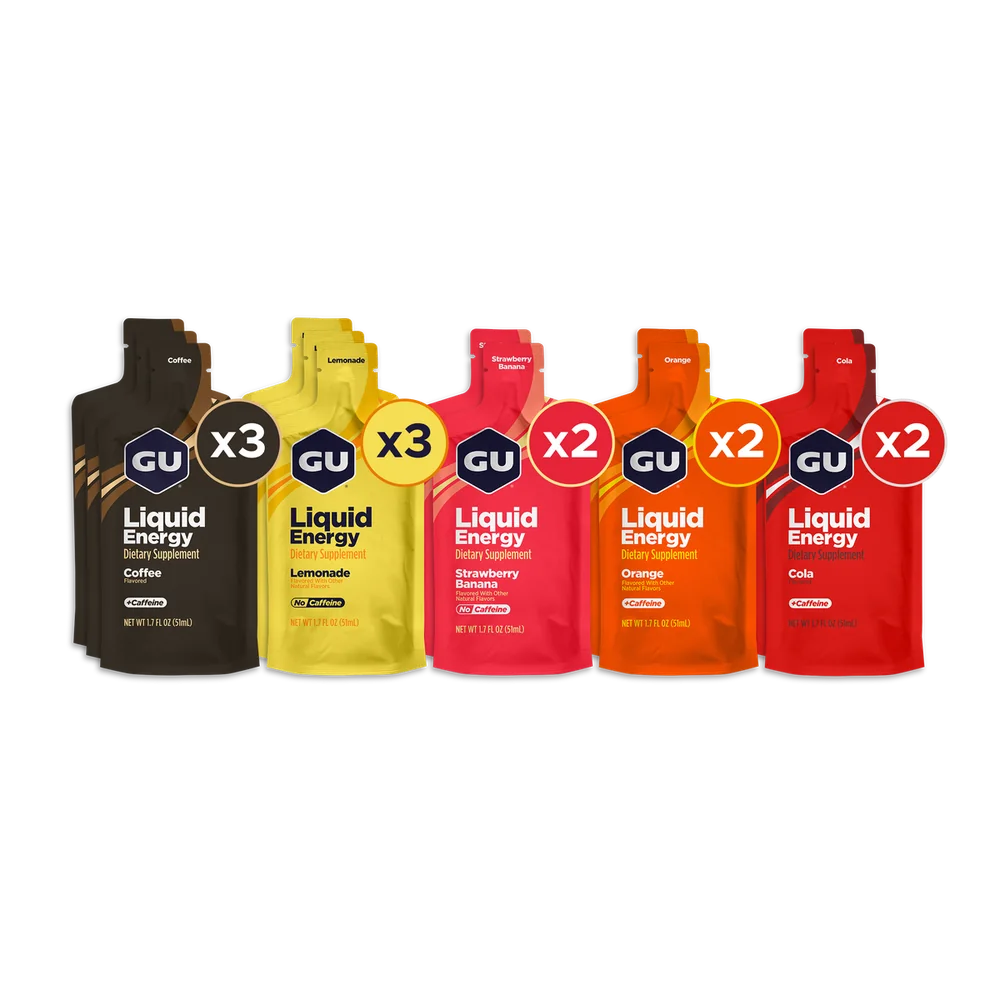
Liquid vs traditional gels
The Original formula with more water and a thinner texture, in a slightly bigger packet: 95–100 calories, 19–24 g of carbohydrate, 75 mg of sodium. It earns its place in heat, at triathlon transitions, for sensitive stomachs and whenever a thick gel is the last thing you want. You still drink water with it.
Read the guideChoosing
Caffeinated vs non-caffeinated
Caffeine sharpens focus and lowers how hard the effort feels, but it is not fuel. Keep the early packets caffeine-free, bring caffeine in for the back half of a race or a key session, and test the dose in training first. Its half-life is 4–6 hours, so doses stack.
Read the guideChoosing
Eat or drink your fuel
Squeeze a packet in one go, or pour Liquid Energy into a soft flask and sip it over the next half hour. Eating is quicker and easier to carry; sipping is gentler and steadier but needs a bottle. Plenty of athletes do both in the same race.
Read the guidePlanning
Marathon gel strategy
Hours × grams per hour ÷ carbs per gel. A 4-hour finisher at 50 g/h needs about 2.4 Original gels an hour, 9–10 across the race; most marathoners land between 8 and 15. Counts by finish time, half-marathon numbers and when to take the first packet.
Read the guidePlanning
Train your gut
The gut adapts to what you ask of it, provided you ask gradually. Start 6–8 weeks out, add about 10 g of carbohydrate an hour each week on your long sessions, and hold a week if you feel bloated or sick. In one review, two weeks of structured practice cut gut discomfort by an average of 47%.
Read the guideComparisons
Gels vs real food
Rice, bananas, dates and toast win for the meal 1–3 hours before and for recovery after. Mid-effort, their fibre, fat and protein slow digestion and can upset your stomach. That is where a 21–23 g packet of carbohydrate every 20–30 minutes fits.
Read the guideComparisons
Gels vs sports drinks
A gel is concentrated carbohydrate that needs water to go down well; a sports drink is mostly fluid and electrolytes. Under an hour, hydrate. Between 60 and 90 minutes, add the odd gel. Past 90 minutes, do both: a gel every 20–30 minutes, a few sips every 10–15.
Read the guideReference
Flavour and caffeine chart
Every flavour across the three lines with its caffeine dose, from 0 mg to the 70 mg in Roctane Cold Brew Coffee. Caffeinated Original flavours carry 20–40 mg, Liquid Energy 20–40 mg, most Roctane 35 mg. Map your intake before you pack the pockets.
Read the guideBy activity
Same gels. Different timing.
Before, during and after, for eight sports, with the intervals that suit each one.
Playbook
Running
Under an hour, one gel five minutes before you start is enough. Longer, carry one for every 20–30 minutes and take it with a few sips of water. For hot, humid runs, several Liquid Energy packets poured into a soft flask are easier to sip than to squeeze.
See the playbookPlaybook
Cycling
Jersey-pocket fuel. First gel 20–30 minutes in, then every 20–30 minutes before you feel tired, taken on a flat or a coast with a sip of water. Roctane for the long climbs; a Liquid Energy frozen overnight melts into a cold slushy on a hot Western Ghats ride.
See the playbookPlaybook
Marathon
Count your gels before the start: most runners need 8–15, one every 20–30 minutes, and the wall is what happens when you skip them. Roctane's extra sodium and amino acids suit anything past 90 minutes, which makes it the race-day gel for most people.
See the playbookPlaybook
Triathlon
Start the swim already fuelled; the first chance to eat is T1. Stage a Liquid Energy for each transition, swallowed without slowing down, then Original or Roctane every 20–30 minutes on the bike and the run.
See the playbookPlaybook
Hiking
A gel for the steep pitches and for the moment energy dips, with water each time. On long or strenuous trails fuel at regular intervals rather than waiting to feel it, and in summer start with a Liquid Energy from the freezer that melts slowly in your pack.
See the playbookPlaybook
Strength training
Under 60 minutes you do not need fuel during the session: 20–30 g of carbohydrate 5–15 minutes before, one Original gel, covers it. Gels earn their place in long, high-intensity or high-rep sessions where glycogen actually runs low.
See the playbookPlaybook
Swimming
Carbohydrate before you get in, then a gel at the wall between long or hard sets, at regular intervals rather than when you fade, so energy stays level through the session. Keep a bottle on the deck; you lose fluid in the pool as well.
See the playbookPlaybook
Ski and snowboard
Cold, dry air and altitude raise your energy demand and dry you out without the warning of sweat. A Roctane gel every 20–30 minutes, kept in a pocket close to your body so it stays soft enough to squeeze.
See the playbookRead enough? Run the numbers.
The fuel calculator turns duration, effort and heat into a carbs-per-hour target, a gel count and a minute-by-minute schedule. Or pick a line and start practising.