
Fuel by activity
Fuelling for ski and snowboard days
A day on snow does not feel like a workout, which is exactly why it goes wrong. Cold makes the body burn more energy to stay warm, blunts appetite so you forget to eat, and dries you out without any thirst; by mid-afternoon the legs are heavy and the turns get sloppy. This page gives a before, during and after plan, a gel plan by time on snow, and notes on cold, altitude and sun for Gulmarg, Auli and Solang.
Who this is for
- Resort skiers and snowboarders lapping lifts from first chair to last, including a first trip to Gulmarg or Auli.
- Ski-school learners, for whom falling over and getting up all day burns more than it looks.
- Ski tourers and splitboarders earning their turns in the Himalaya, where the effort is closer to hiking.
New to gels? Read gel 101 first.
Why cold changes the arithmetic
Three things happen when the temperature drops. Energy demand rises: shivering, extra layers and stiff, cold muscles make every run cost more. You stop noticing: cold suppresses appetite and the feeling of tiredness, so the signal to eat arrives late or never. And the body leans harder on fast-digesting carbohydrate, for the skiing and for internal heat, so glycogen runs down sooner. The rule that follows: fuel early and often, on a schedule, never on hunger.
Before the first run
- Eat breakfast even if you do not want it. Cold makes the pre-activity meal easy to skip. Your usual carbohydrate breakfast, then something light 30 to 60 minutes before the first lift.
- Start hydrated, with electrolytes. Aim for 200–350 ml of fluid in the 1–2 hours before you head out, with sodium in it rather than plain water: sodium helps the body hold on to fluid in dry mountain air.
- Top up at the lift. One Original Energy Gel about five minutes before the first run, with a few sips of water, covers the first hour of groomers.
- Pack gels against your body. An inside jacket or bib pocket, not a backpack lid. A cold gel is thick and slow out of the packet, and Liquid Energy Gel, with its higher water content, can freeze outright.
During the day
Skiing is stop-start: a few minutes of hard effort, then a chairlift, which makes the lift the natural place to eat. A gel is 100 calories that goes down in seconds with gloves on, and the cadence is the same as any sport: one every 20 to 30 minutes of actual skiing, with 90–120 ml of water. Count chairs rather than the clock: on a lift-served day that is one or two gels an hour of clock time; skinning uphill on a touring day, the full two to three.
| Gel | Carbohydrate | Sodium | Caffeine options | On a cold day |
|---|---|---|---|---|
| Original Energy Gel | 22 g | 60–125 mg | 0, 20 or 40 mg | Half days, groomers |
| Liquid Energy Gel | 23 g | 75 mg | 0, 20 or 40 mg | Easiest to swallow; keep it warm |
| Roctane Energy Gel | 21 g | 125–180 mg | 0, 35 or 70 mg | Full days, touring, very cold days |
Carbohydrate is similar across all three; Roctane's up to three times the sodium and amino acids (1,425 mg against 450 mg) of Original make it the pick for longer, colder sessions (see Roctane vs Original). Gels replace carbohydrate during the effort, not the whole day's food: a proper lunch, rice or roti with dal and a hot drink, with gels either side of it, gets you to last lift.
Tip: eat on the chair, not at the top: hands free, nothing moving, and the gel has the ride to start working. Tear the packet before the gloves go back on; the empty goes back in the pocket, never into the snow.
After the last run
Cold raises recovery demand: muscles and metabolism have worked harder than you felt. Within about 30 minutes of coming off the hill, eat something with carbohydrate and protein to restock glycogen and start muscle repair, and keep drinking into the evening, with electrolytes. A gel is a during-the-day tool, not a recovery food.
A gel plan by time on snow
Counts assume about 21 g of carbohydrate per gel; the during column counts time actually moving, not queue or lodge time.
| Day | Time on snow | Before | During | Gels (approx.) | Which gel |
|---|---|---|---|---|---|
| Short session: a lesson, park laps | Under 90 min (about an hour of skiing) | One gel 5 min before | None needed | 1 | Original |
| Half day | 2–3 hours | Food 30–60 min before, gel 5 min before | Every 20–30 min of skiing | 3–5 | Original; Roctane on cold or hard runs |
| Full lift-served day | 5–6 hours | Food 30–60 min before, gel 5 min before | Every 20–30 min of skiing, plus lunch | 5–8, plus real food | Roctane; Original to vary flavour |
| Ski touring or splitboarding | 6–8 hours and beyond, mostly uphill | Full breakfast, 500 ml electrolyte drink, gel 5 min before | Every 20–30 min, with food between gels | 2–3 per hour, plus other carbs | Roctane; Liquid kept warm for the steepest skin track |
Under three hours of moving time, gels alone cover the 30–60 g of carbohydrate an hour you need. A touring day is closer to a long hike: 60 g/h, up to 90 g/h if your gut is trained, with real food between gels (see fuelling for hiking). Put your own day into the fuel calculator for a count.
Hydration, cold and altitude: notes for India
Most Indian skiers arrive from the plains and meet cold, altitude and dry air at once; Gulmarg, Auli and Solang all sit at around 2,500 m or higher. Dehydration sneaks up for four reasons: you sweat less and feel less thirsty; dry air takes water out with every breath, more so at altitude; cold makes you urinate more often; and layers hide the sweat under strong sun on snow. Even mild dehydration dents endurance and mental clarity, and on a mountain clarity is a safety matter.
Sip on every lift, refill at the lodge, carry a soft flask inside the jacket so it does not freeze, use electrolytes rather than plain water, and lean on Roctane's higher sodium on the longest days. Carbohydrate and fluid are separate jobs: energy vs hydration covers both, cold-weather fuelling goes deeper on cold and appetite, and muscle cramps and electrolytes covers a calf that seizes on the last run.
Tip: caffeine helps with the 3 pm fade. Original flavours carry 0, 20 or 40 mg and Roctane flavours 0, 35 or 70 mg: one caffeinated gel after lunch, not one on every chair, and none late in the day if you want to sleep. The flavour and caffeine chart lists every dose.
Common mistakes
- Skipping breakfast because you are not hungry. Cold hides the hunger, not the need.
- Eating once, at lunch. One meal cannot cover the morning already skied or the afternoon to come.
- Not drinking because you are not sweating. The fluid is leaving through breath and urine instead. Drink on a schedule, not on thirst.
- Gels in the backpack, or without water. A rock-hard gel is useless on the lift, and water helps the gut process the carbohydrate.
- New fuel on the trip. Test gels, flavours and caffeine doses on winter runs or rides at home, and build tolerance with train your gut.
FAQ
Do I really need gels for lift-served skiing?
For a couple of hours on groomers after a good breakfast, one gel before the first run is enough. For a full day, yes: cold raises energy demand while hiding hunger, so take a gel every 20–30 minutes of actual skiing, on the chair, with water.
Which gel is best in the cold?
Roctane Energy Gel for long or cold days, for its higher sodium and amino acids; Original Energy Gel for a half day or lighter skiing. Liquid Energy Gel is the easiest to swallow but can freeze, so keep it inside your jacket.
How do I stop gels and water freezing?
Carry both against your body: gels in an inside jacket or bib pocket, water in a soft flask inside the jacket, not in a pack. A stiff gel softens inside your glove over one lift ride. 7 ways to carry gels has more options.
These are general guidelines, not medical or individualised nutrition advice; needs vary with body size, training status, health history and conditions, so consult a qualified sports dietitian before making significant changes. These statements have not been evaluated by a regulatory authority. This product is not intended to diagnose, treat, cure or prevent any disease.
Next steps
- Get a gel count for your trip from the fuel calculator.
- Touring rather than riding lifts? Fuelling for hiking covers long days on foot.
- Stock the jacket pockets from all gels.
Next steps
Turn the playbook into a plan.
The playbook gives you the timing. These three take you the rest of the way: the numbers, the line, the packets.
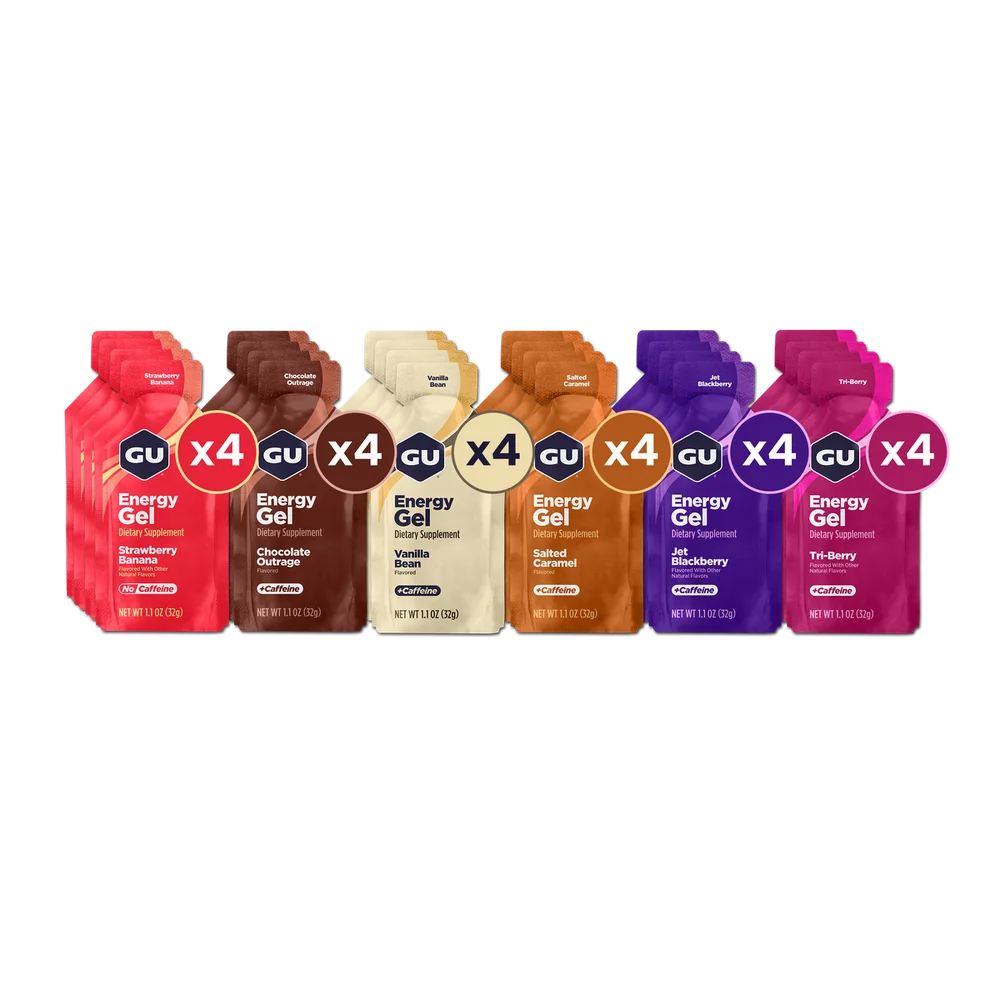
Plan
Fuel calculator
Enter your sport, how long you will be out, the effort and the heat. You get a carbs-per-hour target, a gel count and a minute-by-minute schedule. If the target feels high, build towards it over 6–8 weeks rather than jumping straight in.
Open the calculator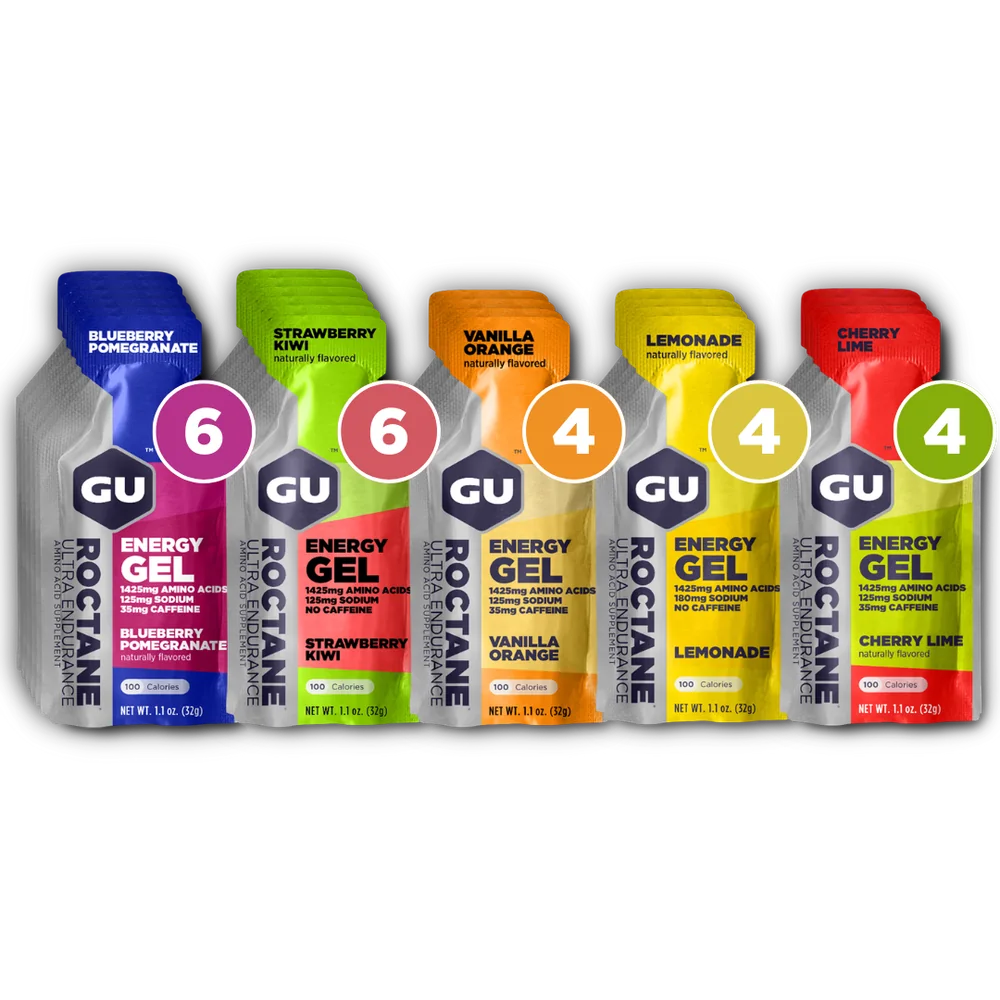
Guide
Roctane vs Original
Original Energy Gel is the everyday choice for steady training. Roctane adds electrolytes and amino acids for long races, hard key sessions and hot days, when hydration balance and muscle fatigue become the bigger problem. Which one, and when.
Read the guide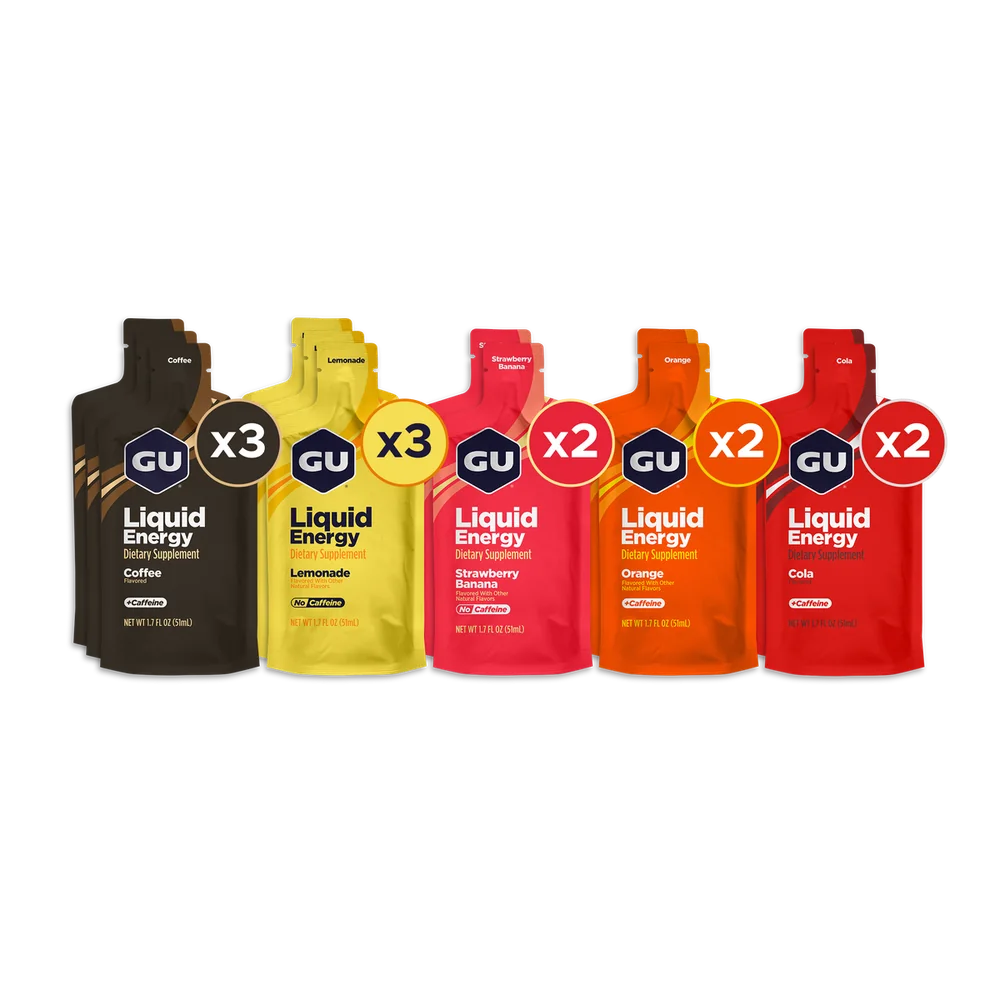
Shop
Shop the gels
Original Energy Gel, Liquid Energy Gel and Roctane Energy Gel, every flavour with its caffeine content listed. Pick the line that fits the session, then practise with it before you race.
Shop all gelsSame gels.
Your timing.
Try the schedule on a long training session first, not on race day, and sip water with every gel.