
The science
What's in a gel, and why.
Every packet does three jobs: carbohydrate for energy, sodium for hydration, amino acids for the muscles doing the work. Here is how each one works, with the actual numbers, and how the three gels differ.
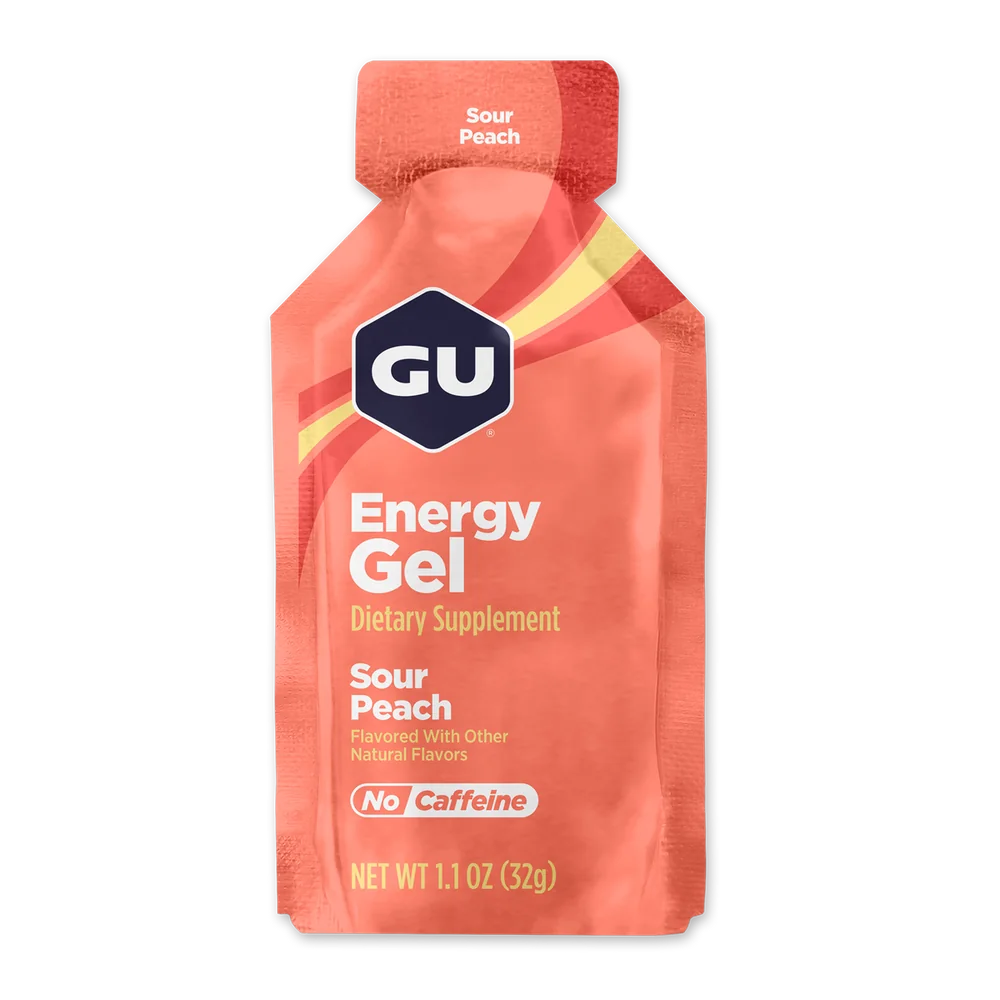
01 · Carbohydrates
Two carbs, two express lanes.
Every gel blends maltodextrin, a complex carbohydrate, with fructose, a simple one. The two are absorbed through separate, non-competing pathways, so each gets its own express lane into the bloodstream. That means more usable energy per hour than a single sugar can deliver, with less of it sitting in your stomach.
The timing is the clever part. Maltodextrin converts into fuel your muscles can tap within minutes; fructose takes several minutes longer. The stagger gives you a steady stream of energy instead of one spike and the crash that follows.
- 100 calories and 19–24 g of carbohydrate per packet, depending on the gel
- Maltodextrin is usable within minutes; fructose arrives a few minutes later and keeps it going
- Past the first hour, one gel every 20–30 minutes; aim for 200–300 calories an hour
- Small, frequent doses keep blood where it belongs during exercise: in the muscles, not the gut
one every 20–30 min →
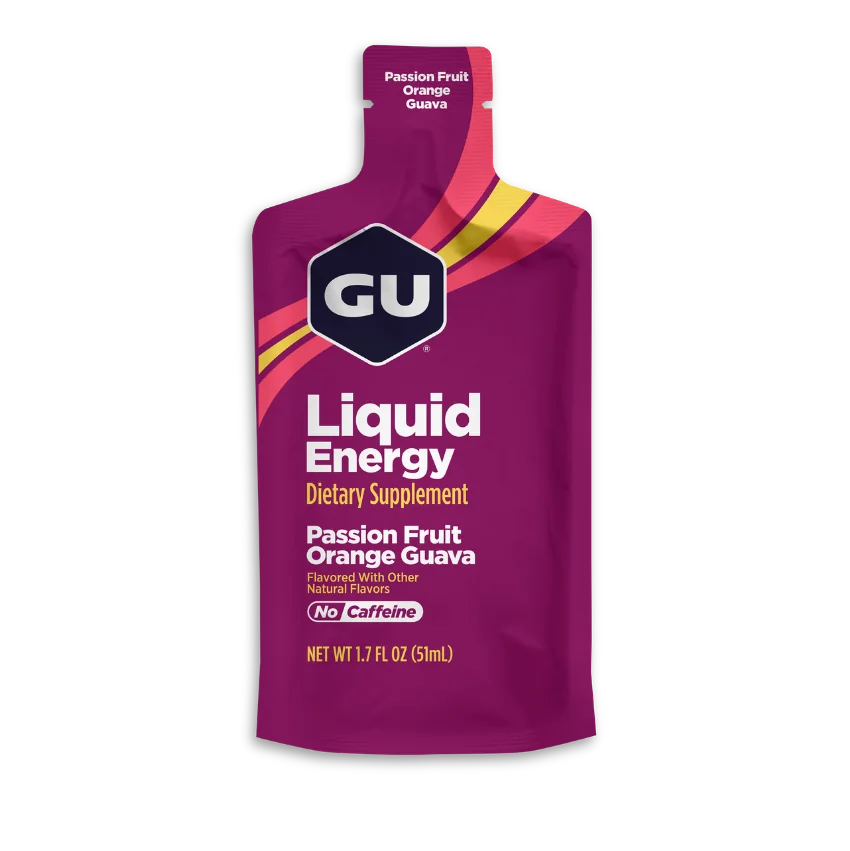
02 · Electrolytes
Sodium, because that is what you sweat out.
Sodium is the main electrolyte you lose in sweat. It helps your body hold on to fluid, keeps fluid balance in check and is essential for muscle contraction. That is why every gel carries some, and why it matters more on a humid Mumbai morning than on a cool one.
Gels are concentrated, so always take one with a few sips of water. The water speeds absorption and lets the sodium do its job. For hot, humid or all-out days, Roctane turns the dose up: up to three times the sodium of the Original gel.
- Sodium per packet: Original 60–125 mg, Liquid 75 mg, Roctane 125–180 mg
- Roctane carries up to 3x the sodium of Original, depending on flavour; Roctane Lemonade has the most of any gel
- Take every gel with a few sips of water, and keep drinking: roughly 470–890 ml (16–30 oz) of fluid an hour, more in heat
- Liquid Energy contains some water, but it is not a substitute for drinking
always with a sip of water
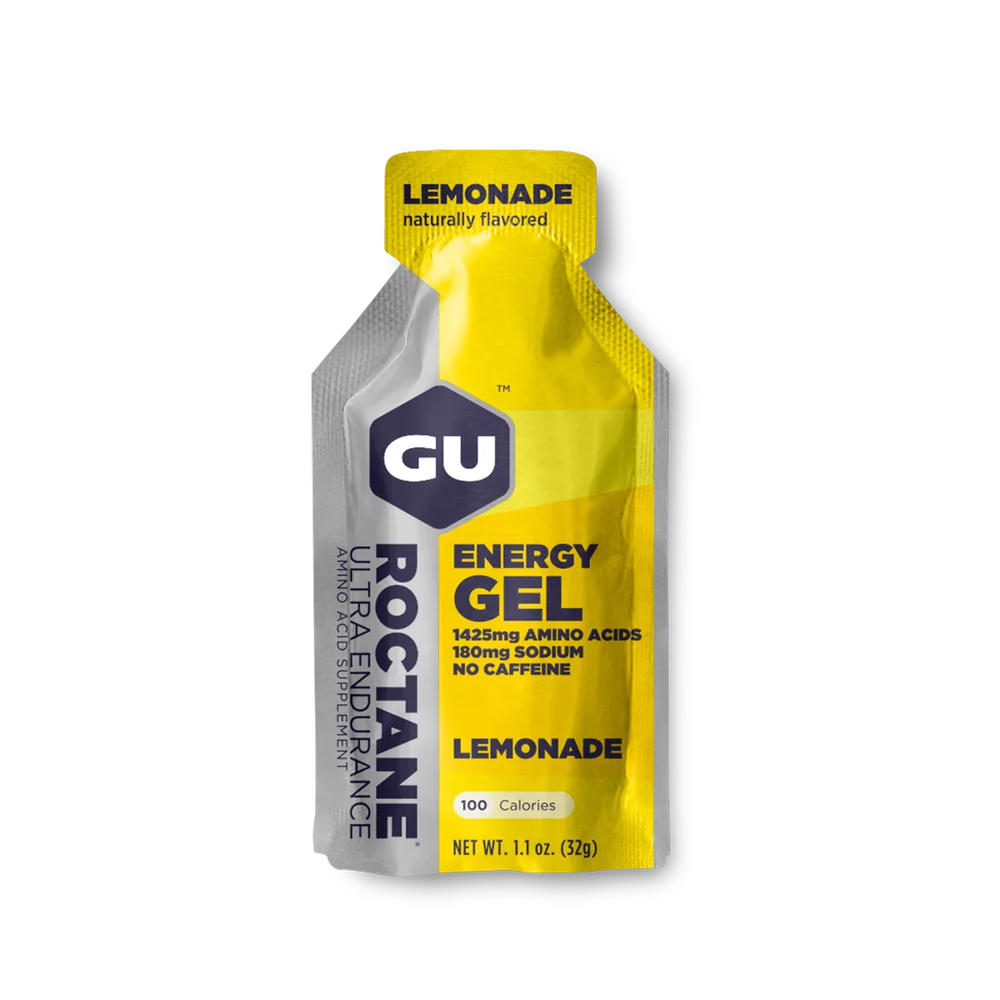
03 · Amino acids
BCAAs for the muscle doing the work.
Branched-chain amino acids, leucine, valine and isoleucine, are metabolised in the muscle itself. Taken during exercise they help limit the breakdown of muscle tissue, contribute to energy production and help hold off mental fatigue. Leucine is the one that kicks off protein synthesis, the rebuilding that makes you stronger.†
Original and Liquid carry 450 mg per packet. Roctane carries 1,425 mg and adds two more amino acids built for long, hard days: taurine, found in high concentrations in the heart, and beta-alanine, which helps delay the onset of fatigue when intensity climbs.†
† These statements have not been evaluated by a regulatory authority. This product is not intended to diagnose, treat, cure or prevent any disease.
- Original and Liquid: 450 mg amino acids per packet
- Roctane: 1,425 mg, about 3x the BCAAs, plus taurine and beta-alanine
- Taurine supports heart contractility and cardiac output over long sessions†
- Beta-alanine promotes carnosine, the buffer that counters muscle acidity in hard efforts†
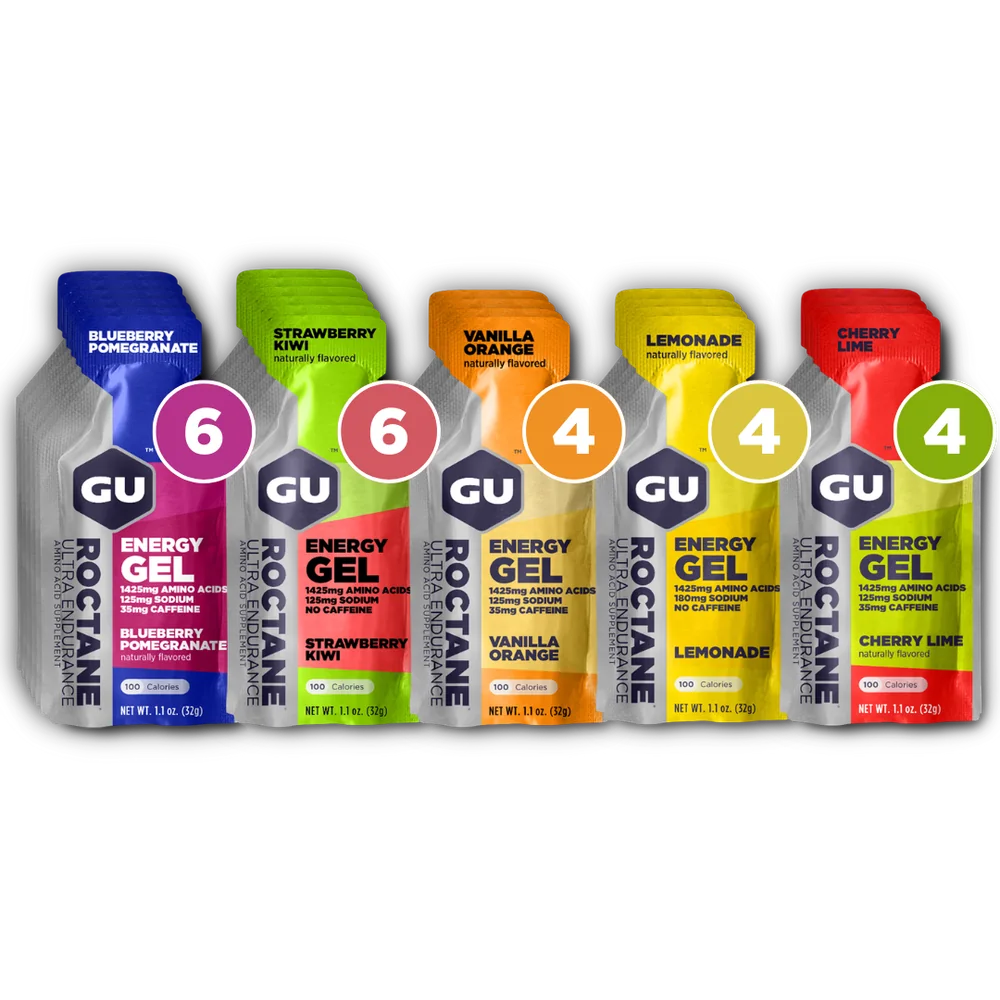
By the numbers
The packet, in numbers.
The 100-calorie serving is deliberate: small enough to take often without overloading your gut, so you can keep feeding. Everything else scales with the effort.
- 100 calories per packet, in every line
- 19–24 g carbohydrate per packet, from maltodextrin and fructose
- 60–180 mg sodium per packet, lowest in Original, highest in Roctane
- 450 mg amino acids in Original and Liquid Energy Gel
- 1,425 mg amino acids in Roctane, with taurine and beta-alanine
- 20–70 mg caffeine in caffeinated flavours; many flavours have none
Compare
Three gels, one formula, different doses.
The same dual-source carbohydrate base in every packet. Liquid changes the texture; Roctane turns up the electrolytes and amino acids.
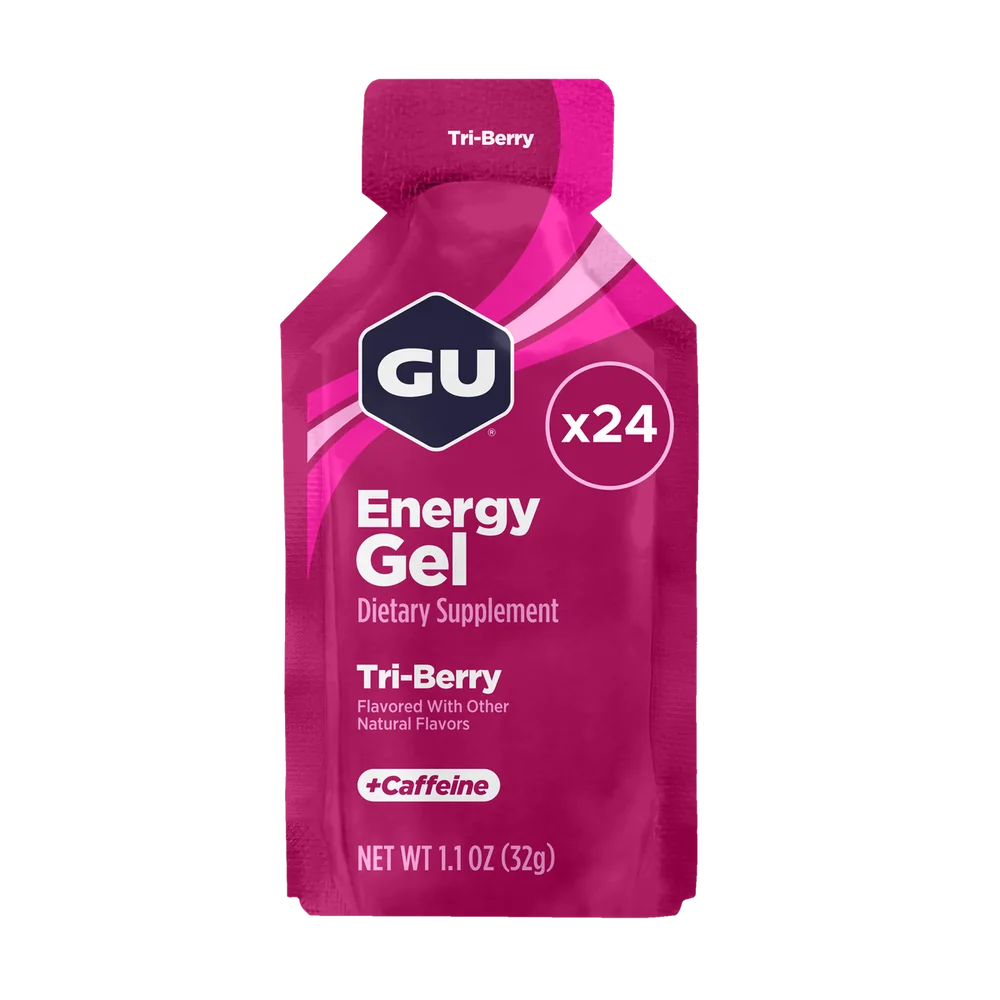
- Packet
- 32 g (1.1 oz)
- Texture
- Smooth gel
- Calories
- 100
- Carbohydrate
- 21–23 g
- Sodium
- 60–125 mg
- Amino acids
- 450 mg BCAAs
- Caffeine
- 0–40 mg by flavour
- Best for
- Everyday training, any distance
- Diet
- Vegan, gluten-free, kosher
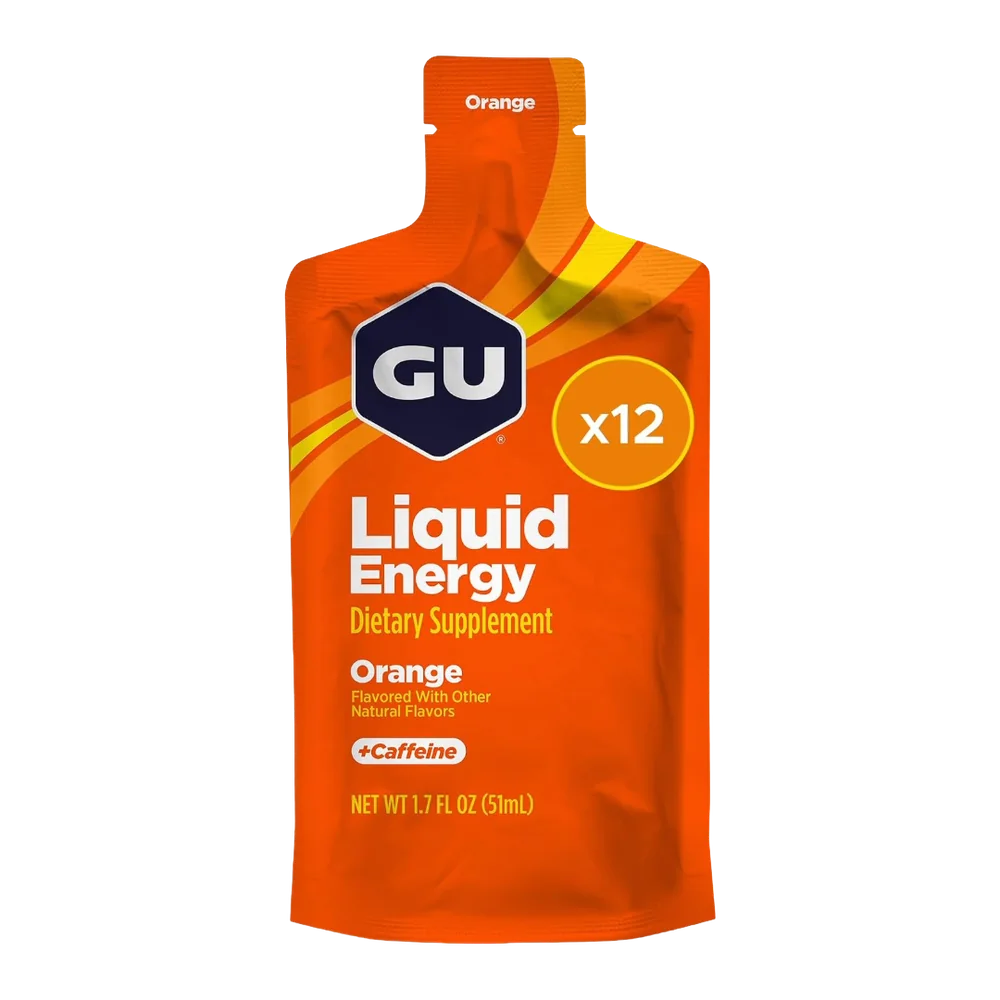
- Packet
- 60 g (2.11 oz)
- Texture
- Light liquid
- Calories
- 100
- Carbohydrate
- 24 g
- Sodium
- 75 mg
- Amino acids
- 450 mg BCAAs
- Caffeine
- 0–40 mg by flavour
- Best for
- Early starts, transitions, hot days (it freezes)
- Diet
- Vegan, gluten-free
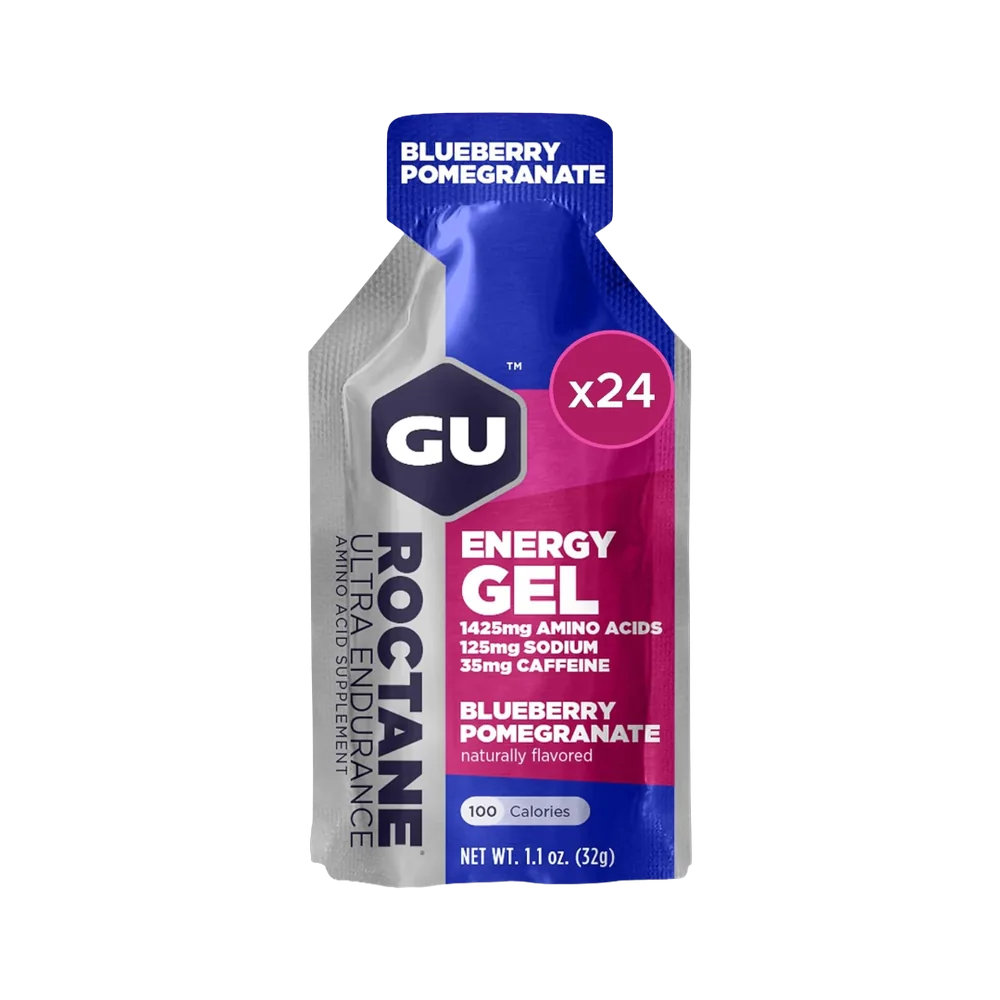
- Packet
- 32 g (1.1 oz)
- Texture
- Smooth gel
- Calories
- 100
- Carbohydrate
- 19–21 g
- Sodium
- 125–180 mg (up to 3x)
- Amino acids
- 1,425 mg + taurine, beta-alanine
- Caffeine
- 0–70 mg by flavour
- Best for
- Races, 3 h+, heat and humidity
- Diet
- Vegan, gluten-free, kosher
Go deeper
Flavour is science too.
Caffeine doses, which flavour carries what, and how a new one goes from idea to packet.
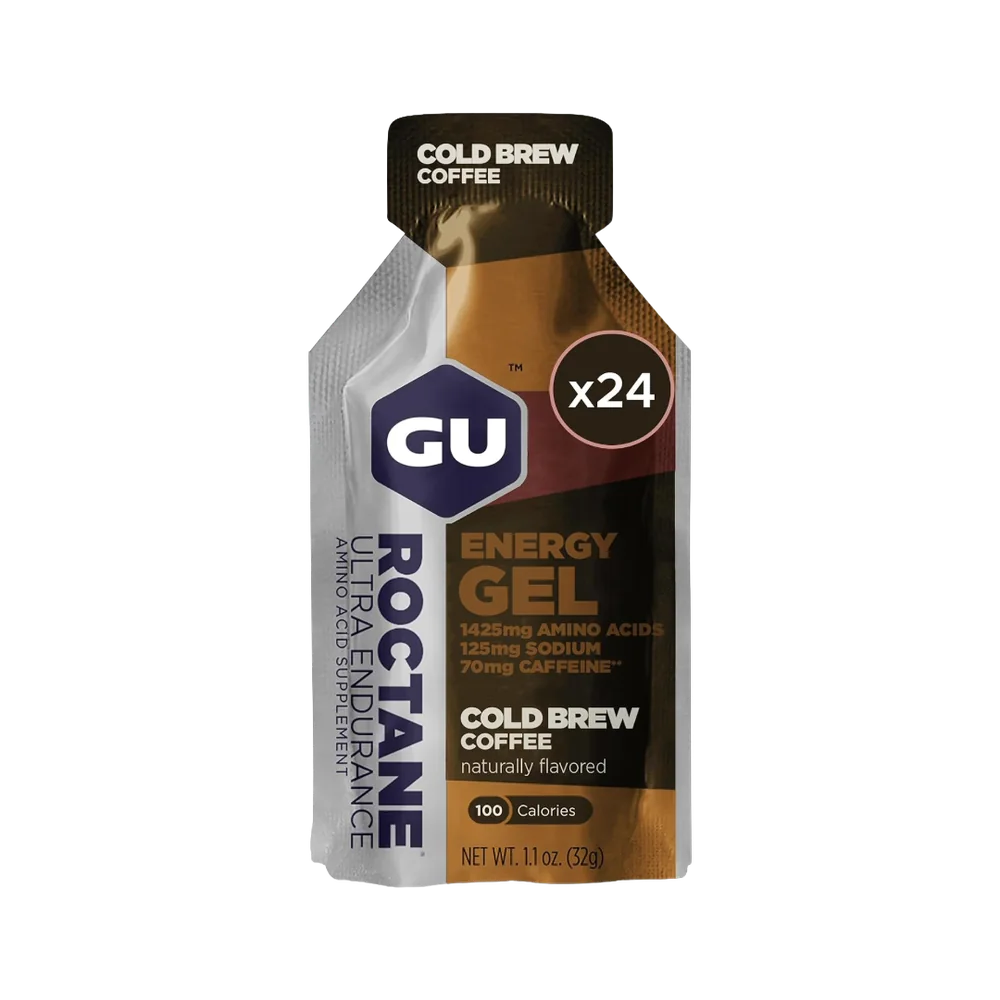
Caffeine guide
Caffeine: 20 to 70 mg, used on purpose.
Caffeine blocks adenosine, so effort feels easier and focus sharpens. Caffeinated flavours carry 20–70 mg; many carry none. When to take it (5–15 minutes before, or late in a race when fatigue bites), when to skip it, and how to test it in training first.
Read the caffeine guide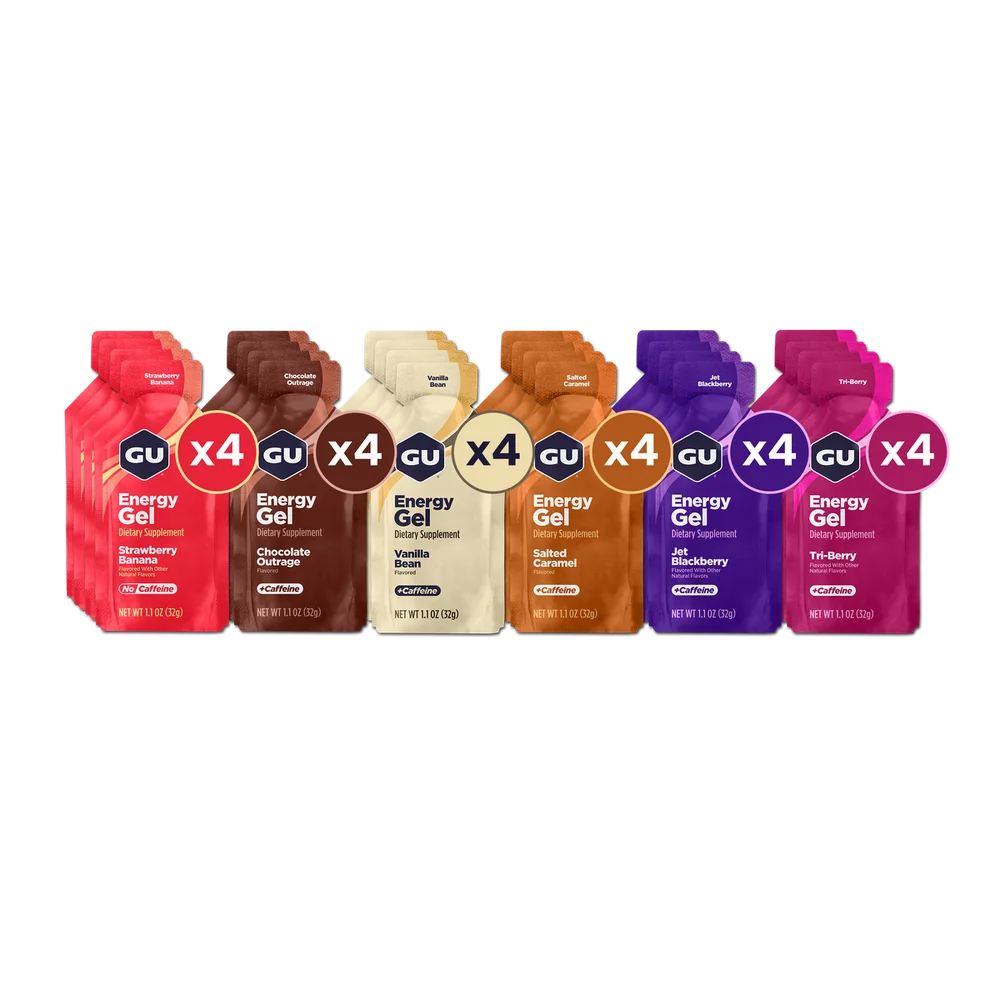
Flavour chart
Every flavour, with its caffeine.
All the flavours across the three gels in one table: caffeine per packet, which ones are caffeine-free, and standouts like Roctane Lemonade for sodium and Cold Brew Coffee at 70 mg. Plan a race-day mix instead of guessing at the aid station.
See the chart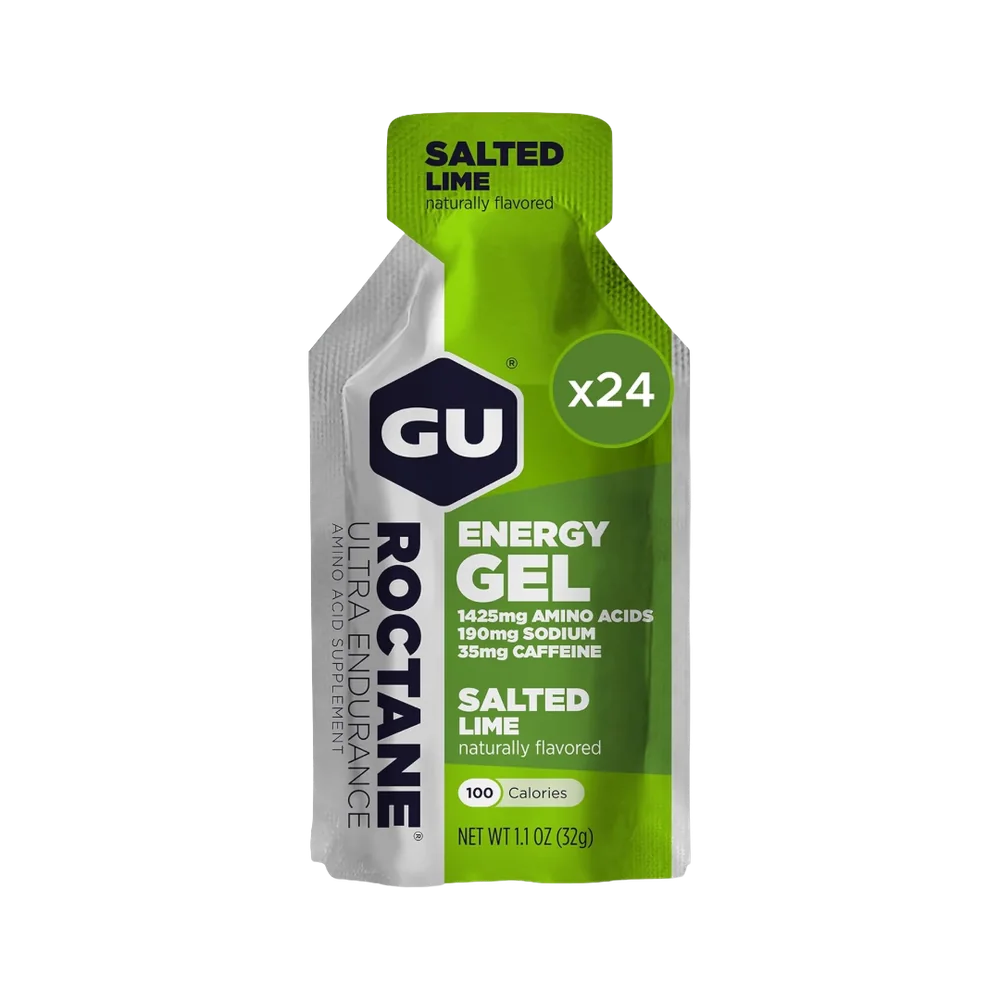
Behind the scenes
How a flavour gets made.
Salted Lime started as a brief: fuel for the hot, dry Western States 100. Five concepts, feedback from the race community, countless iterations and a small panel of supertasters later, one tart, salty lime survived. Here is the process.
Read the storyPick the gel that matches the effort.
Original for everyday training, Liquid when you would rather sip, Roctane for the long, hot and hard days. Not sure? The calculator does the maths for your distance and the weather.