
Fuel by activity
Fuelling for the marathon
The marathon is the one distance where fuelling decides the result as much as training does: the body's carbohydrate store runs out well before 42.2 km, and the fade after 30 km that runners call the wall is an empty tank. Here is what to eat and drink before, during and after, a gel plan for every session in a marathon block, and notes for hot, humid Indian starts.
Who this is for
First-timers who have never carried fuel on a run over 90 minutes, PB chasers who fade over the final 10 km, and anyone mid-block wondering what to take on a Tuesday tempo. If your goal race is shorter, start with fuelling for running.
Before: the last three days
Carb load for 2–3 days, not one dinner. Raise carbohydrate to 8–10 g per kg of body weight per day while trimming fat and fibre: 560–700 g a day for a 70 kg runner, from foods such as white rice, idli, poha, bananas and fruit juice. Keep fat under roughly 1.1 g per kg. More in carb loading made easy.
Skip the all-you-can-eat pasta night. One enormous unfamiliar meal the night before means bloating. Eat a rice- or potato-based dish with a palm-sized serving of protein and well-cooked starchy vegetables; dal, rice and a little paneer or chicken is a sound Indian version. Only foods you eat routinely.
Hydrate early. Drink 2–4 litres a day in the 48–72 hours before the race, with electrolytes rather than water alone; the race-morning dose is in the hydration table below.
Breakfast and logistics. Eat your usual pre-long-run breakfast with time to digest. Sort kit and logistics the night before and count your gels into your belt (see 7 ways to carry gels). Five minutes before the gun, take one gel with a few sips of water.
During: every 20–30 minutes, from the gun
Aim for 60–90 g of carbohydrate an hour: one gel every 20–30 minutes from the first interval, not from the moment you feel flat. Each of our gels carries 21–24 g, so a gel every 20 minutes delivers about 66 g an hour; the top of the range comes from adding the sports drink at aid stations.
Always chase a gel with water. Drink 475–950 ml an hour from aid stations so you carry less, favouring electrolytes over plain water. Dehydration makes the heart work harder and raises perceived effort; one study found drinking to a schedule rather than to thirst improved performance.
Think of fuelling as a drip, not a series of meals: something small every 15–20 minutes is far gentler on the gut than large doses an hour apart, and the best defence against mid-race stomach trouble (more in marathon hydration and nutrition tips).
For the race itself, Roctane Energy Gel is the better fit: more sodium and roughly three times the amino acids of the Original, which matters once hours of running start breaking down muscle for energy. Run the first half on caffeine-free flavours and switch to caffeinated ones from roughly halfway; check the flavour and caffeine chart first.
Tip: set a repeating 20-minute alert on your watch and obey it. A timer removes the decision, and mid-race decisions are the ones that slip.
After: the first hour
In the first hour after the finish, take in protein, carbohydrate and electrolytes to repair muscle and restock glycogen, and keep drinking fluids with electrolytes to replace what you sweated out. Curd rice, a banana and a salted nimbu pani cover all three.
Gel plan by session length
Two rules: one gel five minutes before any session, and one every 20–30 minutes once a run passes the hour (200–400 calories an hour beyond 90 minutes, or two to four gels). Counts include the pre-start gel.
| Session | Duration | Fuel plan | Which gel | Gels |
|---|---|---|---|---|
| Easy run, strides | Under 60 min | One gel 5 min before; nothing during | Original | 1 |
| Tempo, medium-long | 60–90 min | One before, then every 20–30 min | Original | 2–4 |
| Long run | 90 min to 2.5 h | Every 20–30 min with water | Roctane | 4–8 |
| Race rehearsal | 2.5–3.5 h | Every 20–30 min at goal pace with race flavours | Roctane; Liquid in the last hour | 6–11 |
| Race day | 3–5 h | Every 20–30 min plus sports drink at aid stations | Roctane; caffeinated from halfway | 8–16 |
Switch from Original to Roctane beyond 90 minutes or 16 km. Use the longest runs to find your fluid ceiling (sloshing means too much) and to rehearse the race-day plan down to the flavours. New to fuelling? Build the dose over 6–8 weeks with train your gut, then get a count for your finish time from the fuel calculator.
Which gel for which job
| Original Energy Gel | Roctane Energy Gel | Liquid Energy Gel | |
|---|---|---|---|
| Calories | 100 | 100 | 100 |
| Carbohydrate | 21–23 g | 19–21 g | 24 g |
| Sodium | 60–125 mg | 125–180 mg | 75 mg |
| Amino acids | 450 mg | 1,425 mg | 450 mg |
| Caffeine options | 0, 20 or 40 mg | 0, 35 or 70 mg | 0, 20 or 40 mg |
| In a marathon block | Runs under 90 min, pre-run top-ups | Long runs, race day, heat | Back half of a hot race; when a gel feels heavy |
All three carry 100 calories from a blend of simple and complex carbohydrates, so swaps do not change the arithmetic. Original Energy Gel covers most of a block; Liquid Energy Gel is the fallback at 35 km when you cannot face another gel. Full comparison: Roctane vs Original.
Hydration and heat in India
A pre-dawn start in Mumbai or Chennai is still humid, and inland courses in Delhi or Hyderabad warm fast once the sun is up. Humid air stops sweat evaporating, so fluid and sodium losses run high, and a rising core temperature pulls blood away from the gut, so gels that sat well on a cool long run can turn on you in the heat.
| When | How much | Notes |
|---|---|---|
| 48–72 h before | 2–4 litres a day | With electrolytes, not water alone |
| Race morning, 4 h out | About 6.5 ml per kg (450 ml at 70 kg) | A tenth of body weight in pounds, as ounces; leaves time to pass the excess |
| On course | 475–950 ml an hour | Water or sports drink from aid stations, after the first few kilometres |
| After | Fluids with electrolytes | Until sweat losses are replaced |
For a hot start: lean on Roctane's higher sodium, drink to the schedule rather than to thirst, take gels in smaller, more frequent doses, and keep a Liquid Energy Gel for the final third (frozen, it is also a slushy top-up before a hot training run). More in training and racing in the heat and muscle cramps and electrolytes.
Common mistakes
- Waiting to feel flat. By then your stores are already low; start the interval at the gun.
- Trying something new on race day. A new breakfast, flavour or first caffeinated gel belongs on a long run first.
- Gels without water. Water helps absorb the fuel; a dry gel is slower and harder on the stomach.
- One big pasta dinner instead of a proper load. Three days at 8–10 g per kg fills the tank; one plate fills the gut.
- Not fuelling training runs. The gut adapts only to what it is asked to do.
If the day goes sideways anyway, stay calm and run on the plan you have.
FAQ
Do I really need gels to run a marathon?
You need carbohydrate from somewhere, and a gel is the most compact, predictable way to carry it: one every 20–30 minutes replaces glycogen as you use it, which is how you avoid the wall. Real food can work on a slow long run; on a 42.2 km course gels are easiest to carry and dose (see gels vs real food).
Original or Roctane for the marathon?
Roctane. Same calories and similar carbohydrate, but up to three times the sodium and amino acids, which is what you want in a race lasting hours, especially in heat. Switch to Roctane for any run over 90 minutes or 16 km; use Original for everything shorter.
What if I cannot stomach gels late in the race?
Switch to Liquid Energy Gel: the same 100 calories and amino acids as the Original in a thin, drinkable format with 24 g of carbohydrate. Keep sipping water with it, and shrink the dose rather than skip it; a tired gut tolerates smaller amounts more often.
These are general guidelines, not medical or individualised nutrition advice; needs vary with body size, training status, health history and conditions, so consult a qualified sports dietitian before making significant changes. These statements have not been evaluated by a regulatory authority. This product is not intended to diagnose, treat, cure or prevent any disease.
Next steps
- Get a gel count for your own finish time and pace from the fuel calculator.
- Turn the count into a kilometre-by-kilometre plan with marathon gel strategy.
- Stock the block in all gels.
Next steps
Turn the playbook into a plan.
The playbook gives you the timing. These three take you the rest of the way: the numbers, the line, the packets.
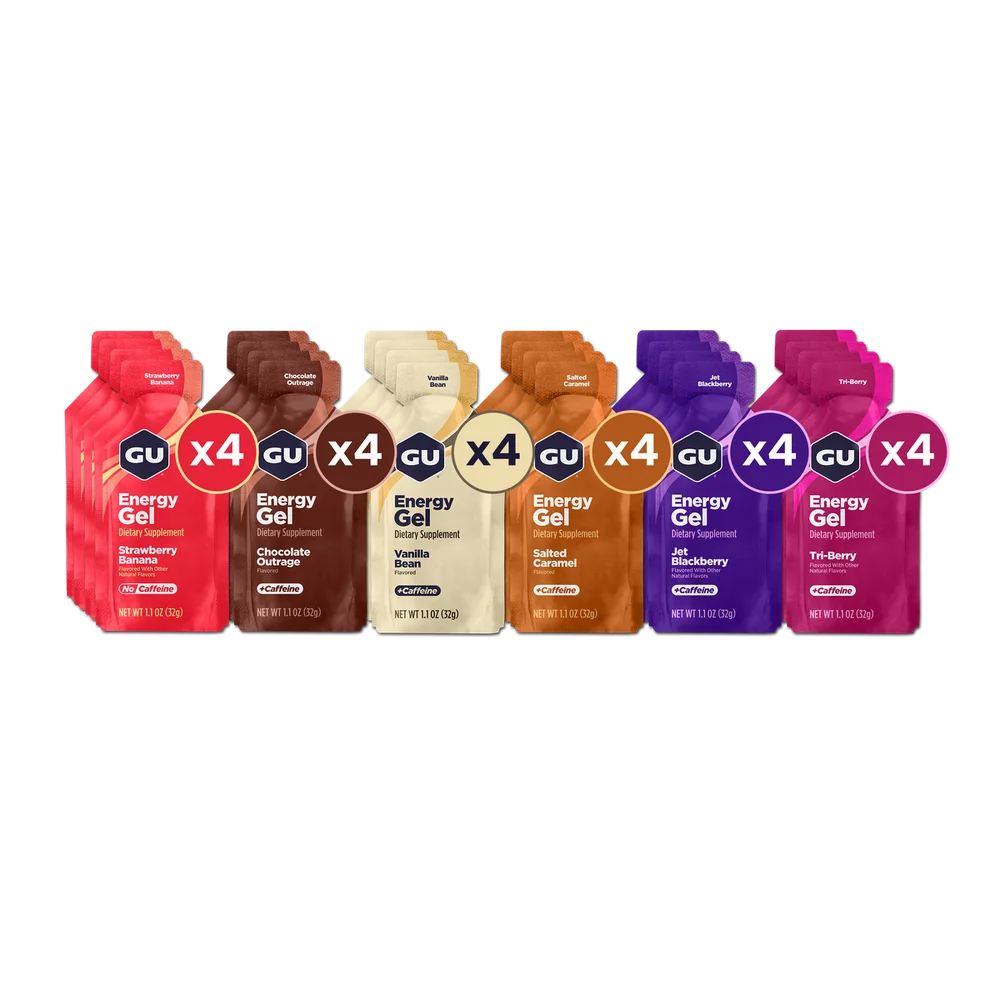
Plan
Fuel calculator
Enter your sport, how long you will be out, the effort and the heat. You get a carbs-per-hour target, a gel count and a minute-by-minute schedule. If the target feels high, build towards it over 6–8 weeks rather than jumping straight in.
Open the calculator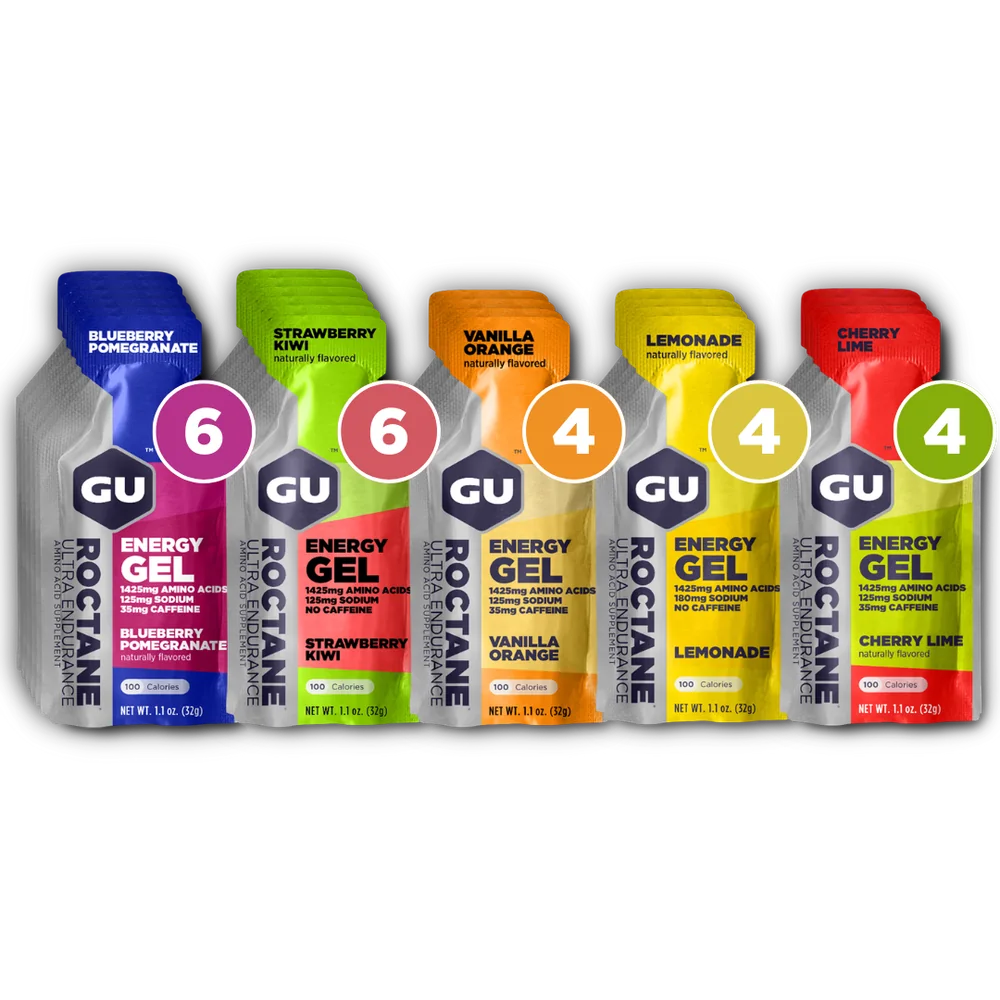
Guide
Roctane vs Original
Original Energy Gel is the everyday choice for steady training. Roctane adds electrolytes and amino acids for long races, hard key sessions and hot days, when hydration balance and muscle fatigue become the bigger problem. Which one, and when.
Read the guide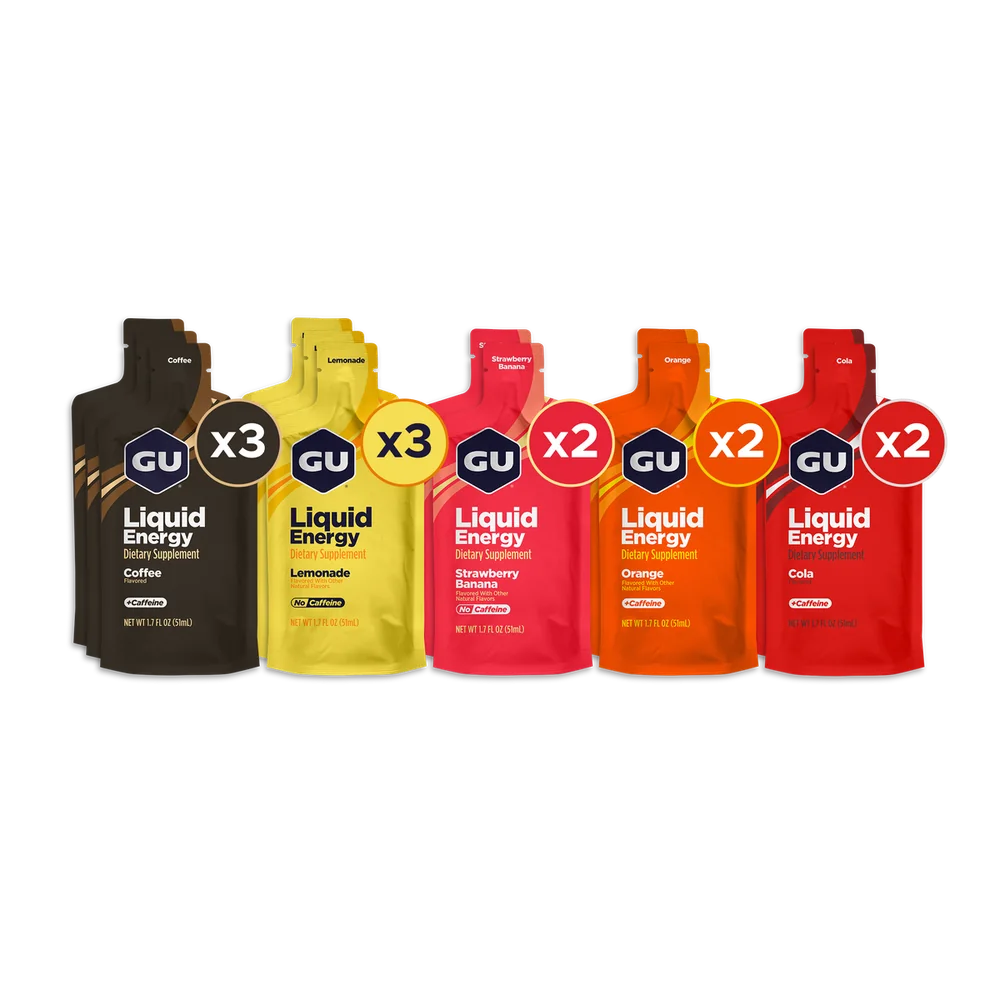
Shop
Shop the gels
Original Energy Gel, Liquid Energy Gel and Roctane Energy Gel, every flavour with its caffeine content listed. Pick the line that fits the session, then practise with it before you race.
Shop all gelsSame gels.
Your timing.
Try the schedule on a long training session first, not on race day, and sip water with every gel.