
Fuel by activity
Fuelling for triathlon
Triathlon's fuelling problem is that you cannot eat in the water, have the most room to eat on the bike, and feel every mistake on the run. The plan is simpler than it looks: a carbohydrate-rich meal 2–3 hours out, a gel 5 minutes before the swim, then a gel every 20–30 minutes on the bike and the run, each with a few sips of water. Here is how to apply that before, during and after, by session length, and in Indian heat.
Who this is for
Anyone racing or training for a triathlon, from sprint distance (750 m swim, 20 km bike, 5 km run) through standard and half-iron distance, and anyone doing brick sessions, a ride followed straight away by a run. If you are eyeing a first sprint, it is written for you too.
A sensible beginner week has two swims, two bikes, two runs and a full rest day, with at least one run a brick off the bike. Rehearsing T1 (swim to bike) and T2 (bike to run) is also when you practise reaching for a gel. The short version is in triathlon fuelling basics.
Before the race
- 2–3 hours before: a light, carbohydrate-rich meal that sits easily, such as porridge, toast or a couple of plain idlis. Eat what you have eaten before training, not a race-morning experiment.
- 30–45 minutes before: fluid and electrolytes. You will not be eating in the water, so top up sodium now; starting well-hydrated also lowers the chance of cramping when race-day adrenaline hits.
- 5 minutes before the swim: one gel with a few sips of water, so you reach the bike with full stores.
During: swim, bike and run
The swim
Nothing to eat here. Race-day swim cramps are usually nerves, dehydration and cooler water arriving together, so hydrate beforehand and ease in with a few relaxed strokes rather than diving in cold.
T1 and the bike
The bike is where the race is fuelled. Most triathletes who fade on the run did not run out of fitness; they under-fuelled on the bike. Take a gel as you leave T1, then one every 20–30 minutes while riding, always with water from your bottle. On a hot course, Roctane Energy Gel earns its place here, with two to three times the sodium of Original and three times the amino acids, which is why it is the gel many racers keep for transitions. Ride-specific detail is in fuel for cycling.
T2 and the run
Take a gel in the last few minutes of the bike, just before T2, so you start the run topped up. Then hold the interval: one gel every 20–30 minutes through the run. Running off the bike is hard enough without a heavy stomach, which is why many people switch to Liquid Energy Gel, 24 g of carbohydrate in a thinner, sip-able form. Caffeinated flavours in the back half help with late-race focus, provided you have tested them in training. The run leg in more detail: fuel for running.
Tip: tie each gel to a landmark, not a feeling. Gel out of T1, gel at every second aid station on the bike, gel before T2, gel at the first run aid station. Decided in advance, nothing is left to a tired brain at kilometre 8 of the run.
After the race
The race has drawn down muscle glycogen and broken down muscle tissue, and the job afterwards is to restore both: a meal or drink with carbohydrate and protein soon after finishing, plenty of fluid, and salt if you came in crusted with it.
Gel plan by session length
The interval is the same for a Tuesday brick and for race day: one gel 5 minutes before you start, then one every 20–30 minutes once you are riding or running, with water. In a race the clock starts at T1, not at the swim start.
| Session length | Typical session | Before | During | Gels in total | Which gel |
|---|---|---|---|---|---|
| Under 1 hour | Swim set, 5 km run, short brick | 1 gel 5 min before | Water only | 1 | Original |
| 1–2 hours | Sprint triathlon, 90-minute brick | 1 gel 5 min before | Gel out of T1, every 20–30 min on bike and run, gel before T2 | 3–5 | Original; Roctane if hot |
| 2–3 hours | Standard-distance triathlon, long brick | 1 gel 5 min before | Every 20–30 min from T1 onwards | 5–8 | Roctane on the bike, Liquid on the run |
| 3 hours and beyond | Half-iron distance, long training days | 1 gel 5 min before | Every 20–30 min, as much as the gut can comfortably process | 7–12+ | Rotate all three; Roctane for sodium and amino acids |
What each gel carries, per packet:
| Gel | Calories | Carbohydrate | Sodium | Amino acids | Caffeine options |
|---|---|---|---|---|---|
| Original Energy Gel | 100 | 21–23 g | 60–125 mg | 450 mg | 0, 20 or 40 mg |
| Liquid Energy Gel | 100 | 24 g | 75 mg | 450 mg | 0, 20 or 40 mg |
| Roctane Energy Gel | 100 | 19–21 g | 125–180 mg | 1,425 mg | 0, 35 or 70 mg |
The full comparison is in Roctane vs Original.
Hydration and heat in India
Every gel goes down with a few sips of water, which speeds absorption. Liquid Energy Gel contains some water but does not replace drinking: plan on roughly 475–890 ml of fluid per hour of activity (16–30 oz), adjusted to your sweat rate and the weather.
A coastal morning in Mumbai or Chennai is humid before sunrise; inland in Hyderabad the air is drier but the bike leg can finish in full sun. Heat pushes blood to the skin and away from the gut, so a gel that was easy in a cool session can feel heavy at 32 °C. Three adjustments:
- More sodium from the gel itself. Roctane carries up to three times the sodium of Original. Lemonade has the most sodium of any gel in the range, and Salted Lime was created for hot, dusty racing.
- Thinner formats late. Liquid Energy Gel in smaller, more frequent sips is easier on a hot stomach, and because of its water content it can be chilled or frozen into a slush before a hot session.
- Pre-load. The 30–45 minute electrolyte window before the swim matters more when you are sweating before the gun.
For cramp, see muscle cramps and electrolytes; for acclimatising, training and racing in the heat.
Common mistakes
- Under-fuelling the bike. The most common cause of a bad run. The bike is the easiest place to eat; use it, and do not wait for the run to start.
- Race-day experiments. A new flavour, caffeine dose or drink on the day is how stomachs go wrong; use it in a brick first.
- Gels without water, or caffeine too early. Fluid with every gel; caffeinated flavours kept for the back half, with the day's total added up from the flavour and caffeine chart.
- Not knowing where the gels are. A gel you cannot find in T1 is a gel you do not take; decide now between tri-suit pocket, top tube and race belt (7 ways to carry gels).
- Never training the gut. Eating at 20–30 minute intervals at race intensity is a skill, built over 6–8 weeks of long rides and bricks with train your gut.
Tip: do a full dress rehearsal on your last long brick before race week: race breakfast, pre-swim gel, bike fuelling, gel before T2, run. Fix what felt wrong there, not the plan on race morning.
FAQ
When should I take gels during a triathlon?
One 5 minutes before the swim, one as you leave T1, then one every 20–30 minutes through the bike and the run, including one just before T2. Nothing during the swim itself.
Do I need Roctane, or is Original enough?
For a sprint in mild weather, Original Energy Gel does the job. Roctane's two to three times the sodium and three times the amino acids matter on hot courses, past two to three hours and at high intensity; many triathletes use it on the bike and in transitions, and Original or Liquid on the run.
Why do I only cramp in the swim on race day?
Usually nerves, dehydration and cold-water shock arriving together. Fluid and electrolytes 30–45 minutes before the start, a proper warm-up in the water, and a relaxed first few hundred metres.
These are general guidelines, not medical or individualised nutrition advice; needs vary with body size, training status, health history and conditions, so consult a qualified sports dietitian before making significant changes. These statements have not been evaluated by a regulatory authority. This product is not intended to diagnose, treat, cure or prevent any disease.
Next steps
- Put your expected swim, bike and run times into the fuel calculator for a gel count built on your race.
- Start the 6–8 week gut-training progression on your long bricks with train your gut.
- Stock the bento box from all gels.
Next steps
Turn the playbook into a plan.
The playbook gives you the timing. These three take you the rest of the way: the numbers, the line, the packets.
Plan
Fuel calculator
Enter your sport, how long you will be out, the effort and the heat. You get a carbs-per-hour target, a gel count and a minute-by-minute schedule. If the target feels high, build towards it over 6–8 weeks rather than jumping straight in.
Open the calculator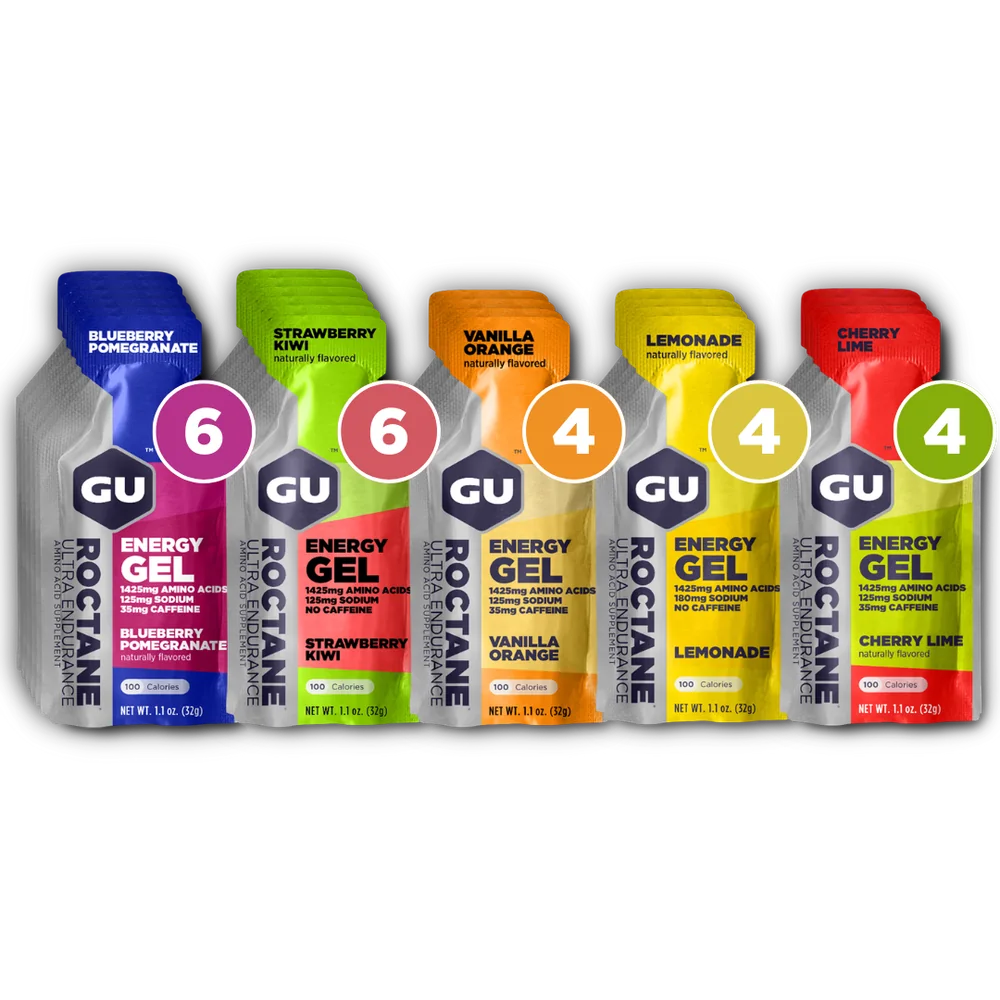
Guide
Roctane vs Original
Original Energy Gel is the everyday choice for steady training. Roctane adds electrolytes and amino acids for long races, hard key sessions and hot days, when hydration balance and muscle fatigue become the bigger problem. Which one, and when.
Read the guide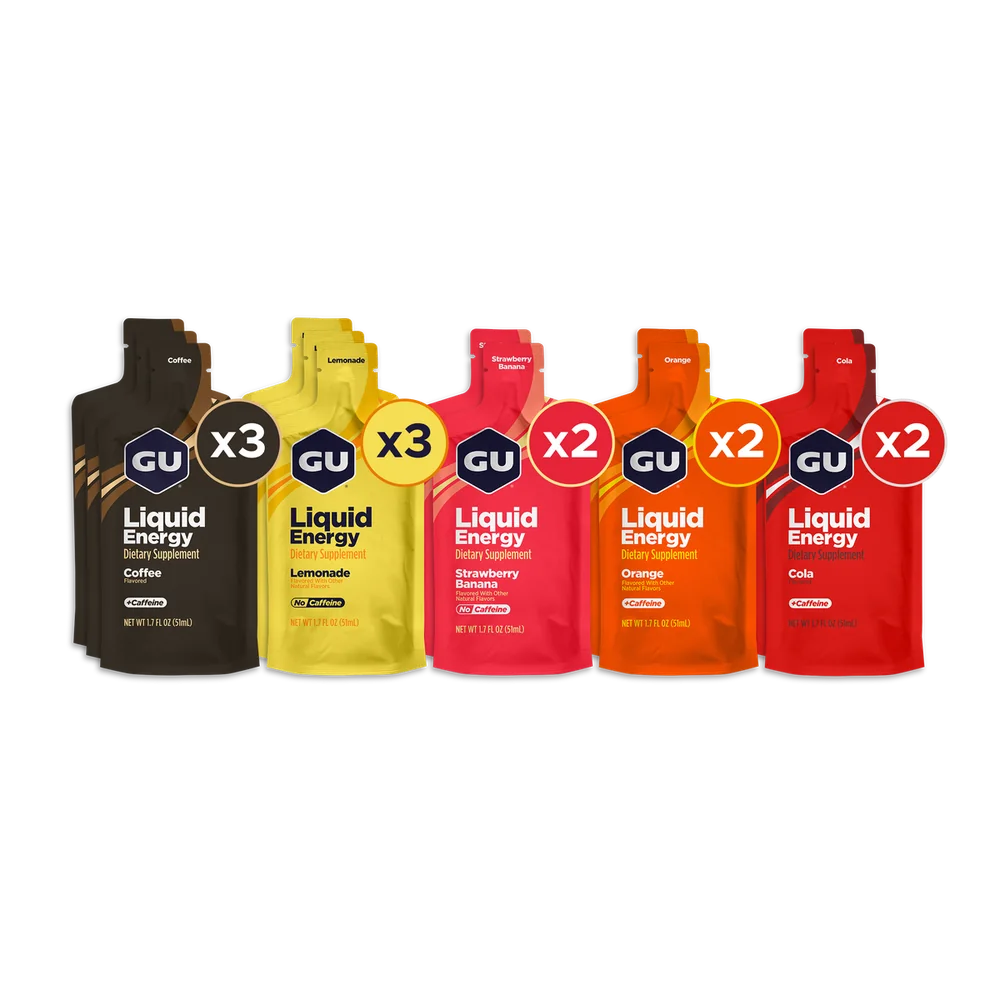
Shop
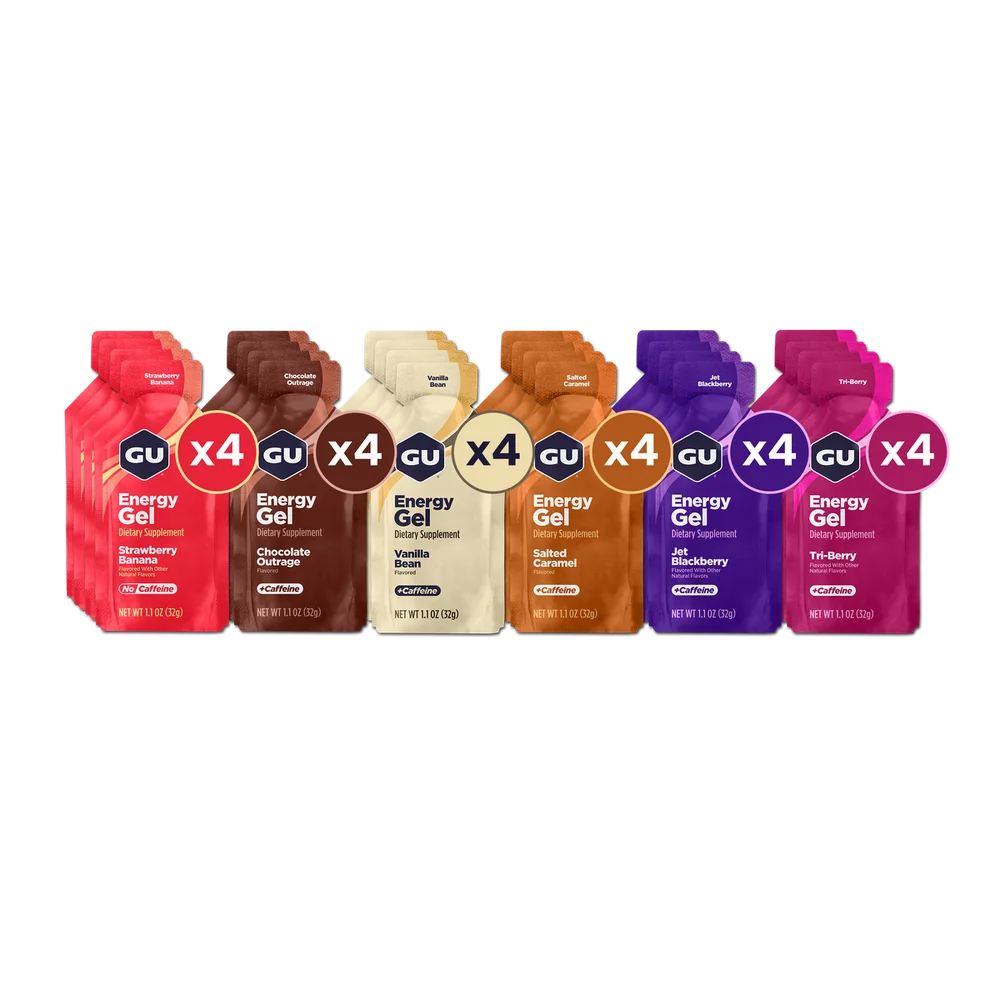
Shop the gels
Original Energy Gel, Liquid Energy Gel and Roctane Energy Gel, every flavour with its caffeine content listed. Pick the line that fits the session, then practise with it before you race.
Shop all gelsSame gels.
Your timing.
Try the schedule on a long training session first, not on race day, and sip water with every gel.