
Fuel guide
Marathon gel strategy: pace, timing and gut tolerance
A marathon burns through stored carbohydrate faster than breakfast can replace it, which is why so many runners slow sharply late in the race. The fix is not complicated: most marathoners need 8 to 15 Original Energy Gels, one every 20 to 30 minutes with water, and a gut that has rehearsed the routine for 6–8 weeks. This guide turns those numbers into a plan for your finish time, where to take each gel on course, and when caffeine earns its place.
The three numbers behind every marathon gel plan
Three figures; the rest is arithmetic.
- Time on course. Your expected finish time sets the total carbohydrate to replace.
- Target carbohydrate rate, in grams per hour. 50 g/h is a sensible starting point if you have not trained your gut; 75 g/h reflects a gut-trained rate.
- Carbohydrate per gel. An Original Energy Gel carries 21 g, the unit that converts a rate into a gel count.
Hours on course × target rate (g/h) ÷ carbs per gel = gel count. A runner aiming for 4:00 at 50 g/h needs about 2.4 gels an hour, or 9 to 10 gels across the race.
Gel count by finish time
| Finish time | Gels at 50 g/h | Gels at 75 g/h |
|---|---|---|
| Sub-3:00 | 8 | 11 |
| 3:00–3:30 | 8 | 12 |
| 3:30–4:00 | 9 | 14 |
| 4:00–4:30 | 11 | 16 |
| 4:30–5:00 | 12 | 17 |
| 5:00+ | 12+ | 18+ |
Both columns assume Original Energy Gels at 21 g each. The 50 g/h column works out to a gel roughly every 25 minutes. Reaching 75 g/h from gels alone would mean spacing them tighter than the standard 20–30 minutes, so runners pair a gel every 20 minutes with a carbohydrate drink in between, which lowers the gel count without lowering total carbohydrate.
Carbohydrate per serving is similar across the range, so the maths holds if you swap formats: Roctane Energy Gel also carries 21 g, with two to three times the sodium and amino acids for hot, long or hard efforts, and Liquid Energy Gel carries 24 g in a thinner format for when a gel feels heavy late in a hot race.
Example plan: 3:30, 4:00 and 4:30 finishers
This table is an example, not a prescription: the formula and guidance above applied to three common finish times, with each interval converted to an approximate distance so you can map it onto the course.
| Target finish | Carb target | Gel interval | Roughly every | Original gels (21 g) | Notes |
|---|---|---|---|---|---|
| 3:30 | 50 g/h, more if gut-trained | Every 20–25 min | 4–5 km | About 8 (12 at 75 g/h) | Short aid-station windows; rehearse at goal pace. Roctane suits the intensity. |
| 4:00 | 45–60 g/h | Every 23–28 min | 4–5 km | 9–11 (14 at 75 g/h) | The widest, most improvised band. Switch to Liquid Energy Gel partway to beat flavour fatigue. |
| 4:30 | 50 g/h | Every 25 min | About 4 km | About 11 (16 at 75 g/h) | More fuelling events, higher cumulative gut load; build Liquid Energy Gel into the back half. |
In every case, take the first gel 5 minutes before the start and run the interval from the gun. Beyond five hours the same logic extends to 12 or more gels, and the thinner format matters more, because prolonged effort reduces blood flow to the gut and slows gastric emptying.
Tip: carry one more gel than the plan says. A missed water station or a slower day stretches your time on course, and a spare costs nothing. See 7 ways to carry gels for belts, pockets and pinning.
When to take each gel
| Effort duration | First gel | Subsequent gels |
|---|---|---|
| Under 60 min | 5 min before the start | Not usually needed |
| 60–90 min | 5 min before the start | One gel at 45–60 min |
| 90 min to 3 hr | 5 min before the start | Every 25–30 min after the first |
| 3 hr and beyond | 5 min before the start | Every 20–30 min throughout |
A marathon sits in the bottom row for almost everyone. Do not wait until you feel flat, by which point your stores are already low: start the clock at the gun and keep the interval steady.
Where to take gels on course
Always take a gel with water. Water supports absorption and offsets the extra gut load of concentrated carbohydrate, so the simplest rule is to tie each gel to a water station.
- Study the route map a week out and note the water station spacing. Plan each gel for the station nearest your interval and open the packet a minute or two before you reach it.
- Take gels on the flat, not on a climb where swallowing is harder; on Indian city courses, that means before a flyover, not on top of it.
- Start hydrated: 200–350 ml of fluid in the 1–2 hours before the gun, adjusted for body size, sweat rate and weather. Starting dry raises the risk of gut distress.
On a hot, humid morning, rising core temperature pushes blood toward the skin and away from the gut, slowing gastric emptying and raising the chance of GI symptoms. For a warm start in Mumbai or Hyderabad, Liquid Energy Gel in smaller, more frequent doses is easier to manage than the same carbohydrate all at once.
Train your gut: start 6–8 weeks out
Mid-race stomach trouble is rarely random; it usually comes from unfamiliar nutrition or too much, too fast. The gut adapts to the demand placed on it, provided the demand is introduced gradually: a systematic review of gut-training studies found that after two weeks of structured practice, athletes reported about 47% less gut discomfort on average, and malabsorbed carbohydrate fell by 45–54%.
If you are new to fuelling or raising your target, start at least 6–8 weeks before race day and build on long runs. Progression matters more than perfection. The source example starts at 30 g/h with a 75 g/h target:
| Week | Carbohydrate per hour |
|---|---|
| Current intake | 30 g/h |
| Week 1 | 30 g/h |
| Week 2 | 40 g/h |
| Week 3 | 50 g/h |
| Onward | Keep building until you reach the target |
If bloating, fullness or nausea appear, hold at the same level for another week or vary your carbohydrate sources; if symptoms persist, step back one level. Jumps of +5 g/h on long runs help fine-tune tolerance. Rehearse your exact race-day interval and gel count at goal pace well before race week. The full method is in train your gut.
The payoff is real: among 160 runners at the 2022 Seville Marathon, those who reached 60–90 g/h were significantly more likely to break three hours, yet the median runner fell well short of that target. Most runners under-fuel.
Caffeine: save it for the back half
Caffeine lowers perceived effort, sharpens focus and helps spare glycogen, which matters most when the race gets hard. A practical approach is to run the first half on caffeine-free flavours and switch to caffeinated ones from roughly halfway, so the effect lands in the closing kilometres. Original flavours carry 0, 20 or 40 mg of caffeine; Roctane flavours carry 0, 35 or 70 mg. Check the flavour and caffeine chart, add up your race-day total, and trial the same sequence on a long run first. An untested caffeine dose is as risky as an untested gel.
Tip: write the plan on your wrist or on tape around your bottle: gel number, kilometre mark for each, and where you switch to caffeine. Mid-race decisions are the ones that go wrong; a written plan removes them.
FAQ
How many gels do I need for a marathon?
Most marathoners need 8 to 15 Original Energy Gels, one every 20 to 30 minutes. Multiply hours on course by your target rate in g/h and divide by 21 g per gel: a 4:00 finisher at 50 g/h needs about 9–10.
Can I reach 75 g/h with gels alone?
Only by spacing them tighter than the 20–30 minute guidance. The practical route is a gel every 20 minutes with a carbohydrate drink in between, once your gut is trained to that rate.
What if I get stomach cramps when I fuel?
That usually signals unfamiliar fuel or too much too soon. Hold your current rate for another week, take water with every gel, try the thinner Liquid Energy Gel, and build up in +5 g/h steps over 6–8 weeks.
These are general guidelines, not medical or individualised nutrition advice; needs vary with body size, training status, health history and conditions, so consult a qualified sports dietitian before making significant changes. These statements have not been evaluated by a regulatory authority. This product is not intended to diagnose, treat, cure or prevent any disease.
Next steps
- Get a gel count for your own finish time with the fuel calculator.
- Build the 6–8 week progression into your long runs with train your gut.
- Stock up for race day in all gels.
Next steps
Read it. Now use it.
Three places to go from here: the full plan, the calculator that does the maths for your distance and the weather, and the gels themselves.
Plan
How to fuel
The whole plan, hour by hour. One gel about five minutes before you start, then one every 20–30 minutes once you are out past the hour, with a few sips of water each time. Do not wait until you feel hungry or flat.
See the plan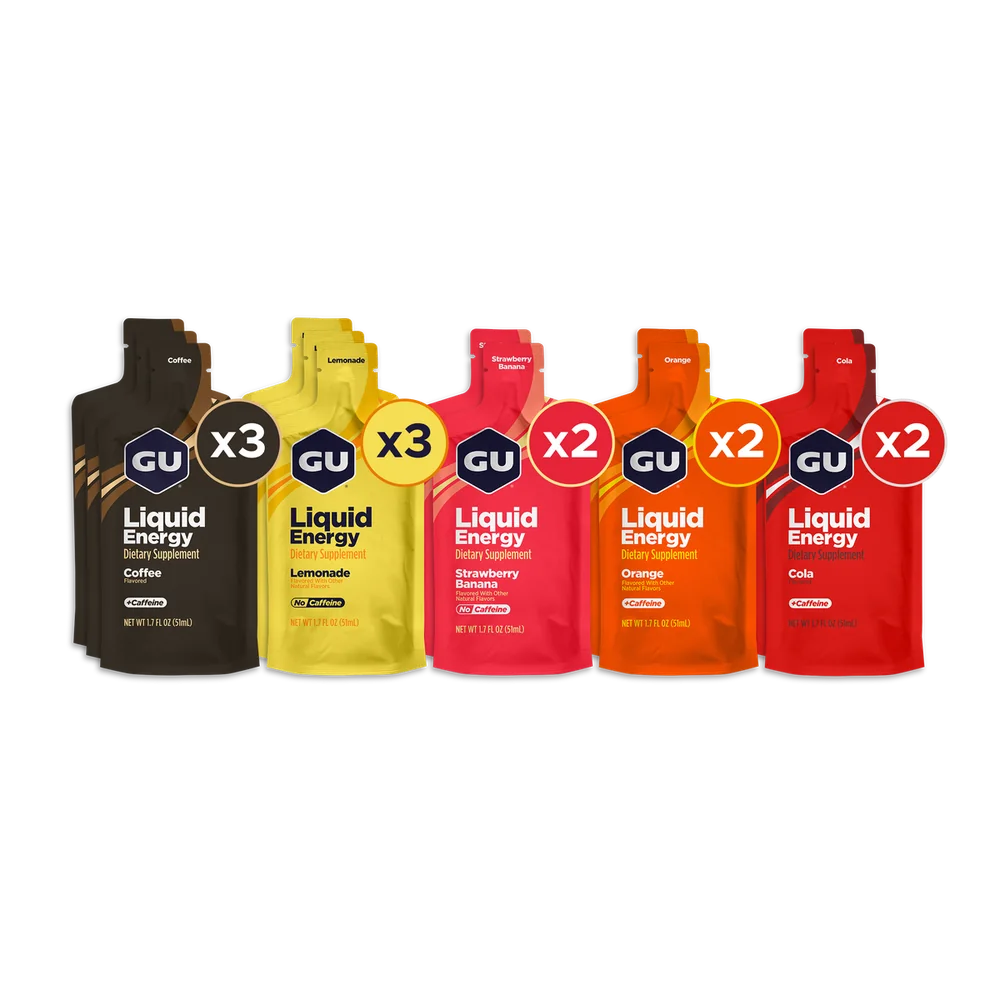
Tool
Fuel calculator
Activity, duration, intensity, body weight and the heat go in; carbs per hour, how many gels to carry and a minute-by-minute schedule come out. If the target feels high, start lower and build towards it over 6–8 weeks of gut training.
Get your numbers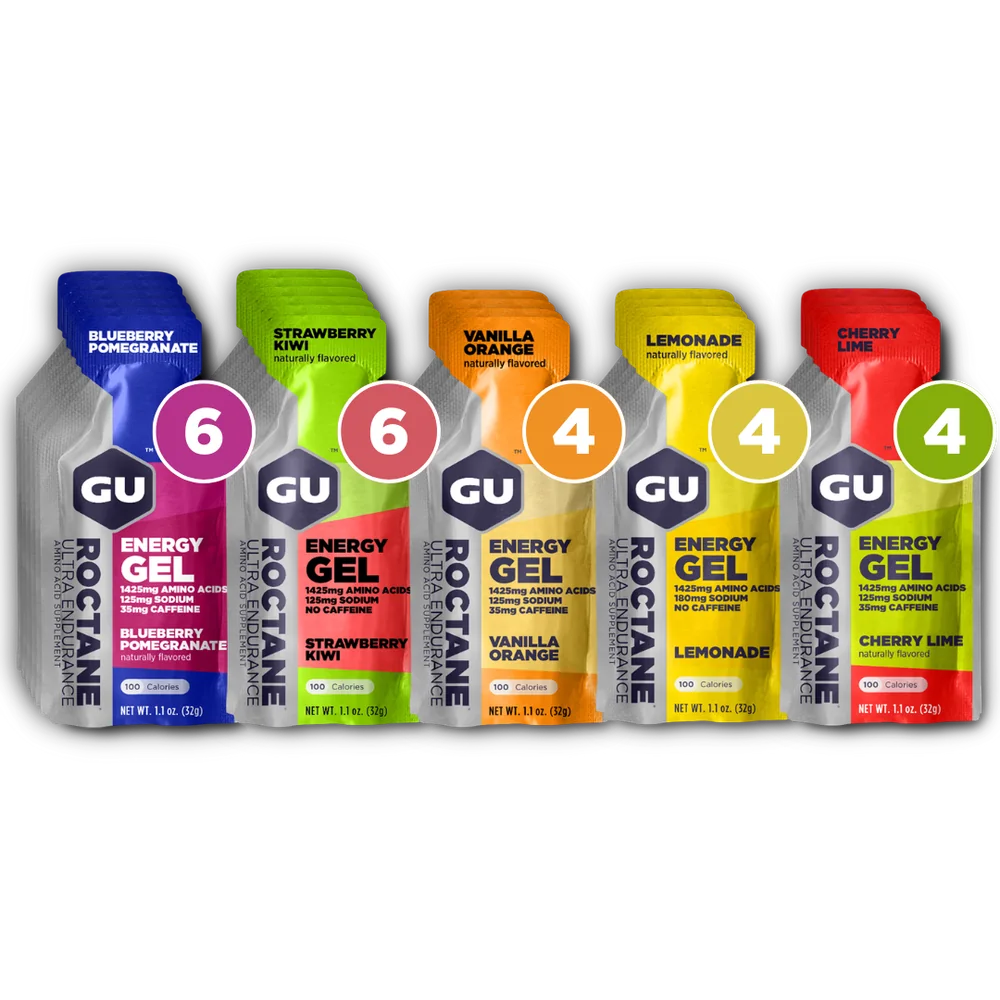
Shop
Shop the gels
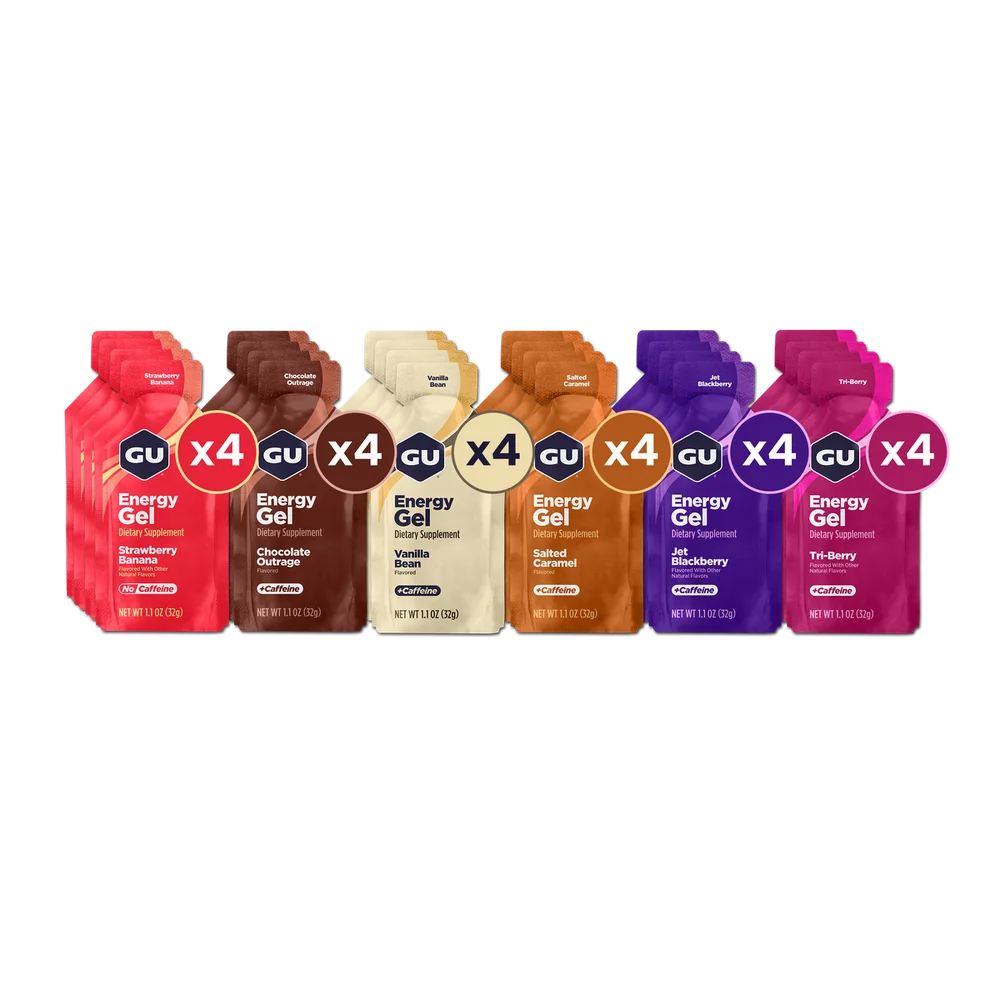
Three lines, one job. Original for everyday training, Liquid Energy for the same carbohydrate in a lighter, smoother form, and Roctane with up to three times the sodium and three times the amino acids for the longest, hardest days.
Shop all gelsPractise the plan on a long session,
not on race day.
Nothing new on the day. Test the timing in training, note what your stomach says, and adjust from there.