
Fuel by activity
Fuelling for hiking and trekking
A hike is not a run. Most of the day sits at a low, uneven intensity where the body burns mostly fat and trail mix does the job; then the path tilts up and the legs want carbohydrate now. Hikers who confuse the two fade on the flats or finish their gels before the one climb that needed them. Here is when real food is enough, when a gel earns its place, and how the plan changes in Indian heat or on a Himalayan pass.
Who this is for
- Day hikers on a four-to-eight-hour trail with one serious climb: a Western Ghats fort, Triund, a hill-station ridge.
- Multi-day trekkers in Himachal, Uttarakhand, Sikkim or Ladakh, where days are long, air is thin and appetite goes missing.
- First-timers who want one rule and a backup in the pocket.
New to gels? Start with gel 101.
Why hiking fuels differently from running
Running holds you at a sustained, raised intensity. Hiking rarely does: pace shifts with gradient, footing and the group, so most of it sits at a lower intensity even when it lasts far longer. Intensity decides the fuel: at low intensity most energy comes from fat, and as effort climbs towards a moderate running pace the body leans on muscle glycogen and blood glucose instead. So a hiker needs steady calories for the hours of moderate effort, plus quick hits saved for the climb or the summit push.
Leaning on fat does not mean skipping food. Over many hours glycogen still runs down, and a case study of a thru-hiker on a multi-month trek found that under-eating led to measurable loss of body composition and a hike cut short by fatigue and injury. Eat every one to two hours, more often in heat, at altitude and on steep ground.
Before the hike
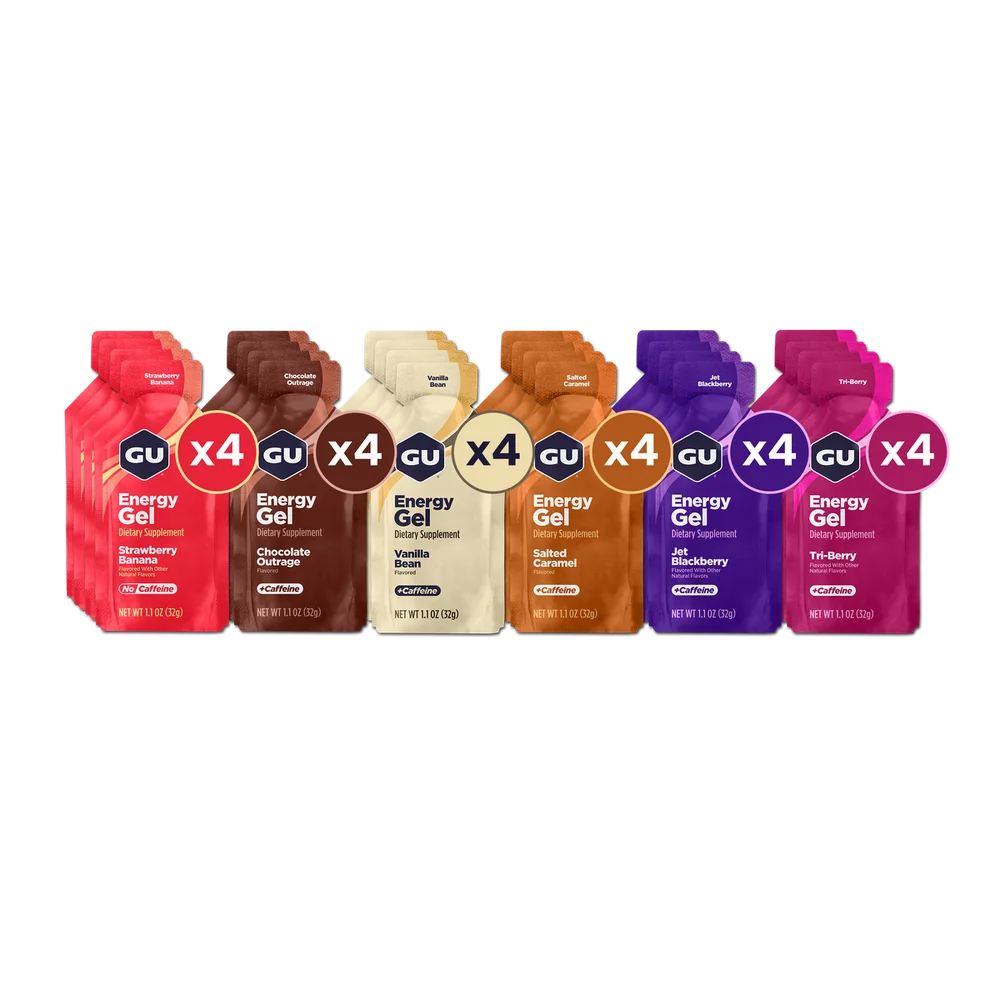
Eat a proper meal before you set off and start hydrated, with electrolytes in the first bottle on a warm start. Many Indian treks begin before dawn without breakfast; one Original Energy Gel five minutes before you start walking, with a few sips of water, covers you until the first food stop. Pack one gel for each hard climb or pass crossing, plus a spare; everything else is real food and water.
During the hike
The steady miles
The approach and the long traverses are real-food territory: trail mix, dried fruit, bananas, chikki, a paratha roll, eaten every one to two hours by the clock, not by hunger. Most ultra-endurance athletes mix whole foods with engineered fuel to keep the gut settled: whole food for the low-intensity stretches, gels when energy has to be fast and predictable (gels vs real food).
The climb
A steep pitch is the moment for a fast, concentrated dose. Take it before the gradient turns hard, not after your legs have told you it is too late, with a few sips of water. Original Energy Gel is the default; for the hottest, longest or hardest stretches, Roctane Energy Gel carries two to three times the sodium and amino acids (Roctane vs Original). On a hot exposed climb or at altitude, when a gel is hard to stomach, Liquid Energy Gel gives the same energy in a thinner format that goes down easier (liquid vs traditional gels).
| Gel | Calories | Carbohydrate | Sodium | Amino acids | Best on trail |
|---|---|---|---|---|---|
| Original Energy Gel | 100 | 21–23 g | 60–125 mg | 450 mg | Climbs, late dips, backup |
| Roctane Energy Gel | 100 | 19–21 g | 125–180 mg | 1,425 mg | Heat, intensity, long summit pushes |
| Liquid Energy Gel | 100 | 24 g | 75 mg | 450 mg | Hot climbs and altitude |
Tip: set an hourly alarm and eat when it goes off, hungry or not. At altitude the appetite goes first, and those least inclined to stop and eat are the ones who most need to.
After the hike
Recovery is a meal, not a packet: carbohydrate to restore what you burned and protein to rebuild muscle, soon after you stop, with plenty to drink. On a multi-day trek, recovery between days matters as much as fuelling within one: eat properly at camp even when tired, and rotate flavours and formats to avoid flavour fatigue.
A gel plan by hike length
| Hike | Steady fuel | Gels (approx.) | When | Which gel |
|---|---|---|---|---|
| Under 2 hours: morning hill walk | Breakfast and water | 0–1 as backup | 5 min before, if breakfast was skipped | Original |
| Half day, 2–4 hours: Kalsubai, a Sahyadri fort | Real food every 1–2 hours | 1–2 | Before the steep section; one spare | Original |
| Full day, 4–8 hours: Triund, a long Ghats ridge | Real food every 1–2 hours, more in heat | 2–4 | Before each hard climb and the summit push | Original; Roctane in heat or on the final push |
| Multi-day trek: Himalayan trail, Ladakh pass | Real food on a schedule, full meals at camp | 2–4 a day, more on the pass day | Before the pass, or when solid food will not go down | Roctane on long or hot days; Liquid at altitude; rotate flavours |
| Fastpacking or timed ascent | Treat it as a run | 2–3 an hour | Every 20–30 min from 20–30 min in | Original; Roctane in heat |
Counts assume one gel per hard section plus a spare, with real food between. Fastpackers at running intensity fuel like runners: a gel every 20 to 30 minutes with water (fast vs steady energy). Put your hike into the fuel calculator for a count.
Hydration, heat, cold and altitude in India
Hiking rarely produces the dripping sweat of a hard run, so fluid loss is easy to underestimate, yet sodium losses are real and highly individual. Gels replace carbohydrate, not fluid; energy vs hydration covers both.
- Heat. As core temperature rises, blood moves to the skin and away from the gut, slowing digestion and raising the chance of stomach trouble. On an exposed ridge in April or in Ghats monsoon humidity, small and frequent beats one big snack. Sip every 10 to 15 minutes, add electrolytes to the bottle and lean on Roctane, with up to three times the sodium of Original. See training and racing in the heat and muscle cramps and electrolytes.
- A frozen start. Liquid Energy Gel has a higher water content than Original, so it freezes; one from the freezer is a cooling slushy for the first hot climb.
- Cold. A winter trek to Kedarkantha or Sandakphu raises calorie needs while blunting thirst, and one trek can swing from below freezing to above 30 °C. Keep eating on the schedule (cold-weather fuelling).
- Altitude. Above 5,000 m food can feel like the last thing you want, right when the body needs it most: a study of trekkers and porters on a multi-week Himalayan expedition found both groups ate well under what the trek demanded and lost muscle and body water. Lost appetite up high is a known response, not a sign you need less. Eat by the clock.
Common mistakes
- Gels on the flats. Eaten on the easy approach, none left for the climb.
- Waiting for the legs to complain. A gel works best before the gradient bites, not halfway up.
- Skipping food because you are not hungry. Cold and altitude blunt appetite without reducing need.
- Caffeine by accident. Original flavours carry 0, 20 or 40 mg and Roctane flavours 0, 35 or 70 mg; keep caffeinated gels for the summit push, not the walk into camp (caffeinated vs non-caffeinated, flavour and caffeine chart).
- Packets on the trail. The empty packet goes back in the hip-belt pocket; see 7 ways to carry gels.
Tip: a first hike does not need an optimised plan. One gel as backup, alongside normal food and water, is enough; the goal is learning what your body asks for.
FAQ
Do I need energy gels for hiking?
On longer or more strenuous hikes, yes, for the moments that call for fast, concentrated carbohydrate: a steep climb, a bonk late in the day, the final push to a summit. They do not replace steady eating across the hike, and a short easy walk needs none.
How often should I eat on a long hike?
Every one to two hours is a reasonable baseline, more often in heat, at altitude and on steep terrain. At running intensity, take a gel every 20 to 30 minutes.
Which gel is best for trekking at altitude?
Liquid Energy Gel when a regular gel is hard to stomach, Roctane Energy Gel for long, hot or high-intensity days where its extra sodium and amino acids matter, and Original Energy Gel for everything else. Rotate them over a multi-day trek.
These are general guidelines, not individualised nutrition advice. These statements have not been evaluated by a regulatory authority. This product is not intended to diagnose, treat, cure or prevent any disease.
Next steps
- Get a gel count for your route from the fuel calculator.
- Read the longer hiking fuelling strategy.
- Fill the hip-belt pocket from all gels.
Next steps
Turn the playbook into a plan.
The playbook gives you the timing. These three take you the rest of the way: the numbers, the line, the packets.
Plan
Fuel calculator
Enter your sport, how long you will be out, the effort and the heat. You get a carbs-per-hour target, a gel count and a minute-by-minute schedule. If the target feels high, build towards it over 6–8 weeks rather than jumping straight in.
Open the calculator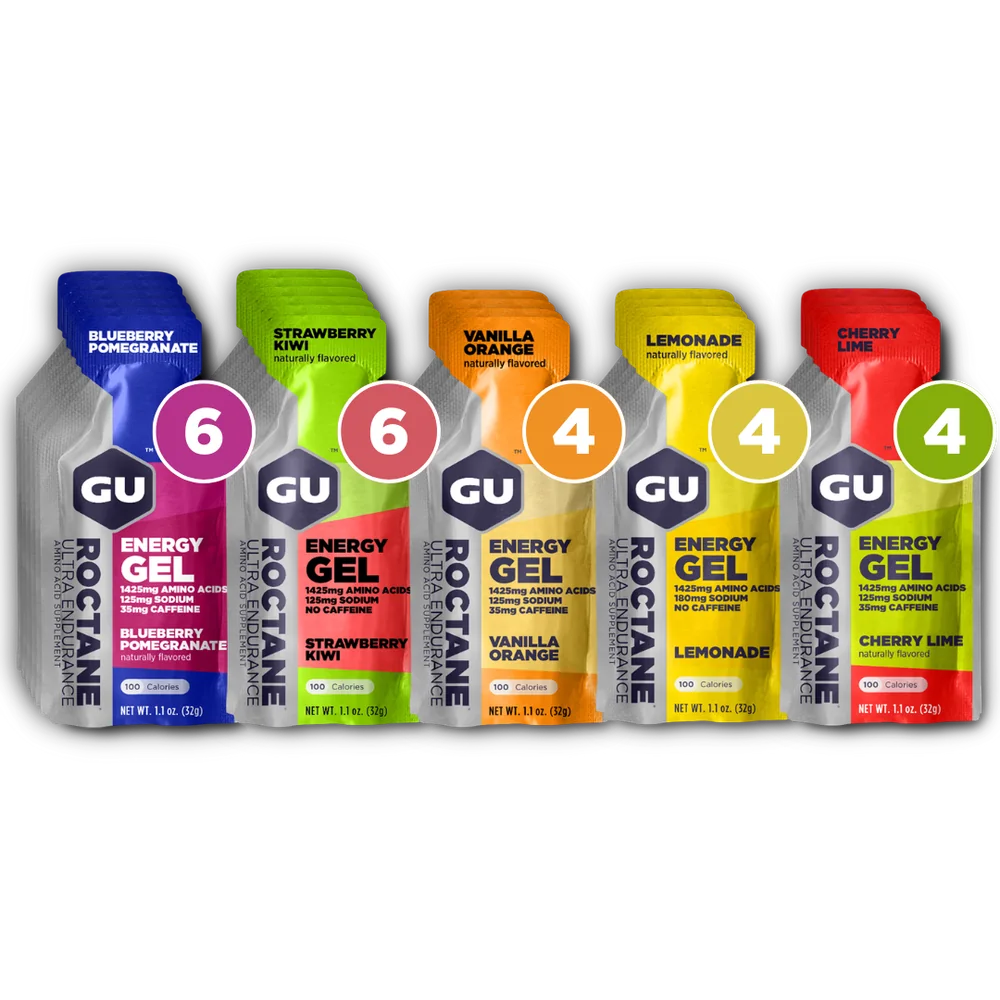
Guide
Roctane vs Original
Original Energy Gel is the everyday choice for steady training. Roctane adds electrolytes and amino acids for long races, hard key sessions and hot days, when hydration balance and muscle fatigue become the bigger problem. Which one, and when.
Read the guide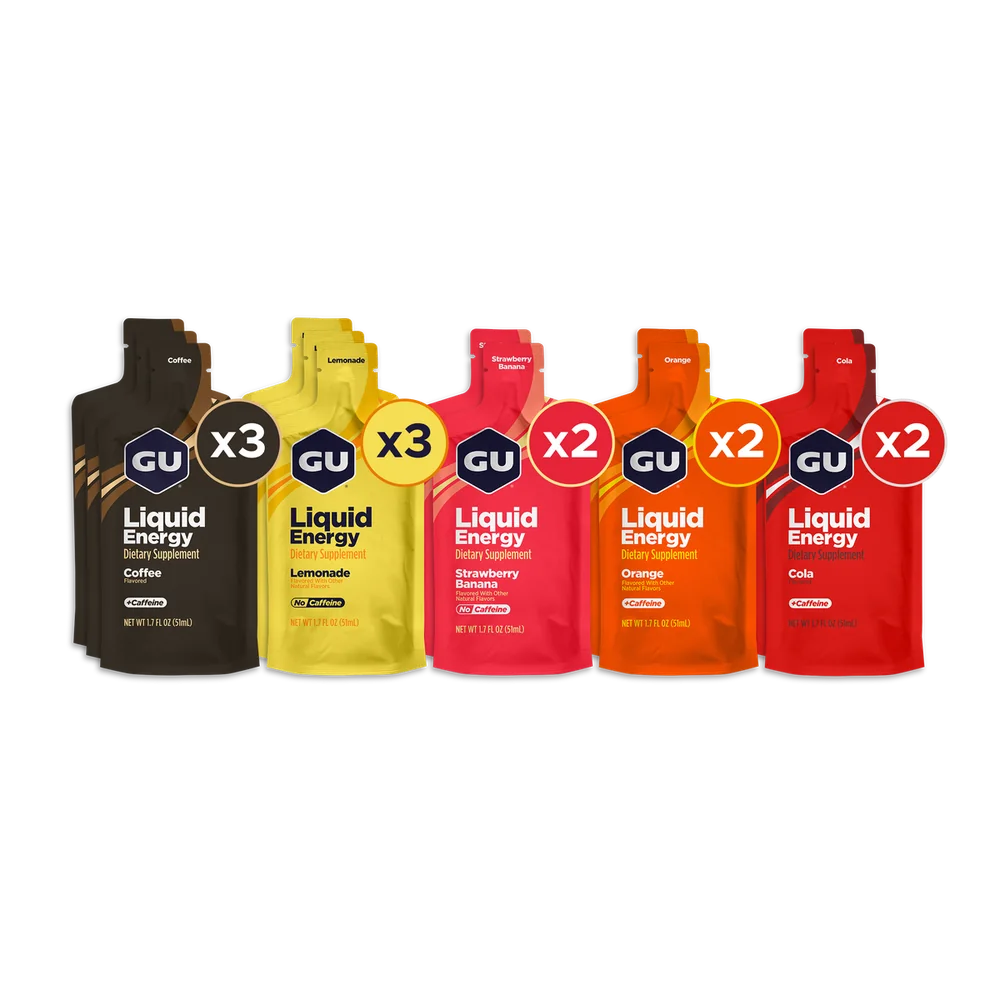
Shop
Shop the gels
Original Energy Gel, Liquid Energy Gel and Roctane Energy Gel, every flavour with its caffeine content listed. Pick the line that fits the session, then practise with it before you race.
Shop all gelsSame gels.
Your timing.
Try the schedule on a long training session first, not on race day, and sip water with every gel.