
Fuel guide
Energy vs hydration: what your body actually needs
Energy and hydration are two different jobs. A gel's job is carbohydrate: 100 calories your muscles can use within minutes, plus a modest dose of sodium. Water's job is to keep blood volume, sweating and temperature control working. Fading or cramping late in a session often traces back to one of the two, and the fix depends on which. This guide separates them, puts numbers on each, and shows when a gel plus plain water is enough and when to add an electrolyte drink or capsules.
Energy vs hydration at a glance
| Energy | Hydration | |
|---|---|---|
| Job | Carbohydrate for working muscles | Fluid and electrolyte balance |
| Key nutrient | Carbohydrate (maltodextrin and fructose in our gels) | Water, plus the sodium lost in sweat |
| When it matters most | Efforts beyond about an hour, and higher intensity | Every session; more so in heat, humidity and beyond an hour |
| What delivers it | Energy gels | Water, with an electrolyte drink or capsules when losses run high |
| What running short feels like | Fading pace, flat legs, fatigue | Heart rate climbing at the same pace, headache, effort feeling harder than it should, cramps |
Why they are separate jobs
During exercise your muscles run largely on carbohydrate stored as glycogen. As those stores fall, fatigue sets in, and the only way to slow that is to put carbohydrate back in while you move. Many endurance athletes aim for 30–60 g of carbohydrate an hour; a gel every 30 minutes lands you mid-range, every 20 minutes takes you to the top of it.
At the same time you are sweating out fluid and electrolytes, mainly sodium. Lose too much and your heart has to work harder to push blood to the muscles, the effort feels harder than the pace justifies, and headaches and cramps follow. One product does not fix both. Carbohydrate needs water to be absorbed, and water on its own carries no energy. So the practical answer for nearly every endurance session is the same: gels for energy, water for hydration, and extra electrolytes only when sweat losses outrun what the gels supply.
What a gel gives you, and what it does not
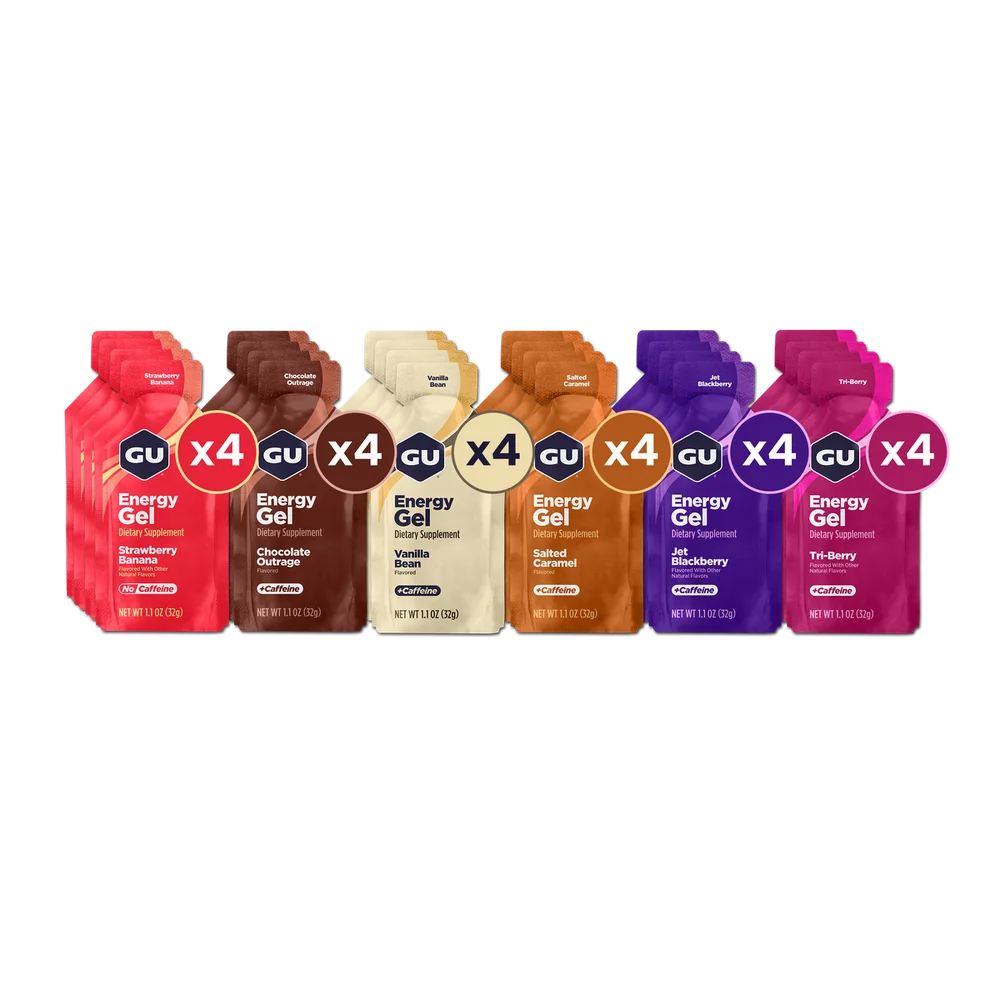
All three of our gels carry 100 calories, a two-source carbohydrate blend and some sodium. The sodium helps, but it is a top-up, not a substitute for drinking.
| Gel | Carbohydrate | Sodium | Hydration note |
|---|---|---|---|
| Original Energy Gel | 21–23 g | 60–125 mg | Take with a few sips of water |
| Liquid Energy Gel | 24 g | 75 mg | Contains some water, but not enough to count as a drink |
| Roctane Energy Gel | 19–21 g | 125–180 mg | Up to 3× the sodium of Original; Lemonade has the most of any flavour |
Do the arithmetic for one hour. Two to three Original gels supply roughly 120–375 mg of sodium; two to three Roctane gels, roughly 250–540 mg. A heavy sweater can lose more than 1,000 mg of sodium in an hour, and more again when it is hot or humid. For a cool 90-minute run, the sodium in your gels may be enough; test it in training. For a four-hour ride in May it is not, and that gap is what electrolytes are for. A sensible starting point is 300–800 mg of sodium per hour, adjusted from there.
Always chase a gel with water. A few sips help the carbohydrate leave the stomach and reach the blood faster. This applies to Liquid Energy Gel too: it is drinkable, but you still need to keep drinking alongside it.
How much water per hour
The working range is 450–900 ml (16–30 oz) per hour of activity. Where you sit in that range depends on body size, how hard you are sweating and the weather, so treat it as a bracket to test in training rather than a number to hit on race day. Sip every 10–15 minutes instead of draining a bottle on the hour: small, frequent doses are easier on the stomach and keep delivery steady. In one study, athletes who drank to a schedule performed better than those who drank only when thirsty.
Two checks tell you whether you have the amount right. A sloshing stomach means you are drinking more than you can absorb, so back off. A heart rate that climbs at steady pace, a headache, or a calf that starts to twitch late in a long session points the other way.
| When | How much | Why |
|---|---|---|
| 1–2 hours before | 200–350 ml (7–12 oz) | Start topped up without a full bladder on the start line |
| Marathon morning | About 1/10 of your body weight in pounds, as ounces, 4 hours before the gun (roughly 450 ml for a 70 kg runner) | Leaves time to pass any excess |
| During | 450–900 ml (16–30 oz) per hour | Sip every 10–15 min; use aid stations so you carry less |
| The 2–3 days before a marathon | 2–4 litres a day | Hydration starts well before race morning |
| After | Fluids with carbohydrate, protein and electrolytes, ideally within 30 minutes | Especially after hot sessions |
When to add electrolytes
For short, cool sessions, plain water plus the sodium in your gels may be enough. Add an electrolyte drink or capsules when one of these is true:
- It is hot or humid. Heat and humidity raise both fluid and sodium losses. A humid coastal start in Mumbai or Chennai pushes sweat losses up even when the thermometer looks mild, and the dry heat of a Delhi or Hyderabad summer evaporates sweat before you notice how much you are losing.
- You will be out for more than an hour. Sodium losses add up over a long ride or trail run, and gels alone will not keep pace with someone losing 1,000 mg an hour.
- You cramp late in long efforts. Cramps have several causes, fatigue included, but dehydration and electrolyte imbalance are two of the usual suspects.
Heat tip: cold drinks, or a slushie, before and during a hot session help keep core temperature lower for longer. If your goal race is a hot one, 1–2 weeks of daily sessions of around 90 minutes in the heat builds most of the adaptation; the detail is in training and racing in the heat.
A simple plan by session
| Session | Energy | Water | Electrolytes |
|---|---|---|---|
| Under 60 minutes | Optional: one gel 5 minutes before the start | Start well hydrated; drink as needed | Not needed in mild weather |
| 60–90 minutes | One gel every 20–30 minutes once past the hour | 450–900 ml per hour | Gel sodium may be enough if it is cool; test it |
| 90 minutes to 2 hours | One gel every 20–30 minutes | 450–900 ml per hour, sipped every 10–15 min | Add electrolytes, aiming for 300–800 mg sodium per hour |
| Over 2 hours | One gel every 20–30 minutes; Roctane if you want the extra sodium | Top of the range if sweating hard | Add an electrolyte drink or capsules |
| Hot or humid, any length | Keep fuelling as planned | Top of the range; cold fluids help | Add electrolytes |
Rehearse the plan on long training days, gels, water and electrolytes together, so you know what your stomach accepts in race conditions. Train your gut covers how.
FAQ
Do I need both energy and hydration?
It depends on duration and conditions. Any session needs fluid. Once you are past about an hour you also need carbohydrate, so a gel every 20–30 minutes comes in. Past an hour, and especially in heat and humidity, add electrolytes on top of both.
Can I skip water if I use Liquid Energy Gel?
No. Liquid Energy Gel contains some water, which makes it easier to take, but nowhere near the 450–900 ml an hour you need. Keep drinking alongside it.
Is a cramp a sign I need salt?
Not necessarily. Cramps are linked to dehydration and electrolyte imbalance but also to muscle fatigue, poor pacing and under-conditioning. When one hits, slow down, stretch the muscle gently and sip fluid with electrolytes; drinking starts to affect blood plasma within about 15 minutes. If cramps keep landing in the same spot, look at training load and strength work. More in muscle cramps and electrolytes.
Do Roctane gels replace an electrolyte drink?
Not on their own. At 125–180 mg per packet, Roctane carries up to 3× the sodium of Original, which is useful on warm days and long efforts, but it is still well short of what a heavy sweater loses each hour. Pair it with water, and add an electrolyte drink or capsules for anything long and hot.
Next steps
- Work out your own carbohydrate and fluid targets with the fuel calculator.
- Practise the plan on long training days: train your gut.
- Weighing gels against a bottle of sports drink? Read gels vs sports drinks.
These statements have not been evaluated by a regulatory authority. This product is not intended to diagnose, treat, cure or prevent any disease.
Next steps
Read it. Now use it.
Three places to go from here: the full plan, the calculator that does the maths for your distance and the weather, and the gels themselves.
Plan
How to fuel
The whole plan, hour by hour. One gel about five minutes before you start, then one every 20–30 minutes once you are out past the hour, with a few sips of water each time. Do not wait until you feel hungry or flat.
See the plan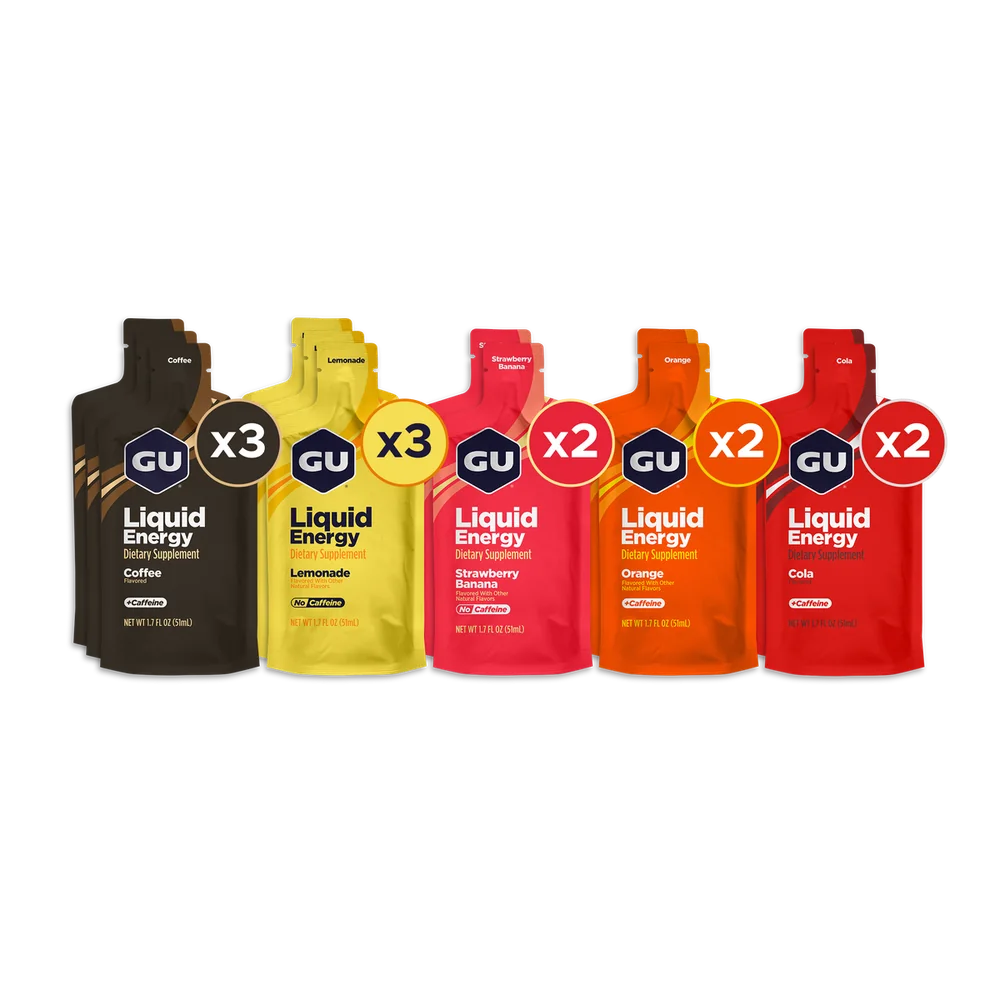
Tool
Fuel calculator
Activity, duration, intensity, body weight and the heat go in; carbs per hour, how many gels to carry and a minute-by-minute schedule come out. If the target feels high, start lower and build towards it over 6–8 weeks of gut training.
Get your numbers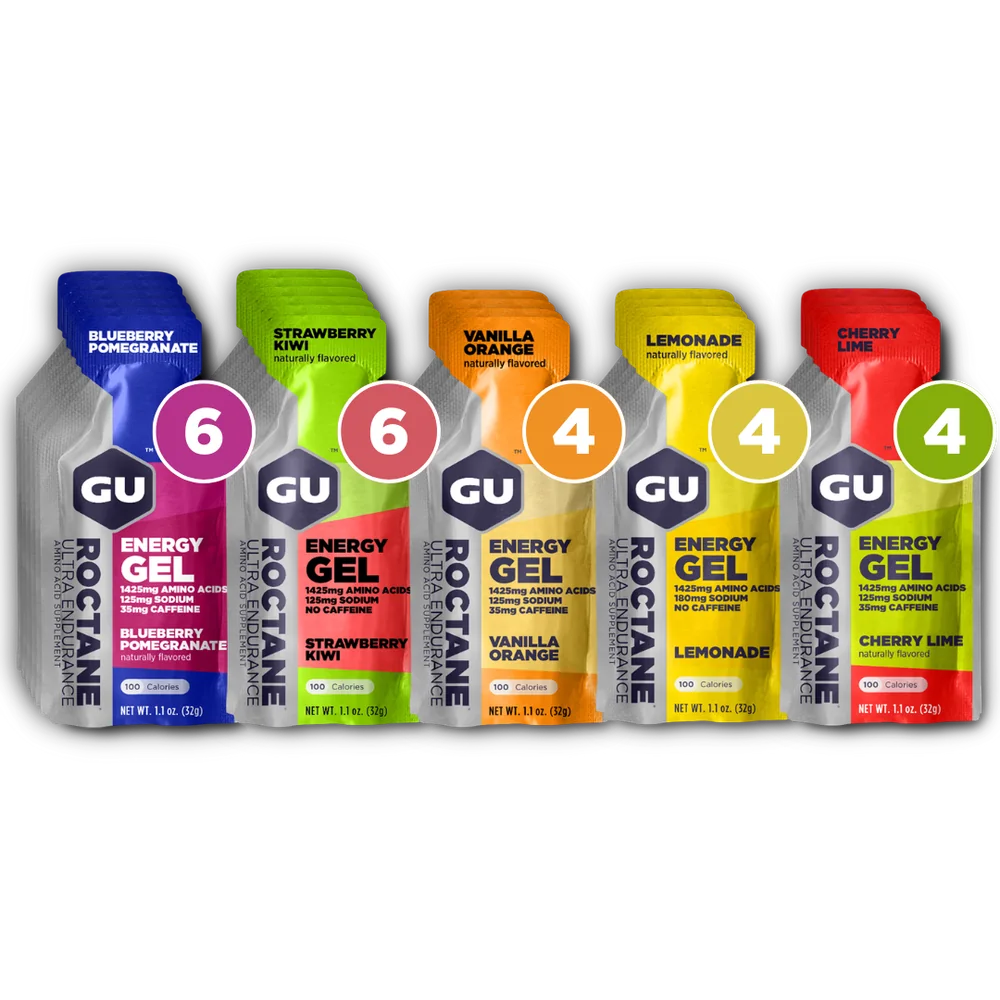
Shop
Shop the gels
Three lines, one job. Original for everyday training, Liquid Energy for the same carbohydrate in a lighter, smoother form, and Roctane with up to three times the sodium and three times the amino acids for the longest, hardest days.
Shop all gelsPractise the plan on a long session,
not on race day.
Nothing new on the day. Test the timing in training, note what your stomach says, and adjust from there.