
Fuel by activity
Fuelling for running
Running is the sport energy gels were built for. Your body stores enough carbohydrate for an easy hour; run harder, or for longer than about 45 minutes, and the available fuel runs out, which is when pace drifts and the last few kilometres stretch. This page covers before, during and after a run, a gel plan by session length, and how to adjust for Indian heat and humidity.
Who this is for
The first gels were made for ultra-trail runners more than 30 years ago, but the arithmetic is the same for anyone who moves, from a weekend 5K runner to a marathoner in Mumbai. What changes is how much you need and how often.
- Easy runs under an hour. Nothing on the move; a gel before you leave is enough.
- Tempo sessions and long runs of 1–2 hours. Carry fuel and take it on a schedule.
- Long runs over 2 hours, and race day. A written plan, a trained gut and the right gel for the conditions.
Not sure which gel suits you? Start with choose the right gel.
Before the run
Two jobs: start hydrated and start topped up.
- Hydrate first. Aim for 200–350 ml of fluid in the 1–2 hours before you run, adjusted for body size, sweat rate and weather. Starting dry raises the risk of stomach trouble once you fuel.
- Eat your usual pre-run meal and leave time to digest. Race morning is not the time to experiment.
- Top up 5 minutes before the start. One gel, 20–30 g of carbohydrate, with a few sips of water. For a 45-minute easy run that is all the fuelling you need.
- Race week. For a half or full marathon, load carbohydrate for 2–3 days before the race at 8–10 g per kg of body weight per day, easing off fat and fibre.
During the run
Once a run passes the hour mark, replace carbohydrate as you go: one gel every 20–30 minutes, each with 90–120 ml of water (3–4 oz). Start the clock at the start line, not when you feel flat; by then your stores are already low.
For marathon-length efforts the target is 60–90 g of carbohydrate per hour. That is more than most runners take, and an untrained gut will complain, so start around 50 g/h and close the gap over 6–8 weeks of gut training.
| Gel | Carbohydrate | Sodium | Caffeine options | Best for |
|---|---|---|---|---|
| Original Energy Gel | 22 g | 60–125 mg | 0, 20 or 40 mg | Everyday training, 10K to half marathon |
| Liquid Energy Gel | 23 g | 75 mg | 0, 20 or 40 mg | Hot, humid runs; when a gel feels heavy late in a race |
| Roctane Energy Gel | 21 g | 125–180 mg | 0, 35 or 70 mg | Runs over 90 min or 16 km, hard efforts, heavy sweaters |
Carbohydrate is similar across all three, so the choice comes down to sodium, amino acids and texture; Roctane vs Original has the detail.
Tip: carrying gels is a solved problem: the key pocket in your shorts, a safety pin through the top tab at the waistband, the side of a sports bra, or 4–5 gels squeezed into a soft flask with a splash of water. All seven options are in 7 ways to carry gels.
After the run
A gel is a during product, not a recovery one. Within about 30 minutes of finishing, eat something with carbohydrate and protein to restock glycogen and start muscle repair, and drink fluids with electrolytes to replace what you sweated out. A normal meal does the job: rice or roti with dal and curd, or a banana and a glass of milk.
A gel plan by session length
These intervals come from the suggested-use guide printed with every gel and assume a steady, purposeful effort. Easy jogs need less; hard sessions in heat need the shorter end of each interval.
| Session | Before | During | Total gels | Notes |
|---|---|---|---|---|
| Up to 60 min | One gel 5 min before | None needed | 1 | No in-run fuel if you have eaten earlier in the day. |
| 60–90 min | One gel 5 min before | One gel at 45–60 min | 2 | Original. Water with the gel. |
| 90 min to 2 hr | One gel 5 min before | Every 20–30 min | 4–6 | Switch to Roctane past 90 min or 16 km. |
| 2–3 hr | One gel 5 min before | Every 20–30 min | 5–10 | Add electrolytes in heat. Mix in Liquid Energy Gel against flavour fatigue. |
| 3 hr and beyond | One gel 5 min before | Every 20–30 min, as much as the gut comfortably handles | 2–3 per hour | Roctane for the extra sodium and amino acids. You cannot replace everything you burn; aim for what you can absorb. |
For gel counts by marathon finish time, see marathon gel strategy, or put your own numbers into the fuel calculator.
Hydration and heat: notes for India
Most Indian running happens in heat, humidity or both: a pre-dawn start in Mumbai or Chennai is warm and sticky before sunrise, Delhi's winter race season pairs cool mornings with a sun that climbs fast, and even Bengaluru is warm by mid-morning. Heat changes the fuelling arithmetic in three ways.
- You sweat more, so you lose more sodium. Replacing water without the salt raises the risk of cramps and fatigue. Roctane has up to 3x the sodium of Original, and its Lemonade flavour has the most sodium of any gel.
- Drink roughly 475–950 ml of water per hour (16–32 oz) in regular sips, and use every water station on race day.
- The gut slows when the core is hot, because blood goes to the skin instead of the digestive tract. Smaller, more frequent doses are easier to handle, and the thinner Liquid Energy Gel goes down more easily than a thick gel at 30 km. It also freezes, so a slushie gel before a hot run doubles as pre-cooling.
If you are racing somewhere hotter than where you train, the body adapts: 1–2 weeks of daily sessions of about 90 minutes in the heat, or 60-minute sessions over 2–4 weeks, lower working heart rate and core temperature and bring sweat on earlier. Most of the adaptation arrives in the first 7–10 days and fades at roughly 2.5% a day once the heat stress stops. Run at the cooler ends of the day, and see training and racing in the heat for cooling tactics.
Tip: in heat, do not skip the pre-run gel on short runs. Hot conditions burn through stored carbohydrate faster, so a gel 5 minutes before even a 45-minute run keeps the second half honest.
Common mistakes
- Waiting until you feel flat. A gel cannot undo a deficit you have already built. Fuel on a schedule from the start.
- Taking a gel without water. Water supports absorption and eases the load on the gut. Tie each gel to a water station or a sip from your bottle.
- Trying a new gel or caffeine dose on race day. Rehearse exact products, flavours and timings on long runs first. The flavour and caffeine chart lists every dose.
- Jumping straight to 90 g/h. Build from 30 g/h in 10 g/h weekly steps over 6–8 weeks, and hold a level for another week if bloating or nausea appear.
- Replacing fluid but not sodium in the heat. More sweat means more salt lost. Muscle cramps and electrolytes covers what to do when a calf seizes mid-run.
- Carrying exactly the number you need. A dropped gel or a slow day breaks the plan. Carry one spare.
FAQ
Do I need a gel for a 5K or a 10K?
For a run under an hour, one gel 5 minutes before the start with a few sips of water is enough. A 10K that takes you longer than 60 minutes moves to the next row of the table: one gel at around 45 minutes.
Original or Roctane for a half marathon?
Inside 90 minutes, Original Energy Gel covers it. Over 90 minutes, or on a hot and humid morning, Roctane's extra sodium and amino acids earn their place, especially for heavy sweaters.
Gels upset my stomach. What should I change?
Usually too much too soon, not enough water, or an unfamiliar product. Take every gel with 90–120 ml of water, drop to a rate your gut tolerates and build up in small steps, and try the thinner Liquid Energy Gel.
These are general guidelines, not medical or individualised nutrition advice; needs vary with body size, training status, health history and conditions, so consult a qualified sports dietitian before making significant changes. These statements have not been evaluated by a regulatory authority. This product is not intended to diagnose, treat, cure or prevent any disease.
Next steps
- Get a gel count for your next long run or race with the fuel calculator.
- Racing 42.2 km? Build the full plan with fuelling for marathon.
- Stock up in all gels.
Next steps
Turn the playbook into a plan.
The playbook gives you the timing. These three take you the rest of the way: the numbers, the line, the packets.
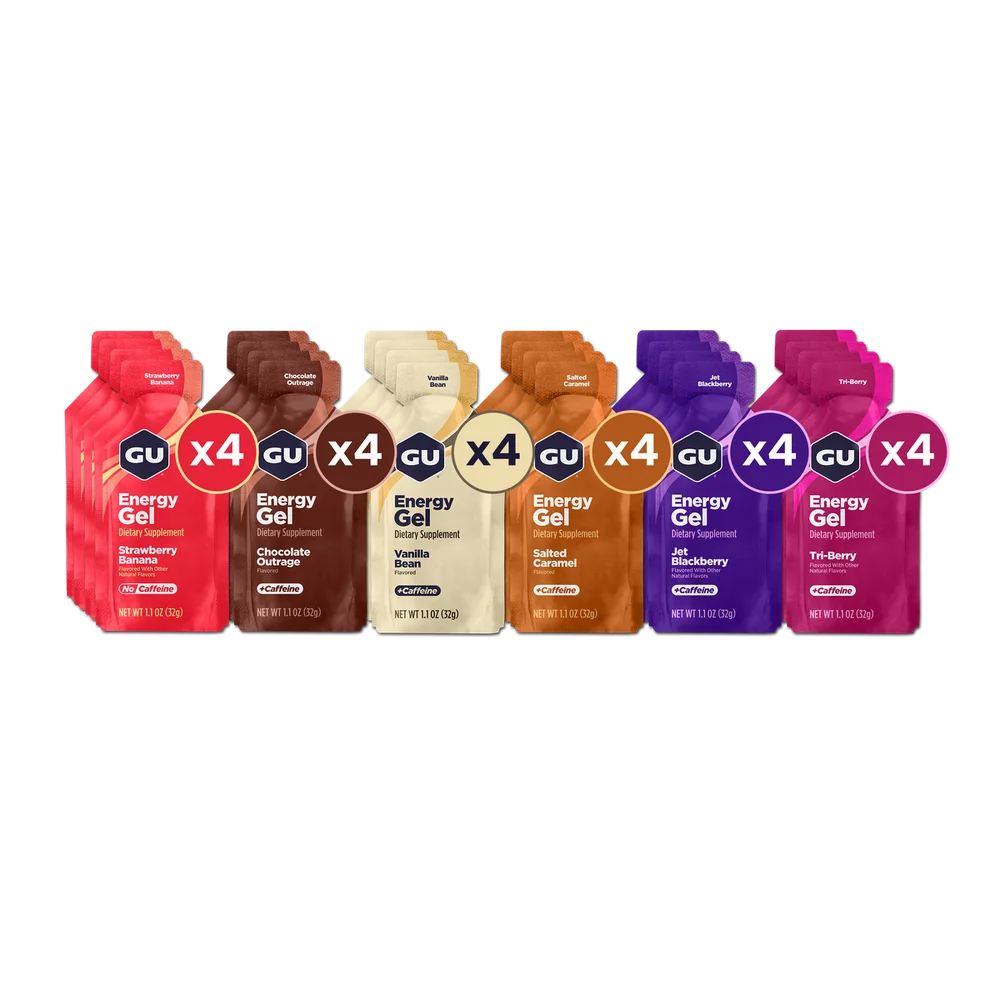
Plan
Fuel calculator
Enter your sport, how long you will be out, the effort and the heat. You get a carbs-per-hour target, a gel count and a minute-by-minute schedule. If the target feels high, build towards it over 6–8 weeks rather than jumping straight in.
Open the calculator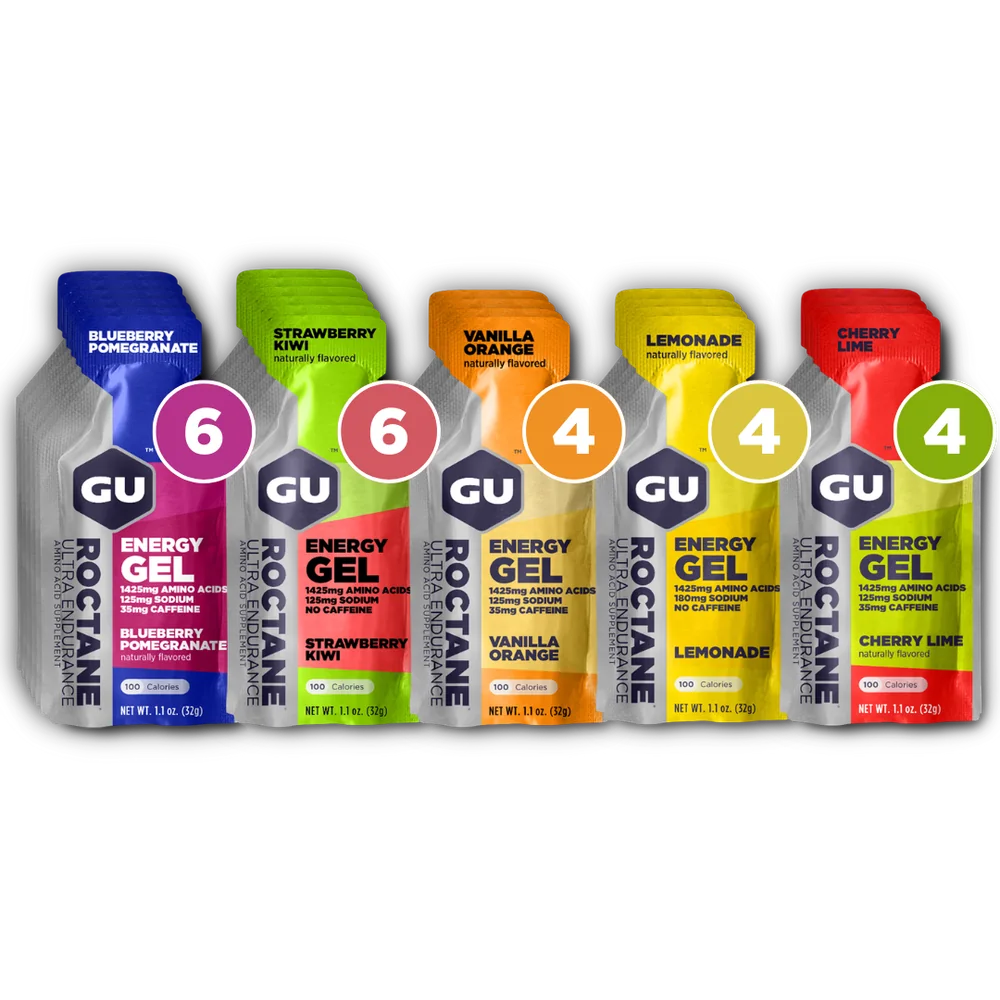
Guide
Roctane vs Original
Original Energy Gel is the everyday choice for steady training. Roctane adds electrolytes and amino acids for long races, hard key sessions and hot days, when hydration balance and muscle fatigue become the bigger problem. Which one, and when.
Read the guide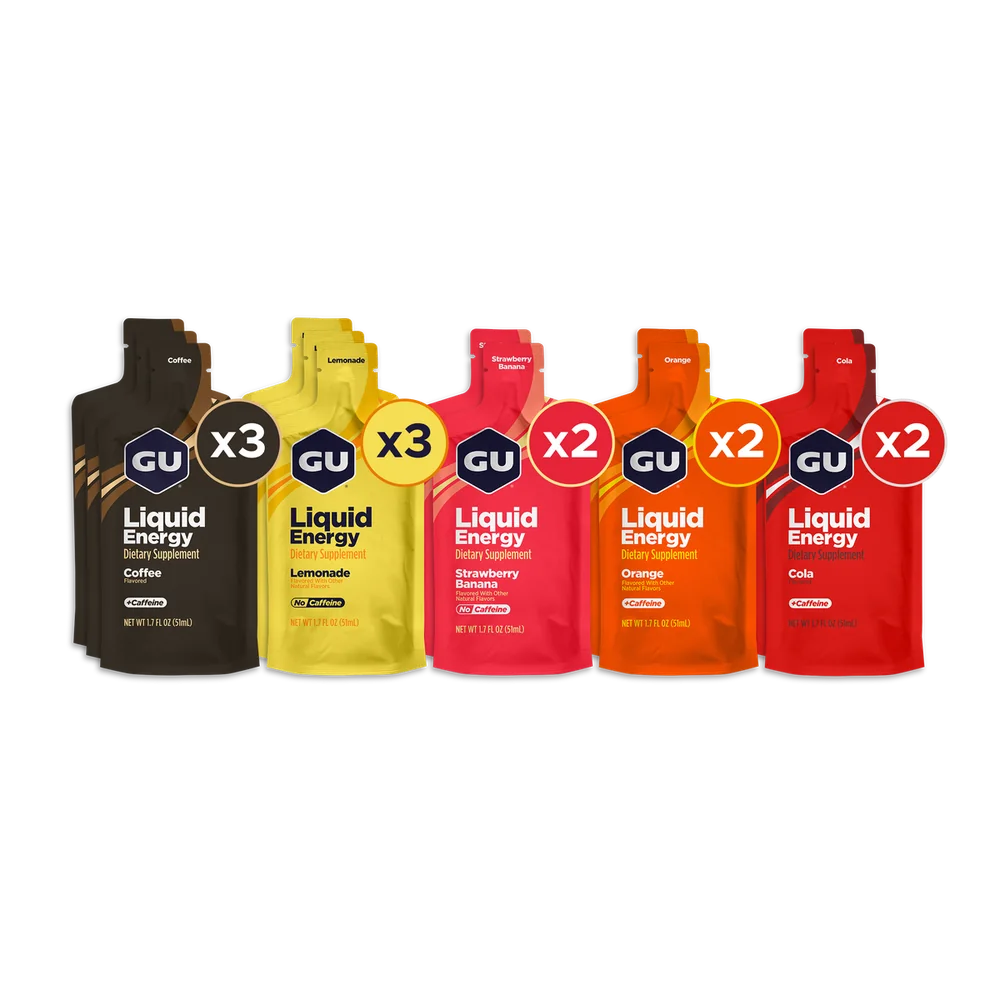
Shop
Shop the gels
Original Energy Gel, Liquid Energy Gel and Roctane Energy Gel, every flavour with its caffeine content listed. Pick the line that fits the session, then practise with it before you race.
Shop all gelsSame gels.
Your timing.
Try the schedule on a long training session first, not on race day, and sip water with every gel.