
Fuel guide
Energy gels vs real food
Should you fuel a long run on bananas and dates, or on gels? Ask most endurance athletes and the honest answer is both. Real food does the heavy lifting around training, at breakfast and at the recovery meal. Gels do their job during the effort, when carbohydrate has to digest predictably and fit in a pocket. Here is where each fits, what happens to digestion under effort, and how to combine them in one plan.
Why fuelling during exercise matters
Endurance exercise runs largely on carbohydrate, stored as glycogen in your muscles and liver. Those stores are limited. As a long run or ride goes on, glycogen drops, and if nothing comes in to replace it you get fatigue, a fading pace and eventually the sudden collapse in pace known as hitting the wall.
To stay ahead of it, most endurance athletes target 30 to 60 g of carbohydrate per hour on longer sessions. The number is not the hard part. The hard part is delivering it in a form your stomach accepts at pace and that you can carry without a rucksack. New to gels? Gel 101 covers the basics.
Where real food fits
Real food is the foundation of an athlete's diet. Bananas, oats, rice, toast and dates bring carbohydrate plus the vitamins and minerals that daily training and recovery depend on. It earns its place at three moments.
One to three hours before
A meal one to three hours before a session tops up liver glycogen and lifts blood glucose, so you start full. Oats, toast with jam, poha, upma, idli or rice with fruit all do the job. Keep fat and fibre modest the closer you get to the start.
After, for recovery
A balanced meal with carbohydrate and protein, say rice and dal with curd, or eggs on toast, refills glycogen and supports muscle repair. Gels are not designed for this job.
Very long, lower-intensity efforts
On an ultramarathon, a long cycling day or a stage race, some athletes take small amounts of real food during the effort. The pace is lower, the hours are many, and a change of taste and texture can keep you eating. Even here it is usually alongside gels, not instead of them.
Where gels fit
Energy gels exist for one window: during activity. Each packet is a concentrated dose of easily digested carbohydrate with electrolytes and amino acids, light to carry and quick to take without breaking stride.
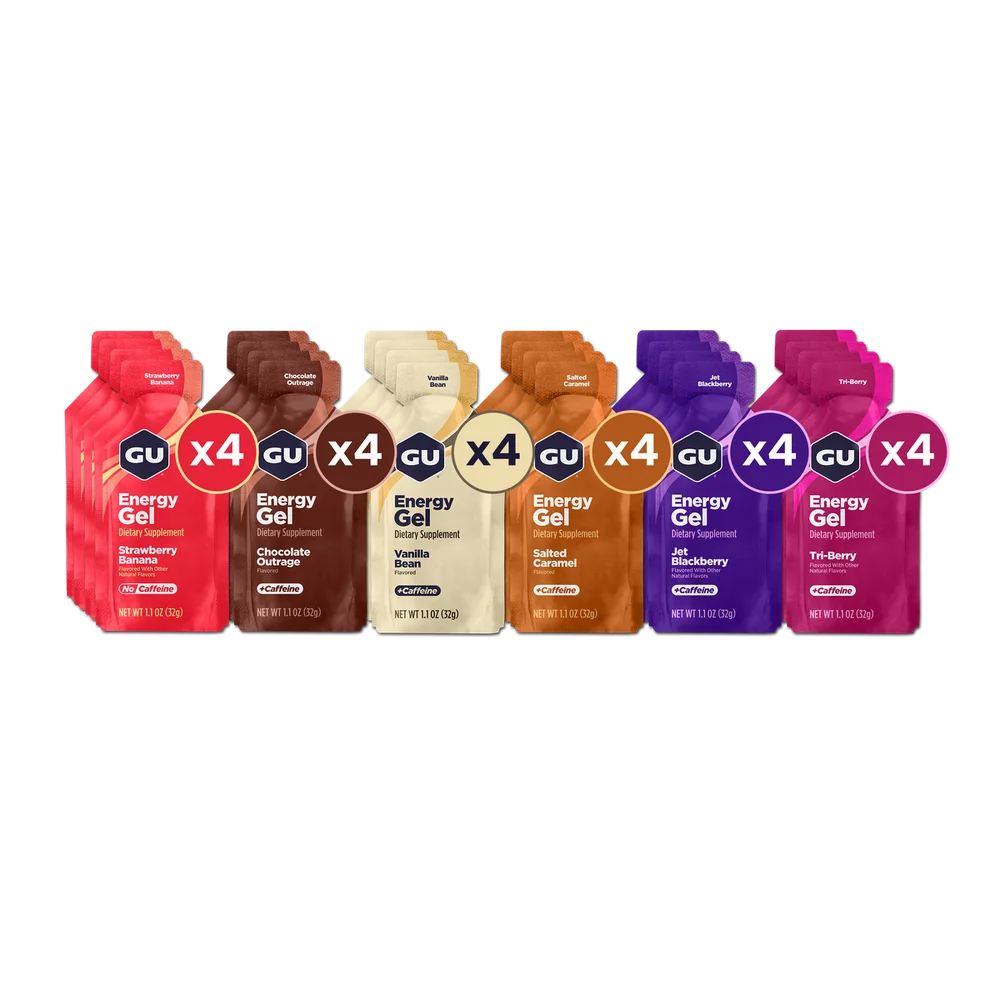
The plan is simple: one gel about 5 minutes before you start, then one every 20 to 30 minutes during activity, with a few sips of water each time. At roughly 21 to 23 g of carbohydrate per gel, two to three an hour lands you in or just above the 30 to 60 g range. Our three gels cover slightly different needs.
| Per packet | Original Energy Gel | Liquid Energy Gel | Roctane Energy Gel |
|---|---|---|---|
| Energy | 100 kcal | 100 kcal | 100 kcal |
| Carbohydrate | 21–23 g | 23–24 g | 19–21 g |
| Sodium | 60–125 mg | 75 mg | 125–180 mg |
| Amino acids | 450 mg | 450 mg | 1,425 mg |
| Caffeine options | 0, 20 or 40 mg | 0, 20 or 40 mg | 0, 35 or 70 mg |
| Packet weight | 32 g | 60 g | 32 g |
| Best for | Long runs, rides, races, everyday training | Hard intervals, transitions, a thinner texture | Marathons, ultras, long rides, triathlon, hot or hard days |
Original is the classic. Liquid Energy carries the same carbohydrate in a thinner form that some athletes find easier to get down at high intensity. Roctane adds electrolytes and amino acids for longer or harder efforts; see Roctane vs Original.
Digestion under effort
The reason a banana that sat happily at breakfast can turn on you at kilometre 25 is what else is in it. Fibre, fat and protein all slow digestion. At rest that is fine. While you are running or riding hard, it means food sitting in the stomach, which is where the sloshing, cramping and nausea come from.
Gels are built around the opposite idea: carbohydrate and very little else. The maltodextrin in our gels converts into energy your muscles can use within minutes, while the fructose arrives several minutes later, so you get a steady stream rather than a rush and a crash. Sips of water with each packet speed absorption.
Intensity is the dial. The harder you go, the less your gut tolerates. A small piece of real food may sit fine on an easy ultra climb or a long flat ride; at marathon pace in Mumbai humidity it probably will not.
| Mid-effort | Energy gel | Typical real food |
|---|---|---|
| Carbohydrate per serving | 19–24 g, the same every packet | Varies: a medium banana about 27 g, two dates about 36 g |
| Fibre, fat and protein | None to speak of | Present, and all three slow digestion |
| Weight to carry | 32 g, or 60 g for Liquid Energy | A medium banana is around 120 g, mostly water |
| Time to eat | A few seconds, one hand | Peeling and chewing, usually at a slower pace |
| In a hot pocket | Fine; Liquid Energy can even be frozen | Bananas bruise, dates stick, bars melt |
| Counting your intake | One packet, one known dose | Hard to track accurately at hour four |
Rule of thumb: the harder and shorter the effort, the more you lean on gels; the longer and easier, the more room for small amounts of real food between them. Rehearse either in training, never on race morning: Train your gut shows how.
Mixing formats: one day, both fuels
You do not have to pick a side. The most common approach stacks the two so that each covers the window it is best at.
| When | What | Why |
|---|---|---|
| 1 to 3 hours before | Carbohydrate-focused meal: oats, toast, fruit, poha or rice | Tops up liver glycogen and raises blood glucose |
| 5 minutes before | 1 gel | Fast carbohydrate on board from the start |
| During longer sessions | 1 gel every 20 to 30 minutes, with sips of water | Keeps intake steady, in the 30 to 60 g per hour range |
| Very long, easy efforts only | Small amounts of real food between gels | Variety and a break from sweetness |
| After | Meal with carbohydrate and protein | Refills glycogen and supports muscle repair |
A 30 km marathon-build long run
Idli or toast two hours before a 5 am start. One Original gel on the doorstep, then one at 30, 60, 90 and 120 minutes with water. Nothing else goes in; at this pace nothing else needs to. Afterwards, a proper plate of rice, dal, curd and fruit. Marathon gel strategy turns this into a race-day schedule.
A six-hour ride in the Western Ghats
Breakfast at home, a gel five minutes before rolling out, then one every 20 to 30 minutes through the morning climbs. At the midway chai stop, a banana or something small and low in fat, eaten while stopped, then straight back onto the gel schedule. For the hot afternoon, switch to Roctane for the extra sodium. Real food in its lane, gels in theirs.
Tip: if you do eat real food mid-effort, keep it small, low in fat and fibre, and take it on an easy stretch or at a stop, not on a climb or in the final hour. Then go back to counting gels.
FAQ
Are energy gels better than real food?
Neither. They do different jobs: real food covers everyday nutrition, the pre-session meal and recovery; gels cover the effort itself, when carbohydrate must be quick to digest, predictable in dose and easy to carry.
How much carbohydrate should I take per hour?
Many endurance athletes aim for 30 to 60 g per hour on longer sessions. One gel carries about 21 to 23 g, so a gel every 20 to 30 minutes with sips of water keeps you in range.
Can I run a marathon on bananas alone?
At race intensity the fibre in real food slows digestion and often causes stomach trouble, and a banana is bulky to carry. Most runners use gels for the race and keep bananas for breakfast and the finish line.
What if I cannot face breakfast before an early session?
A gel about 5 minutes before you start gives you 100 kcal of fast carbohydrate without chewing anything. Liquid Energy was made for that rolled-out-of-bed workout. Eat a proper meal afterwards.
These statements have not been evaluated by a regulatory authority. This product is not intended to diagnose, treat, cure or prevent any disease.
Next steps
- Fuel calculator: size a gels-per-hour plan for your duration and intensity.
- Train your gut: rehearse gels and any real food before race day.
- Shop all gels: every line is ₹999 for a box of 8.
Next steps
Read it. Now use it.
Three places to go from here: the full plan, the calculator that does the maths for your distance and the weather, and the gels themselves.
Plan
How to fuel
The whole plan, hour by hour. One gel about five minutes before you start, then one every 20–30 minutes once you are out past the hour, with a few sips of water each time. Do not wait until you feel hungry or flat.
See the plan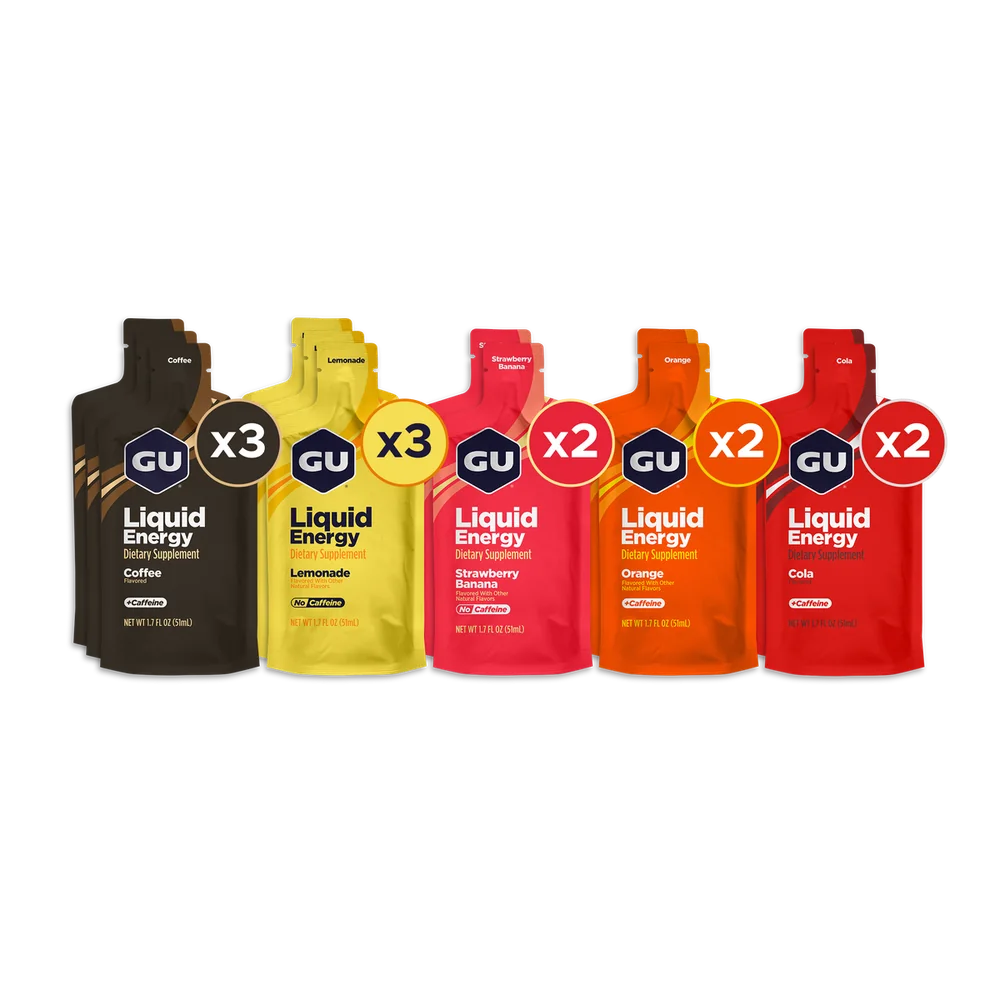
Tool
Fuel calculator
Activity, duration, intensity, body weight and the heat go in; carbs per hour, how many gels to carry and a minute-by-minute schedule come out. If the target feels high, start lower and build towards it over 6–8 weeks of gut training.
Get your numbers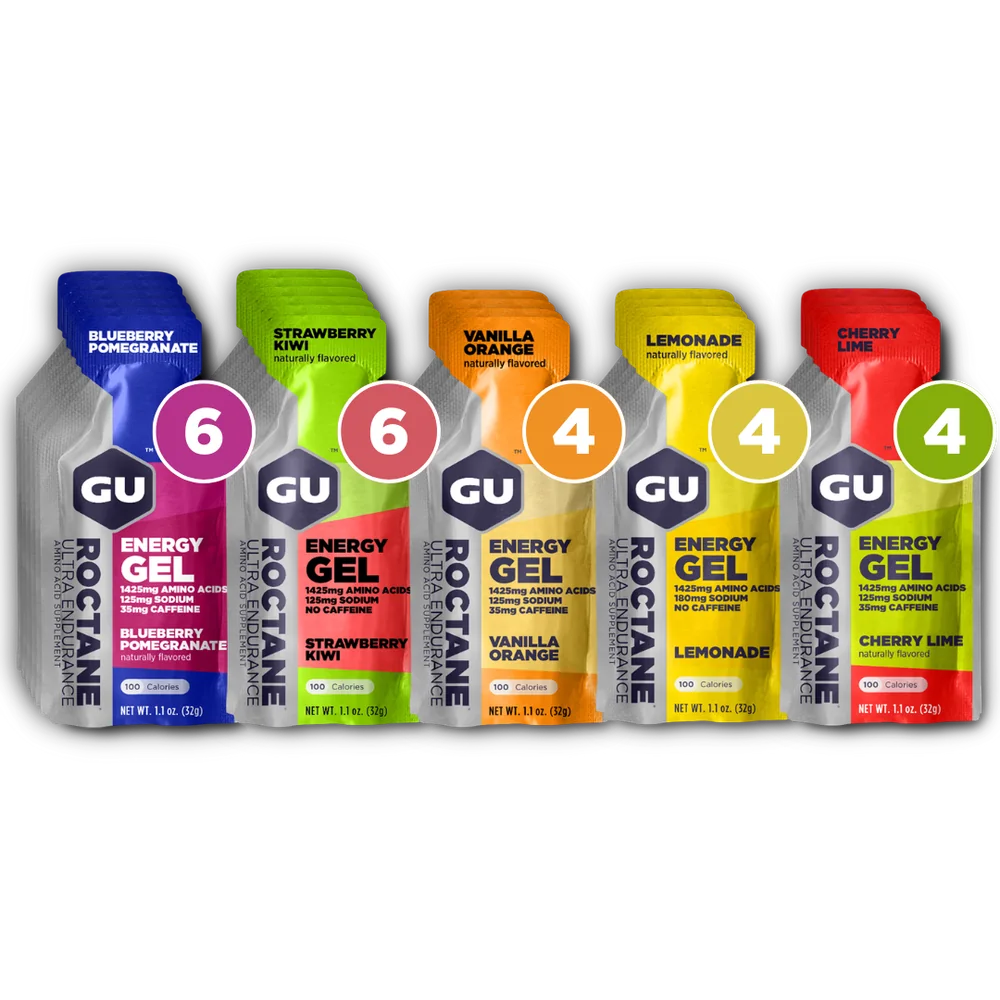
Shop
Shop the gels
Three lines, one job. Original for everyday training, Liquid Energy for the same carbohydrate in a lighter, smoother form, and Roctane with up to three times the sodium and three times the amino acids for the longest, hardest days.
Shop all gelsPractise the plan on a long session,
not on race day.
Nothing new on the day. Test the timing in training, note what your stomach says, and adjust from there.