
Fuel guide
Caffeinated vs non-caffeinated gels: how to choose
Caffeine is the one ingredient in an energy gel that works on your head as much as your legs. Used well, it makes the last hour of a long run or ride feel easier; used carelessly, it costs you sleep and sometimes your stomach. All three of our gels come in caffeinated and caffeine-free flavours, with a fixed 20–70 mg per caffeinated packet, so you set the dose by picking the flavour. Here is what caffeine does, how much is in each flavour, when to take it and who should skip it.
Caffeinated vs caffeine-free at a glance
The fuel is the same either way: a caffeinated and a caffeine-free flavour of the same gel deliver the same 100 calories and near-identical carbohydrate (a gram or two can differ by flavour). The only thing that changes is the stimulant, so the question is not which fuels better but whether you want the caffeine effect in this session.
| Decision area | Caffeinated | Caffeine-free |
|---|---|---|
| When in the effort | Usually brought in later in a long effort, as fatigue builds | Early and throughout, for steady carbohydrate delivery |
| How often | Key sessions, hard intervals and races | Daily mileage and base training |
| Effect on your head | Sharpens focus and lowers perceived effort | No stimulant effect, just fuel |
| Sleep and gut | Can disturb sleep or gut comfort in some people | The safe choice for sensitive athletes and evening sessions |
What caffeine actually does during exercise
Caffeine blocks adenosine, the brain chemical that signals relaxation and sleepiness. With adenosine held back you feel more alert and, more usefully for endurance, the same pace feels easier. Research suggests moderate caffeine use can improve endurance performance by increasing fat oxidation, sparing muscle glycogen and delaying fatigue, and one study found that taking caffeinated energy gels significantly improved endurance performance, particularly in long, high-intensity efforts. The full science is in Caffeine and endurance.
Two things it does not do. It does not replace carbohydrate: a caffeinated gel works because it is a gel first. And more is not better: too much brings jitters, a racing heart rate and broken sleep. The per-packet doses below are modest on purpose, so you can take caffeine in small, repeated amounts rather than one big hit.
How much caffeine is in each gel
All three gels (made by GU Energy Labs) have caffeinated and caffeine-free flavours. The dose is fixed per flavour, so you set it by choosing the packet.
| Line | Caffeine per packet (caffeinated flavours) | Flavours with caffeine | Flavours without |
|---|---|---|---|
| Original Energy Gel | 20 mg or 40 mg | 10 of 17 | 7 |
| Liquid Energy Gel | 20 mg or 40 mg | 3 of 7 | 4 |
| Roctane Energy Gel | 35 mg (Cold Brew Coffee: 70 mg) | 7 of 10 | 3 |
Flavour by flavour:
| Line | Caffeinated flavours (mg per packet) | Caffeine-free flavours |
|---|---|---|
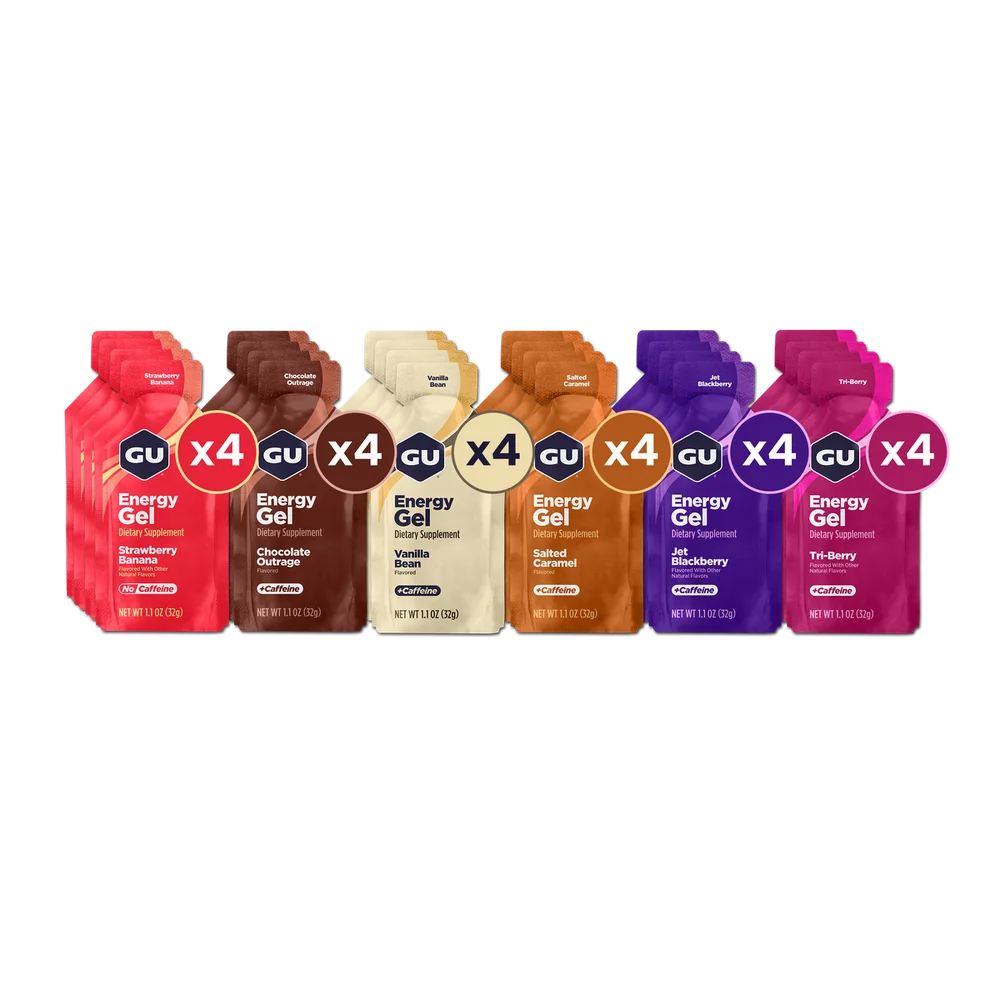
| Original Energy Gel | 40 mg: Cola Me Happy, Jet Blackberry, Espresso Love, Caramel Macchiato. 20 mg: Salted Watermelon, Tri-Berry, Vanilla Bean, Chocolate Outrage, Salted Caramel, Mandarin Orange | Sour Peach, Lemon Sublime, Birthday Cake, Strawberry Banana, Campfire S'mores, Raspberry Lemonade, Pumpkin Spice (seasonal) |
| Liquid Energy Gel | 40 mg: Coffee, Cola. 20 mg: Orange | Plain & Simple, Passion Fruit Orange Guava, Lemonade, Strawberry Banana |
| Roctane Energy Gel | 70 mg: Cold Brew Coffee. 35 mg: Blueberry Pomegranate, Chocolate Coconut, Vanilla Orange, Cherry Lime, Sea Salt Chocolate, Salted Lime | Pineapple, Strawberry Kiwi, Lemonade |
Every flavour is sold in its own box of 8, and the flavour picker on each product page marks the caffeine dose, so you always know what is in your pocket.
When in the effort to take it
Later rather than earlier. Carbohydrate keeps you going from the first hour; caffeine earns its place once fatigue has started, which in a long effort is the back half. The common pattern is caffeine-free gels through the opening hours and caffeinated packets once the effort starts to bite. The higher-caffeine Roctane flavours were made for exactly that late stage, when body and mind are both tired.
- Before you start. A caffeinated gel 5–15 minutes before a session means you begin alert, which helps on a dawn start or a hard interval set. Some athletes also take one before races and key sessions.
- During. Keep your normal cadence, one gel every 20–30 minutes past the hour with a few sips of water, and swap caffeine-free packets for caffeinated ones at the point you want the lift. At 20–40 mg a packet you can top up more than once without a jittery spike.
- After. Stop. Caffeine once the session is over only gets in the way of sleep and recovery.
A worked example: in a four-hour marathon at one gel every 25 minutes you will take around ten packets. Keep the first five caffeine-free and switch to 20–40 mg packets from roughly halfway, and the caffeine lands where the race gets hard. Indian city marathons start before sunrise; a 20 mg packet at the start takes the edge off a 3 a.m. alarm, but save the bigger doses for after halfway. The full race plan is in Marathon gel strategy.
Count every source. A 4 a.m. coffee, a caffeinated gel at the start and three more in the back half add up, and the jitters come from the total, not from any single packet. Plan caffeine for the whole morning, not packet by packet.
Who should skip caffeine
Caffeine-free is the default, not the compromise. Stay with the caffeine-free flavours if any of these apply.
- You are sensitive to it. If coffee makes you jittery or sends your heart rate up, a gel will do the same mid-effort.
- You train in the evening. After-work sessions are the norm around Bengaluru or Hyderabad traffic, and a 40 mg packet at 8 p.m. trades a night's sleep for a slightly easier tempo run. Recovery loses.
- Your gut is the limiter. Caffeine affects gut comfort in some athletes. Settle your carbohydrate tolerance on caffeine-free gels first, then add caffeine as a separate experiment.
- It is daily mileage. Easy runs, base rides and recovery sessions do not need a stimulant. Save it for sessions where focus matters, so it still works when you want it.
- It is for a child. Gels are fine for active kids on a hike or a match day, but keep them on the caffeine-free flavours.
- You have been told to limit caffeine. The caffeine-free flavours give you the same carbohydrate with nothing else to think about.
It is not a hydration strategy either. On a humid Mumbai or Chennai morning you need more fluid and sodium, not stimulant. See Energy vs hydration.
A simple way to decide
- Everyday training: caffeine-free. Pick flavours you will happily eat week after week.
- Long or hard sessions and races: caffeine-free early, caffeinated from the point the effort gets hard.
- New to caffeine: start at 20 mg, move to 35–40 mg once that sits well. Cold Brew Coffee's 70 mg is the last step, not the first.
- Evening training, sensitive stomach or poor sleep already: stay caffeine-free.
- Whatever you choose, rehearse it on a long training session before race day.
First time using caffeine mid-effort? Try a 20 mg flavour on a routine long session and note how your stomach, heart rate and sleep respond before stepping up. Treat the 70 mg Cold Brew Coffee as a tested race-day tool, never a first try.
Choosing between Original and Roctane as the base gel is about sodium and amino acids, not caffeine: see Roctane vs Original.
FAQ
Do I need caffeine to perform well?
No. Carbohydrate is the foundation of endurance fuelling and is what every gel delivers. Caffeine is an optional extra for focus and perceived effort in long or demanding efforts.
Can I mix caffeinated and caffeine-free gels in one session?
Yes, and most people should. The usual pattern is caffeine-free early and caffeinated later as fatigue builds. Some athletes also take a caffeinated gel just before a race or a hard session.
Should I try it in training first?
Always. Test the dose and the timing on a long training session so you know how your stomach, heart rate and sleep respond before you rely on it in a race.
What are the side effects?
Overdo caffeine and you may feel jittery, notice your pulse climbing or sleep badly that night. Begin with one of the milder flavours, keep caffeine to the part of the effort where you need it and stop once you have finished.
Next steps
- Flavour and caffeine chart: every flavour across the three lines with its caffeine, in one place.
- Train your gut: how to rehearse your fuelling, caffeine included, so race day holds no surprises.
- Shop all gels: caffeinated and caffeine-free flavours of every line.
These statements have not been evaluated by a regulatory authority. This product is not intended to diagnose, treat, cure or prevent any disease.
Next steps
Read it. Now use it.
Three places to go from here: the full plan, the calculator that does the maths for your distance and the weather, and the gels themselves.
Plan
How to fuel
The whole plan, hour by hour. One gel about five minutes before you start, then one every 20–30 minutes once you are out past the hour, with a few sips of water each time. Do not wait until you feel hungry or flat.
See the plan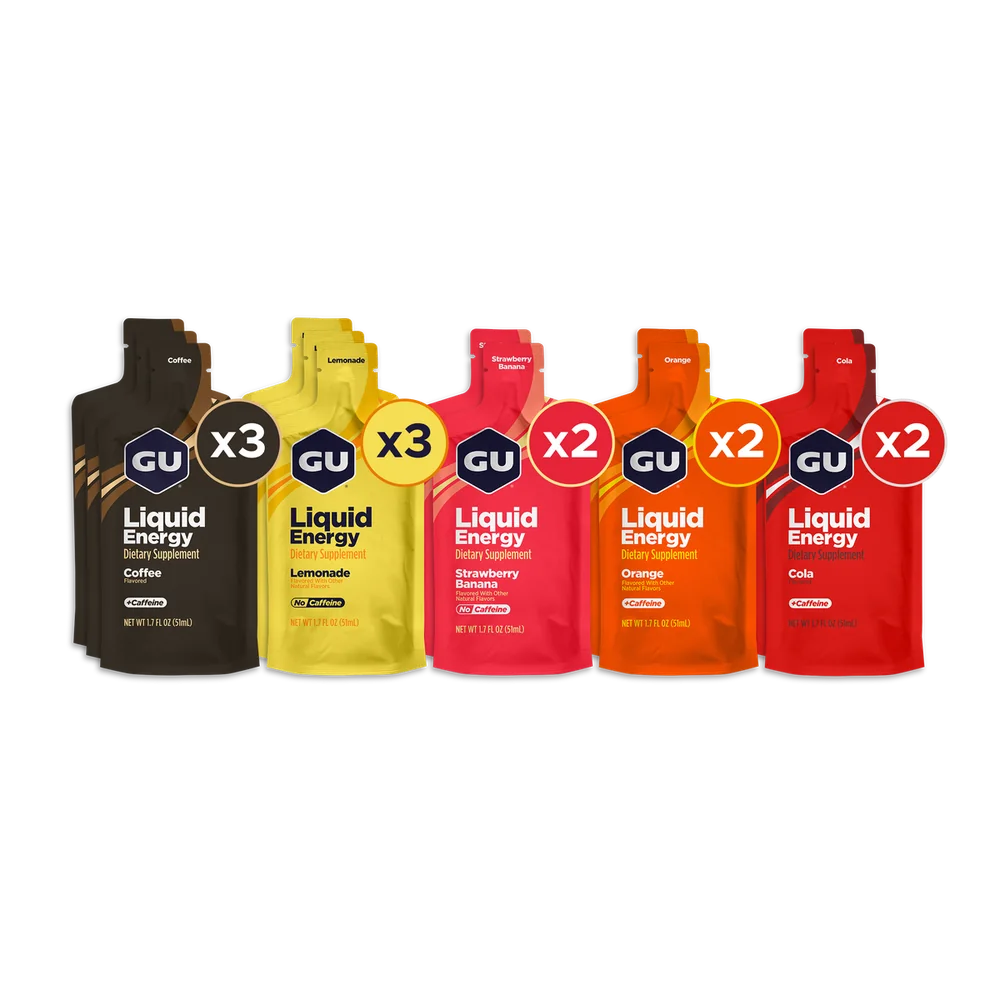
Tool
Fuel calculator
Activity, duration, intensity, body weight and the heat go in; carbs per hour, how many gels to carry and a minute-by-minute schedule come out. If the target feels high, start lower and build towards it over 6–8 weeks of gut training.
Get your numbers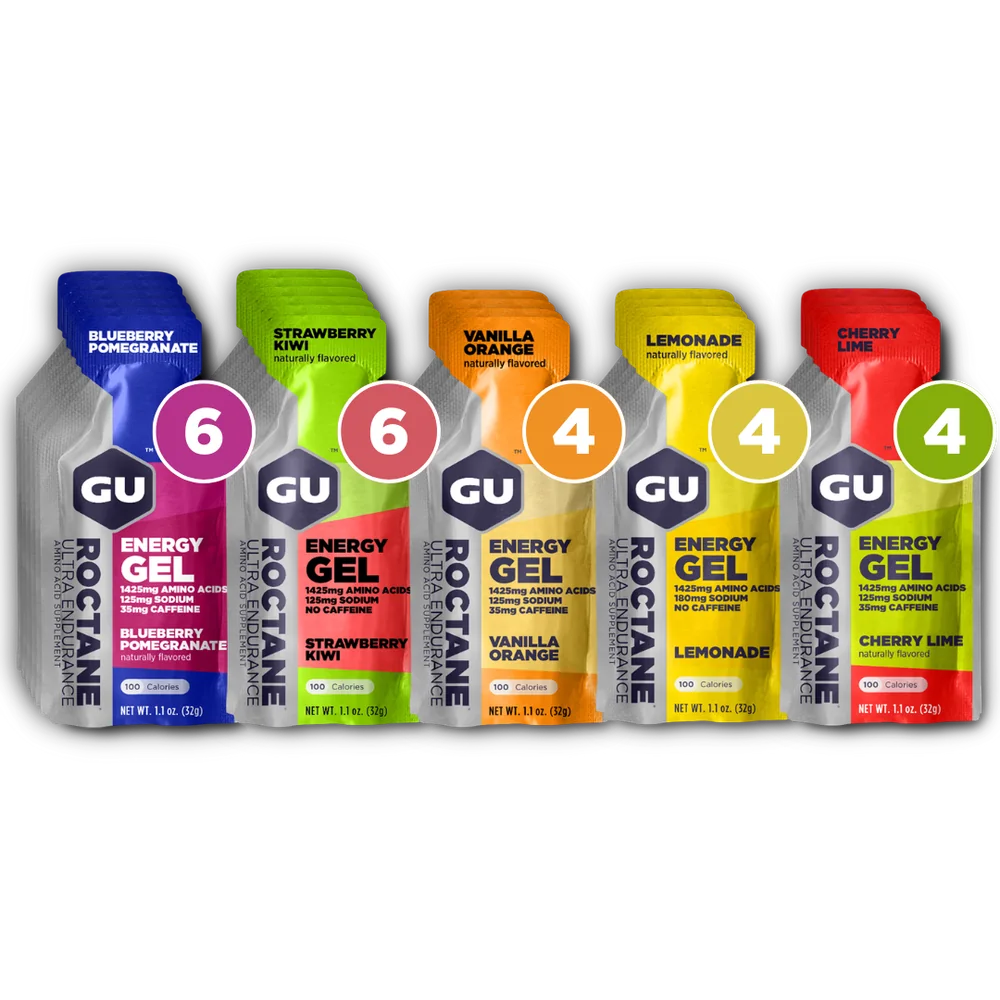
Shop
Shop the gels
Three lines, one job. Original for everyday training, Liquid Energy for the same carbohydrate in a lighter, smoother form, and Roctane with up to three times the sodium and three times the amino acids for the longest, hardest days.
Shop all gelsPractise the plan on a long session,
not on race day.
Nothing new on the day. Test the timing in training, note what your stomach says, and adjust from there.