
Fuel by activity
Fuelling for cycling
Around the 90-minute mark of a long ride the legs turn heavy, attention drifts and a gentle rise starts to feel like a wall. That is stored carbohydrate running low, not a lack of fitness, and it is avoidable: start eating in the first half hour, keep eating every 20 to 30 minutes, and drink before you are thirsty. This page turns those rules into a plan for Indian roads, from a one-hour session to a 200 km brevet.
Who this is for
Riders who have bonked once, and riders building up to something longer:
- A first 100 km or 160 km ride, a weekend fondo or a brevet.
- Group rides and amateur races where stopping to eat is not an option.
- Long climbs in the Western Ghats, the Nilgiris or the Himalaya, where the hardest hour arrives late.
- Commuters and indoor riders doing hard sessions of an hour or less.
New to gels altogether? Read gel 101 first.
Why riders fade at 90 minutes
Early in a ride the body runs on glycogen stored in the muscles and liver. After roughly 90 minutes those stores begin to run down, and that is when fatigue, cramping and foggy thinking arrive. Fuel early and consistently, ahead of the dip.
The targets: 30 to 60 g of carbohydrate an hour on rides under three hours, and up to 90 g an hour on longer efforts, paired with electrolytes and amino acids. One gel carries about 21 g (Original or Roctane) or 24 g (Liquid), so a gel every 20 to 30 minutes delivers 40 to 60 g an hour on its own. There is a ceiling: during exercise the gut processes roughly 120 to 240 calories an hour, and the more you push in, the more blood it pulls from your legs to digest it. Comfortable and consistent beats heroic.
Before the ride
Have your usual pre-ride meal well beforehand, then top up 30 to 60 minutes before wheels down with something light and familiar. For a short, hard session, or a pre-dawn start with no breakfast, one Original Energy Gel about five minutes before you roll out does the job, with a few sips of water. Start hydrated, and if the morning is already warm, put electrolytes in the first bottle: on an Indian summer start, sweat loss begins before the sun does.
During the ride
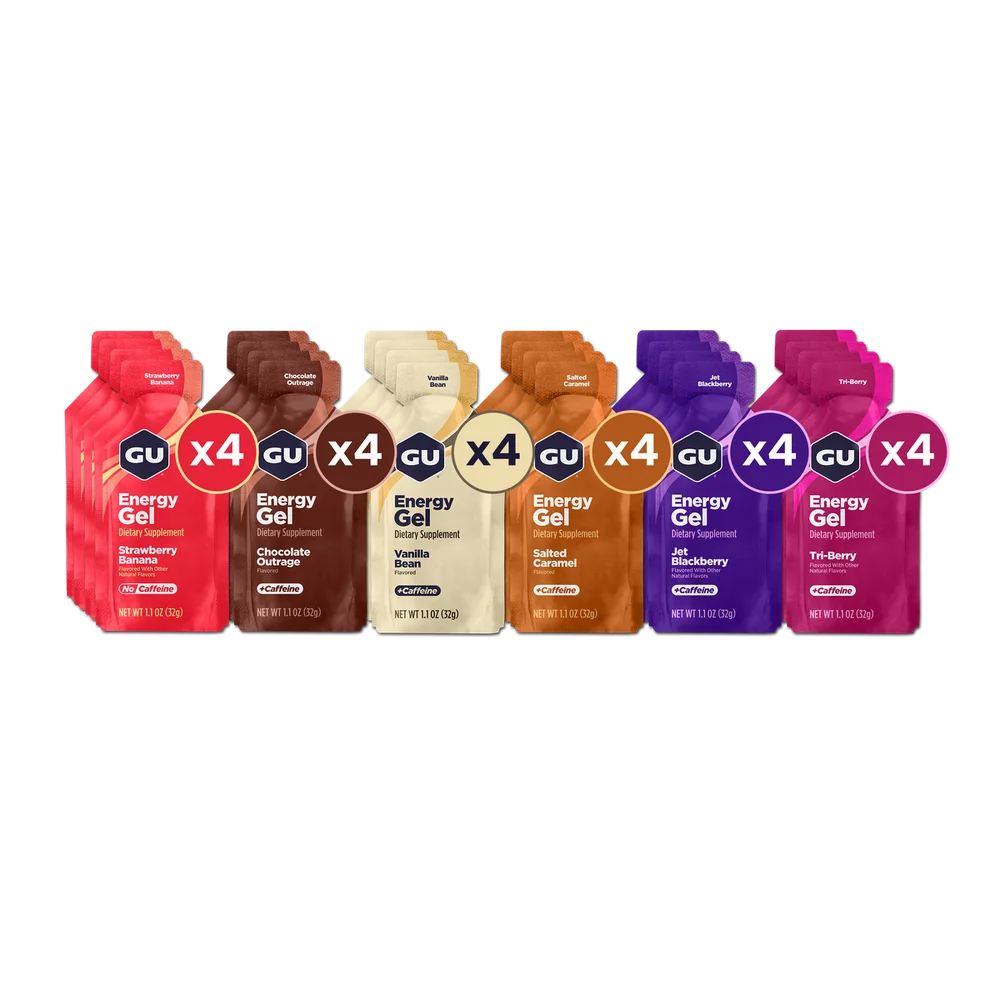
Keep a rhythm: a gel every 20 to 30 minutes, with water, starting 20 to 30 minutes in. Do not wait until you feel empty. Between gels, sip fluid every 10 to 15 minutes. For flat and rolling terrain, Original Energy Gel is the default: 100 calories, 21–23 g of carbohydrate, 60–125 mg of sodium and 450 mg of amino acids, in caffeine-free and caffeinated flavours.
Long climbs and hard intervals
Roctane Energy Gel carries up to three times the sodium (125–180 mg) and three times the amino acids (1,425 mg) of Original, to replace what you sweat out and delay muscle fatigue on a 20 km climb or a set of five-minute efforts. Liquid Energy Gel is thinner and easier to swallow when your heart rate is high, so keep one for the steepest part of the day. The full comparison is in Roctane vs Original.
How to eat a gel on the bike
Pick a flat or slower section, not a climb or descent. Tear the packet with your teeth, keep the bike steady and squeeze the gel out over a few seconds while coasting. A few sips of water after helps digestion and clears a sticky mouth. The empty packet goes back in the jersey pocket, not onto the road. More carrying options in 7 ways to carry gels.
Tip: alternate flavours and formats on a long day. Switching between Original, Roctane and Liquid, and between fruity and savoury flavours, stops the palate giving up at hour four. The flavour and caffeine chart helps plan the sequence and total the caffeine.
After the ride
Carbohydrate restores the energy you burned and protein rebuilds muscle, so eat a proper meal with both soon after you stop, and keep drinking, with electrolytes if it was hot. Gels are a during-the-ride tool, not a recovery food.
A gel plan by ride length
| Ride length | Carbohydrate target | First gel | Then | Gels (approx.) | Which gel |
|---|---|---|---|---|---|
| Under 1 hour: intervals, commute | Top up only | 5 min before the start | Not needed | 0–1 | Original |
| 1–2 hours | 30–60 g/h | 20–30 min in | Every 20–30 min | 2–5 | Original, water with each |
| 2–3 hours | 30–60 g/h | 20–30 min in | Every 20–30 min | 4–8 | Original; Roctane on climbs or in heat |
| 3 hours and beyond: century, brevet, Ghats loop | 60 g/h, up to 90 g/h if gut-trained | 20–30 min in | Every 20–30 min, plus carbohydrate from a drink or food in between | 2–3 per hour, plus other carbs | Roctane for sodium; Liquid late when a gel feels heavy |
Counts assume about 21 g per gel. Under three hours, gels alone cover the target. Beyond three hours, reaching 90 g/h needs carbohydrate from a drink or real food between gels, because spacing gels tighter than every 20 minutes rarely sits well (see gels vs real food). On a very long day you cannot replace everything you burn; eat as much as your gut comfortably handles. Put your own ride into the fuel calculator for a gel count.
Hydration and heat: riding in India
Most Indian riding is hot, humid or both, and a gel replaces carbohydrate, not fluid. Whatever you carry, sip every 10 to 15 minutes, more deliberately in heat and humidity.
- Bottles or a pack. Bottles win for road races and group rides on weight and aerodynamics. A hydration pack suits long solo or gravel rides where refills are scarce: a remote Ghats loop or a day in Ladakh.
- Sodium. On hot or humid days, or when riding flat out, Roctane's sodium (up to three times Original) earns its place in the pocket. If you cramp, read muscle cramps and electrolytes.
- Freeze a Liquid Energy Gel. Its higher water content means it freezes. Overnight in the freezer before a hot ride, it melts into a cooling slushy in the pocket.
- Gels are not hydration. Carbohydrate and fluid are separate jobs; energy vs hydration explains how to cover both, and training and racing in the heat goes deeper on hot days.
Common mistakes
- Waiting for the dip. Fuelling starts at 20–30 minutes, not when the legs go. Eat before you are hungry, drink before you are thirsty.
- Gels without water. Water helps the gut process the carbohydrate. One gel, a few sips, every time.
- New fuel on event day. Practise with your gels on training rides at event intensity; nothing new on the day.
- Opening a gel on the climb. Take it on the flat before the climb, while coasting; on a busy Indian road that is also the safer moment.
- Caffeine by accident. Original flavours carry 0, 20 or 40 mg and Roctane flavours 0, 35 or 70 mg. Count what you take and keep it for the back half; see caffeinated vs non-caffeinated.
Tip: set a repeating alert on your bike computer or phone every 25 minutes. On a long ride the first thing to go is the memory of when you last ate.
FAQ
Which gel is best for cycling?
Original suits most rides under three hours. Roctane adds up to three times the sodium and amino acids for long, hot or hard efforts. Liquid is the easiest to swallow when your heart rate is high or a regular gel feels heavy late in the day.
When should I take my first gel on a ride?
About 20 to 30 minutes in, then every 20 to 30 minutes, before you feel tired. For a ride under an hour, a single gel five minutes before the start is enough.
Can I ride 100 km on gels alone?
For most riders, yes: a gel every 20 to 30 minutes with water covers 40 to 60 g of carbohydrate an hour. To push towards 90 g/h on a longer day, add a carbohydrate drink or real food between gels and build the rate gradually with train your gut.
These are general guidelines, not medical or individualised nutrition advice; needs vary with body size, training status, health history and conditions, so consult a qualified sports dietitian before making significant changes. These statements have not been evaluated by a regulatory authority. This product is not intended to diagnose, treat, cure or prevent any disease.
Next steps
- Get a gel count for your next ride from the fuel calculator.
- Planning something long? Read fuel for a 100-mile ride and the cycling nutrition guide.
- Stock the jersey pockets from all gels.
Next steps
Turn the playbook into a plan.
The playbook gives you the timing. These three take you the rest of the way: the numbers, the line, the packets.
Plan
Fuel calculator
Enter your sport, how long you will be out, the effort and the heat. You get a carbs-per-hour target, a gel count and a minute-by-minute schedule. If the target feels high, build towards it over 6–8 weeks rather than jumping straight in.
Open the calculator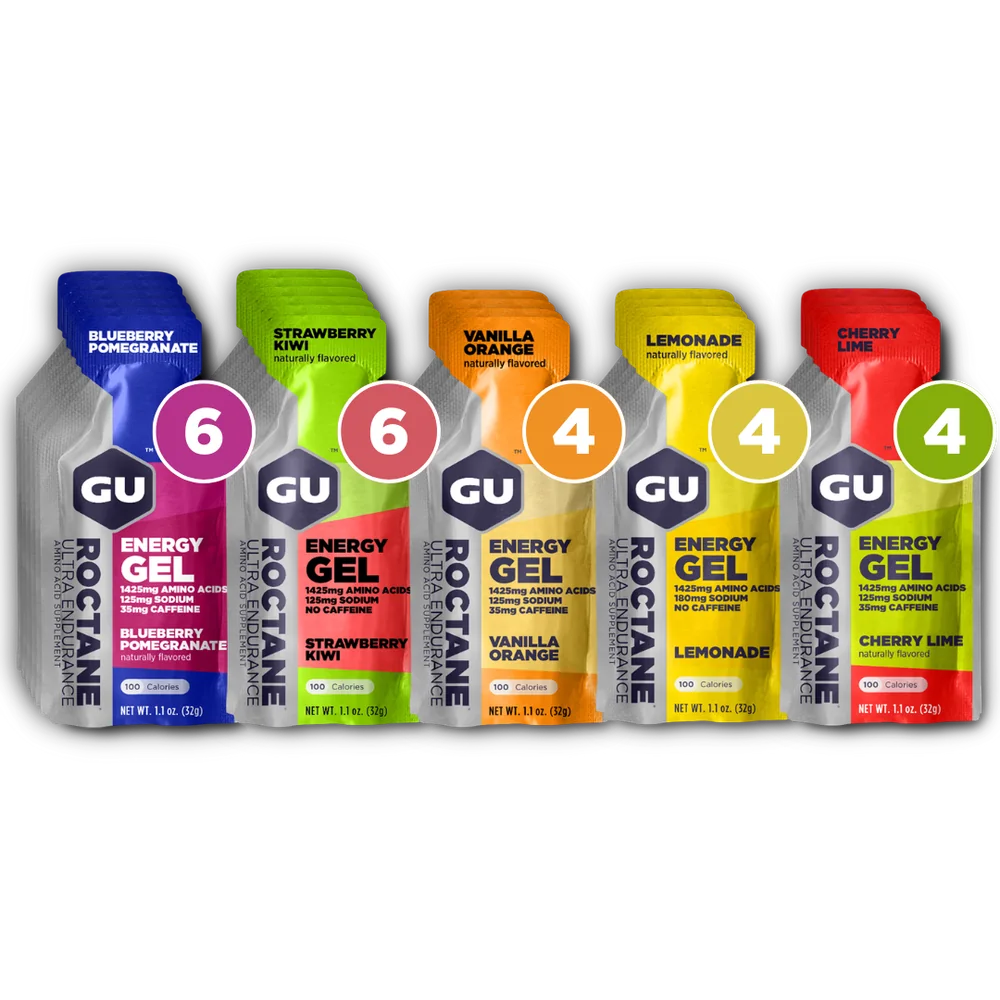
Guide
Roctane vs Original
Original Energy Gel is the everyday choice for steady training. Roctane adds electrolytes and amino acids for long races, hard key sessions and hot days, when hydration balance and muscle fatigue become the bigger problem. Which one, and when.
Read the guide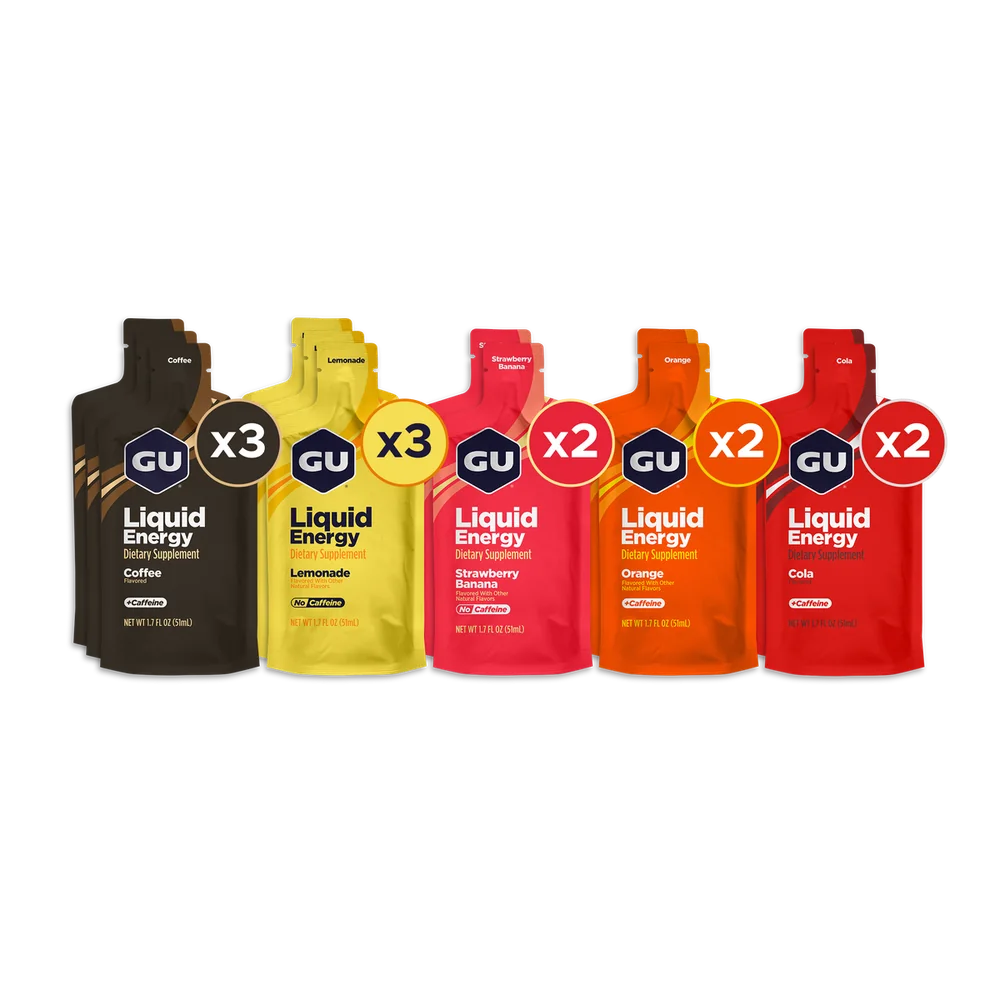
Shop
Shop the gels
Original Energy Gel, Liquid Energy Gel and Roctane Energy Gel, every flavour with its caffeine content listed. Pick the line that fits the session, then practise with it before you race.
Shop all gelsSame gels.
Your timing.
Try the schedule on a long training session first, not on race day, and sip water with every gel.