
FAQ
Questions, answered.
Everything people ask us about energy gels before they buy and after they start using them: what is in a packet, when to take one, which line to pick, what they are made with, and what happens after you order. Can't find it here? The guides in the education hub go deeper.
Gel basics
What's in the packet, and why.
Start here if you are new to gels or new to our three lines.
What is an energy gel?
A small packet of carbohydrate your body can absorb while you move, with a little sodium and some amino acids alongside. Each of our gels carries 100 calories: about 21–23 g of carbs in an Original Energy Gel, 24 g in a Liquid Energy Gel and 19–21 g in a Roctane Energy Gel. Carbs become your main energy source as you go from resting to working, and the harder you go, the more you rely on them. A gel is the most portable way to keep that supply topped up. Energy gel 101 covers the basics.
Do I actually need one?
The real question is whether you need fuel. Your body stores carbohydrate from your daily diet, and that store covers short or easy sessions on its own. Work hard, or go for longer than about 45 minutes, and you run out of available fuel; as the store empties, performance drops. A gel puts carbs back in a form your gut can handle mid-effort, so you keep going at the same pace instead of fading. For an hour or less, one gel about five minutes before the start covers it. Past an hour, or in any hard session, you fuel on the move.
Why are the gels made with two kinds of carbohydrate?
Our gels blend maltodextrin and fructose. The two use different pathways in the gut, so each gets its own express lane into the bloodstream. That means more usable energy per hour than a single carb source, and less of the stomach upset that comes from pushing one pathway too hard. It also spreads the energy out: the maltodextrin arrives fast and the fructose a little later, which is why a gel feels steady rather than spiky. Fast vs steady energy explains the timing.
How quickly does a gel work?
Straight away. The maltodextrin converts into a form your muscles can use within minutes. The fructose takes several minutes longer, so you get a steady stream of energy instead of one big sugar hit and a crash afterwards. That delay is also why the timing rule is one gel every 20–30 minutes: you take the next packet before the last one has run out, not after.
What's the difference between Original, Liquid Energy and Roctane?
Same carbohydrate base, three jobs.
- Original Energy Gel: a 32 g (1.1 oz) smooth gel with 100 calories, about 22 g of carbs, 60–125 mg of sodium and 450 mg of amino acids. The everyday gel for most training.
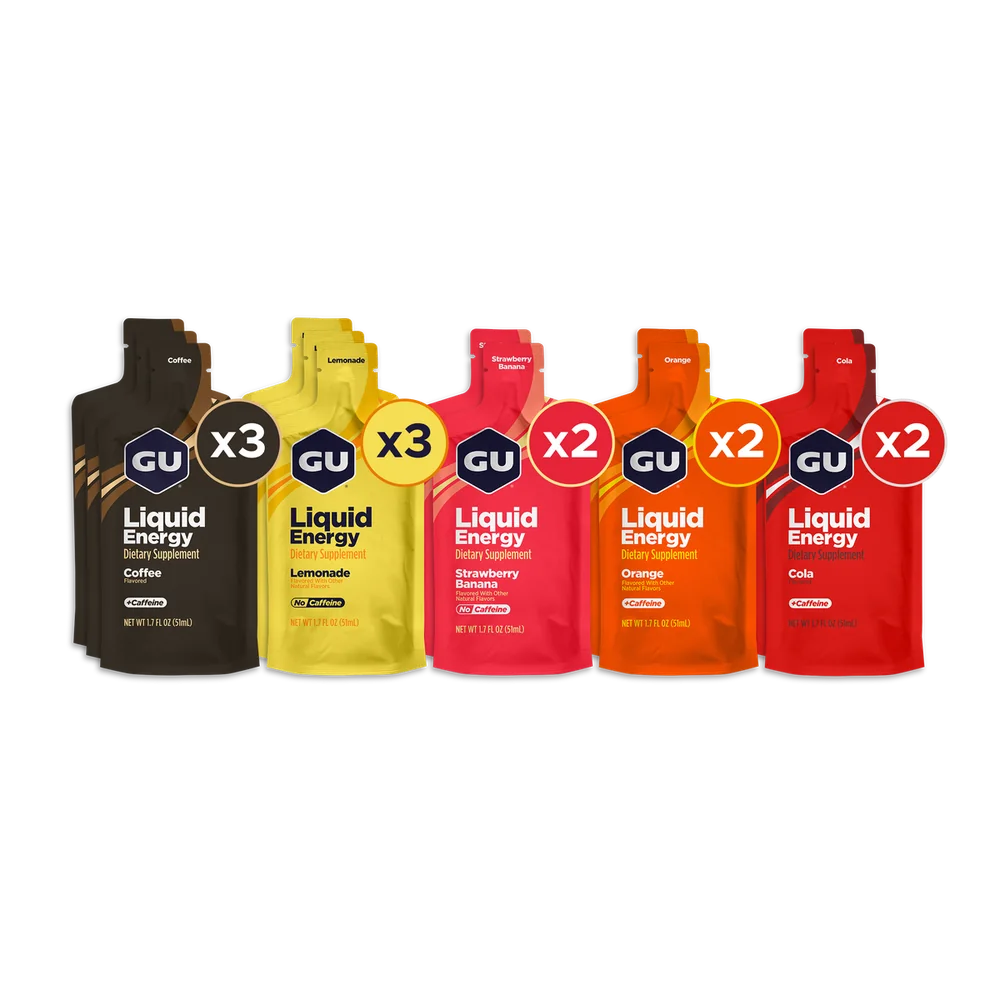
- Liquid Energy Gel: the same 100 calories and 450 mg of amino acids in a thinner, drinkable 60 g (2.11 oz) packet with 24 g of carbs and 75 mg of sodium. Easier to swallow when it is hot or the effort is hard, and it freezes.
- Roctane Energy Gel: built for long or intense days. Up to 3x the sodium of the Original (125–180 mg) and 3x the branched-chain amino acids, 1,425 mg of amino acids in all, including taurine and beta-alanine.
Still unsure? Choose the right gel, or go straight to Roctane vs Original and Liquid vs traditional gels.
Is one Liquid Energy Gel worth two Original gels?
No. The packet is bigger because it carries more water, not more fuel. One Liquid Energy Gel gives you the same 100 calories and 450 mg of amino acids as one Original Energy Gel, with 24 g of carbs against about 22 g. Count it as one gel in your plan. What you gain is the texture: a light liquid you can sip rather than squeeze, which many people find easier early in the morning, in heat, or between triathlon transitions. Eat or drink your fuel goes into when each format suits.
Timing and usage
When to take them, and how.
The numbers that matter once you are out the door: first gel, interval, water, caffeine.
When should I take my first gel?
It depends on how long you will be out. For an hour or less, start well fed and hydrated and take one gel about five minutes before you begin, with a few sips of water; that tops up your stores for the whole session. For anything longer than an hour, you fuel on the move: first gel at 20–30 minutes, then one every 20–30 minutes until you finish. The full timeline, before, during and after, is on How to fuel.
How many gels an hour?
Past the first hour, one gel every 20–30 minutes. At 100 calories a packet that is roughly 200–300 calories an hour, which is the range to aim for during activity. The 100-calorie serving is deliberate: during exercise blood moves to your working muscles and away from the gut, so small, frequent doses go down better than a large one. Everyone processes fuel a little differently, so test your schedule in training before you trust it on race day. The fuel calculator turns your duration, intensity and conditions into a minute-by-minute plan.
Do I need to drink water with a gel?
Yes, every time. A few sips of water with each gel helps your body absorb the carbs faster and keeps the gut comfortable. A gel is concentrated fuel, not hydration, so keep drinking as well: a good rule of thumb is roughly 475–890 ml (16–30 oz) of fluid per hour of activity, more in heat and humidity or if you sweat heavily. Liquid Energy Gel contains some water, but it is not enough to replace what you lose; drink alongside it too. Energy vs hydration explains how to tell which one you are short of.
Should I use the caffeinated flavours?
Only if you want to, and only after testing them in training. Caffeine is not fuel; the carbs do that job. What it adds is focus and a lower sense of effort, which is why many athletes keep it for the back half of a race or for key hard sessions rather than every packet. It can affect sleep or the stomach in some people, so evening or sensitive-gut sessions are better non-caffeinated. Doses per packet: 20 or 40 mg in Original and Liquid Energy flavours, 35 mg in caffeinated Roctane flavours, and 70 mg in Roctane Cold Brew Coffee. Every line has caffeine-free flavours. See Caffeinated vs non-caffeinated and the flavour and caffeine chart.
When is Roctane worth it over Original?
When the day is long, hard, or hot. Roctane Energy Gel has up to 3x the sodium and 3x the branched-chain amino acids of the Original, plus taurine and beta-alanine, so it was designed for prolonged or intense efforts: the ones that need extra recovery time, where fatigue, focus and perceived effort start to decide the result. On a humid Mumbai or Chennai morning, that extra sodium is the point. There is no harm in using Roctane for every session, but most people use Original through the week and keep Roctane for long days, key workouts and race day. Roctane vs Original has the full comparison.
Gels upset my stomach. What can I do?
Four things, in order. Take every gel with water. Take smaller amounts more often rather than a whole packet at once; the 100-calorie serving exists so you can sip it over a few minutes. Try Liquid Energy Gel, whose thinner texture many people find easier to tolerate. And train your gut the way you train your legs: if you are new to fuelling or want to take in more than you do now, start at least 6–8 weeks before race day and build up gradually on long sessions, so your stomach has time to adapt. Train your gut shows how.
Orders and dietary
Ingredients, suitability and ordering.
What the gels are made with, who they suit, and the practical bits after you add to cart.
Are the gels vegan, gluten-free and dairy-free?
Yes, all three. Original Energy Gel, Liquid Energy Gel and Roctane Energy Gel are vegan, gluten-free and dairy-free, and every line is banned-substance tested. Full supplement facts and ingredient lists are printed on each packet, and the headline numbers are on each product page, so check the packet for the flavour you are buying. More in Gluten-free and vegan gels.
Are they kosher?
Original Energy Gel and Roctane Energy Gel are kosher. Liquid Energy Gel is not. If kosher matters to you, stick to the Original and Roctane lines; they cover every duration and intensity between them.
Can I use them while pregnant, or give them to my kids?
The gels are made for active bodies, but we recommend speaking to a doctor or other healthcare professional before using any energy supplement during pregnancy or while breastfeeding. For children who are playing sport, hiking or otherwise active, a gel works the same way it does for you; just keep them away from the caffeinated flavours and choose caffeine-free ones. The flavour and caffeine chart lists which is which.
How should I store gels, and do they survive heat and cold?
Keep them in a cool, dry place, and once a packet is open, finish it; the taste and texture are best straight away. Cold thickens a gel: Original and Roctane only freeze well below zero, but on a cold-weather run or ski day keep them in a pocket close to your body so they stay soft enough to squeeze. Liquid Energy Gel has a higher water content and does freeze, which is a feature on hot days: freeze one overnight and it melts into a slushie on the way out. Temperature, taste and fuelling has more.
What box sizes can I order?
Every gel, Original, Liquid and Roctane, comes in a box of 8 single-flavour packets at ₹999, so trying a new flavour costs no more than your usual one. Prices are shown in INR on each product page, and you can compare all three lines on the shop page.
How long does delivery take, and what about returns?
Shipping is calculated at checkout. For delivery areas, timings and charges, see our shipping policy. For returns, exchanges or a parcel that arrives damaged, see our refund policy. If anything about an order is unclear, get in touch and we will sort it out.
Still deciding? Let the numbers choose.
Run the fuel calculator for a plan built around your session, or browse all three lines side by side.