
Fuel guide
Train your gut: how to practise race-day fuelling
Your stomach is trainable. The long runs that build your legs can also teach your gut to absorb more carbohydrate and fluid at race effort, which is why most race-day bloating traces back to a plan that was never rehearsed, not to the gel itself. This guide sets out a 6–8 week progression, shows how to practise at race pace, pairs each gel with water, and lists what to log so the plan improves every week.
Why the gut needs training
Absorbing carbohydrate on the move is a skill, and the gut adapts to what it is regularly asked to do. Give it 60 g an hour at marathon pace a few times and it gets quicker at moving that sugar from stomach to blood. Ask for it for the first time on race morning and it objects. Marathon guidance is 60–90 g of carbohydrate an hour, taken every 20–30 minutes, and the only comfortable route there is to build up in training.
Start 6–8 weeks before race day
If you are new to fuelling, or your target is a step up from what you take now, start gut training at least 6–8 weeks out. Long runs are the sessions that matter: they expose the gut to several gels in a row and include stretches near race effort. Easy or recovery runs under 60 minutes do not need in-run fuel if you have eaten earlier in the day; take 20–30 g of carbohydrate, one gel, 5–15 minutes before you start and save the higher targets for the sessions where rehearsal counts. Set your own target with the fuel calculator first, so you know where the progression is heading.
A weekly progression
Progression matters more than perfection. If the target feels high, start at what feels manageable and add roughly 10 g an hour each week. Here is the worked example for a runner on 30 g an hour with a target of 75 g. An Original Energy Gel carries 21–23 g of carbohydrate; a Liquid Energy Gel carries 24 g.
| Week | Target | Gel schedule on the long run | Roughly delivers |
|---|---|---|---|
| 1 | 30 g/h | One gel every 40 minutes | 32–35 g/h |
| 2 | 40 g/h | One gel every 30 minutes | 42–46 g/h |
| 3 | 50 g/h | One gel every 25 minutes | 50–55 g/h |
| 4 | 60 g/h | One gel every 20 minutes | 63–69 g/h |
| 5 | 70 g/h | One Liquid Energy Gel every 20 minutes | 72 g/h |
| 6 | 75 g/h | Liquid Energy Gel every 20 minutes plus a mouthful of carbohydrate drink between gels | 75 g/h |
| 7–8 | Hold | Repeat the target schedule on the last two long runs, at race pace | 75 g/h |
Three rules govern the jumps:
- Symptoms mean hold, not quit. If you get bloating, fullness or nausea, stay at the same intake for another week, or keep the grams and vary the source: alternate Original with Liquid Energy Gel, or move some carbohydrate into a drink.
- Persistent symptoms mean step back. If a second week at the same level still causes trouble, drop to the previous step and reassess.
- Fine-tune in 5 g steps. Close to the target, jumps of about 5 g an hour on long runs find the exact level your gut accepts.
Keep the empty packets in a pocket and count them at home. "Three gels in two hours" is the plan; the wrappers say what happened, and the gap between the two belongs in your log.
Practise at race pace
A stomach that is happy at easy pace is not necessarily happy at marathon pace. Harder running sends more blood to the legs and less to the gut, so a gel that went down fine on a Sunday jog can sit like a stone at threshold. Take some of each long run's gels during the race-pace segments.
- Take the first gel on schedule, not on hunger. Waiting until you feel flat means you are already behind. Set a watch alert for every 20–30 minutes and follow it.
- Use the gel you will race on. Same flavour, caffeine and format. If your race runs beyond 90 minutes or 16 km, that usually means Roctane Energy Gel, with its extra electrolytes and amino acids, so practise with it rather than switching on race day.
- Practise the handling. Opening a packet with sweaty hands at 4:30 per km is its own skill, and so is carrying six of them.
- Rehearse race morning once. Your usual pre-long-run meal, with time to digest and no fibre or protein close to the start, tried before a key long run rather than for the first time in race week.
Pair every gel with water
Carbohydrate is absorbed best with fluid alongside it, so whenever you take a gel, drink. A gel on a dry stomach sits heavier. Starting dehydrated also raises the risk of GI distress and undermines the fuelling you are practising, so hydration begins before the first step.
| When | How much | Why it matters for gut training |
|---|---|---|
| Through the day | Sip fluids with light electrolytes | Arrive at the session topped up |
| 1–2 hours before | 200–350 ml (7–12 oz) | Lowers the chance of GI trouble; adjust for body size, sweat rate and weather |
| With each gel | A few good sips | Helps the carbohydrate leave the stomach |
| Per hour, beyond 60 minutes | 450–900 ml (16–30 oz), with electrolytes | Sip every 10–15 minutes; a sloshing stomach means you are over the range |
| After | Carbohydrate, protein and electrolytes within 30 minutes, then keep drinking | Tomorrow's session starts hydrated |
Practise with the water set-up the race will give you. If that is aid stations, learn where they fall from the course notes, time gels to land just before a water point, and rehearse the gel-then-cup sequence at pace. If you carry a bottle, train with it.
Heat changes the equation. A humid pre-dawn start in Mumbai or Chennai, or a 32 °C long run in Hyderabad, pushes sweat losses up and makes the gut less tolerant of everything. Do some gut-training runs in the conditions you expect on race day, drink towards the top of the range, and expect to sit a step lower on the ladder until you adapt.
What to log
Gut training only works if you can compare weeks, and memory is unreliable about how a long run felt once the shower is done. Six lines per session in a phone note is enough:
- The session: distance, duration, and how much was at race pace.
- The fuel: target grams an hour, the planned schedule, and what the wrapper count says you actually took, with flavour and caffeine.
- The fluid: millilitres an hour, water or electrolytes, before and during.
- Conditions: temperature, humidity and start time.
- Gut score: 0 for nothing, 1 for mild fullness, 2 for bloating or nausea that affected pace, 3 for having to stop.
- Energy in the last 30 minutes: steady, fading or flat.
Then apply the rules: advance a step only if the week's long run scored 0 or 1, and step back after two sessions at 2 in a row. Over a few weeks the log also shows what the table cannot predict, such as a day when 40 g felt like 70 because you started dehydrated.
Race week: nothing new
By race week the experiment is over. Run the plan the log says works: the same gels, interval and water. Carbohydrate-load for the 2–3 days before at 8–10 g per kg of body weight, cutting fat and fibre, eat your usual pre-long-run meal with time to digest, and start hydrated. If the weather forces a change, change the drink, not the gel schedule.
FAQ
How long does it take to train the gut?
Allow at least 6–8 weeks. Each long run buys a little more tolerance, but a 30 g to 75 g jump needs the full window plus a week or two at the target.
I feel sick on gels. Should I push through?
No. Hold at the current intake for another week, or keep the grams and change the source. If symptoms persist, step back one level. Persistent nausea is information, not a test of character.
Should I practise with the exact gel I will race on?
Yes. Flavour, caffeine and format all affect how a gel sits over three or four hours. If your race is longer than 90 minutes or 16 km, that is usually Roctane Energy Gel, so make it your long-run gel from the start of the block. Roctane vs Original explains the differences.
Next steps
- Set your carbohydrate and fluid targets with the fuel calculator, then start the ladder.
- Turn the practised plan into a race plan: marathon gel strategy.
- Match fuel to the week's workload with fuelling for training load.
These statements have not been evaluated by a regulatory authority. This product is not intended to diagnose, treat, cure or prevent any disease.
Next steps
Read it. Now use it.
Three places to go from here: the full plan, the calculator that does the maths for your distance and the weather, and the gels themselves.
Plan
How to fuel
The whole plan, hour by hour. One gel about five minutes before you start, then one every 20–30 minutes once you are out past the hour, with a few sips of water each time. Do not wait until you feel hungry or flat.
See the plan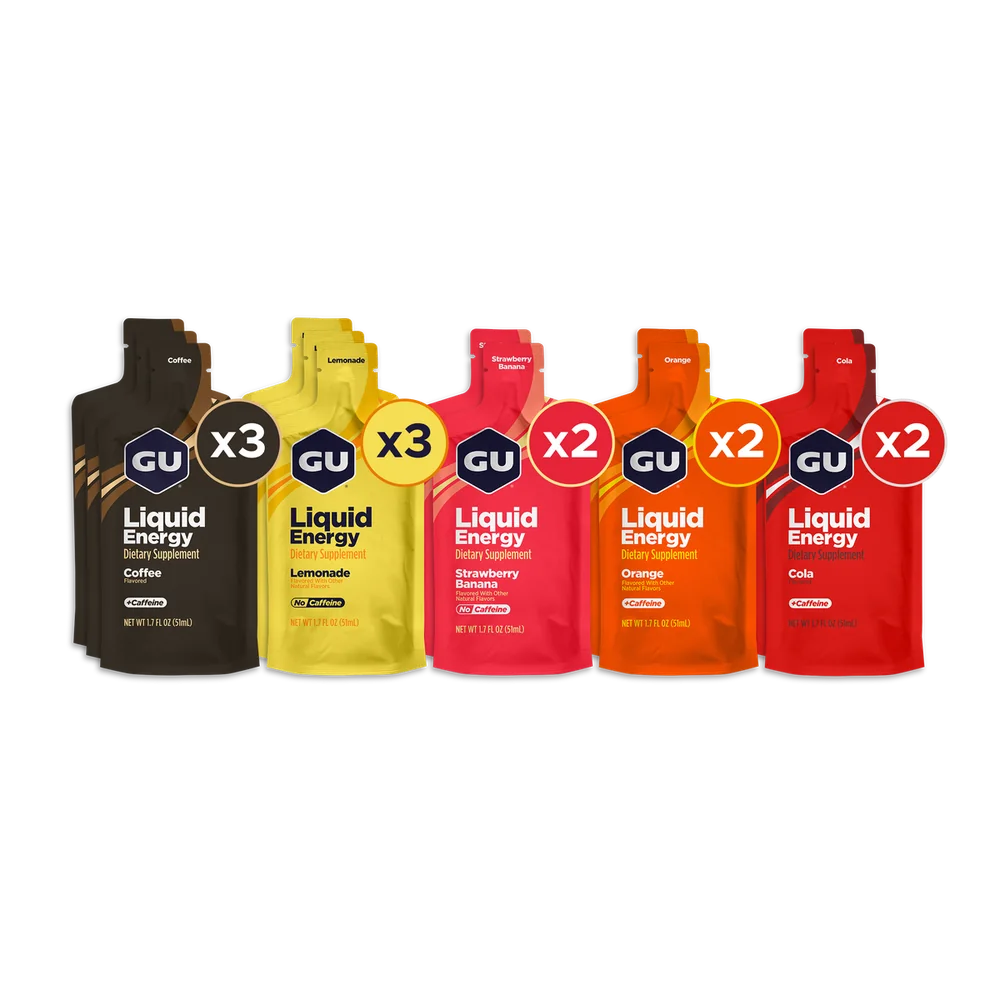
Tool
Fuel calculator
Activity, duration, intensity, body weight and the heat go in; carbs per hour, how many gels to carry and a minute-by-minute schedule come out. If the target feels high, start lower and build towards it over 6–8 weeks of gut training.
Get your numbers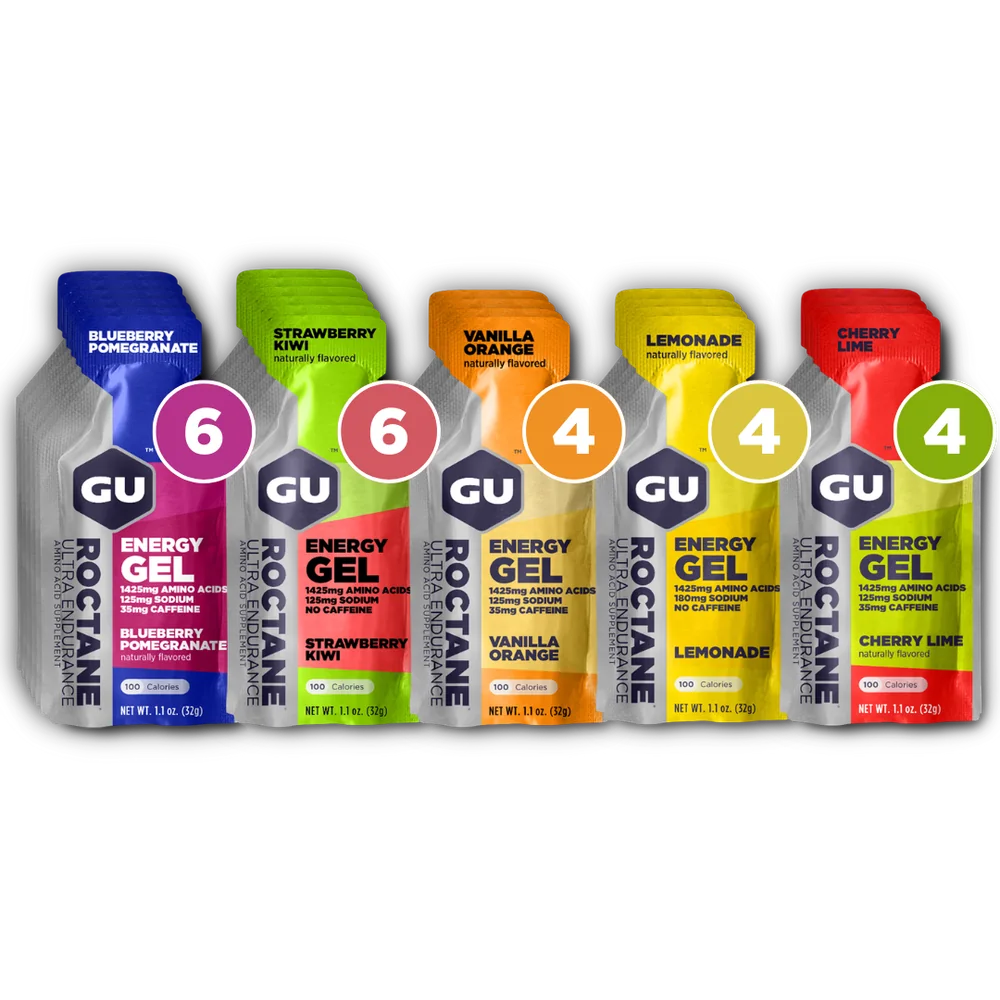
Shop
Shop the gels
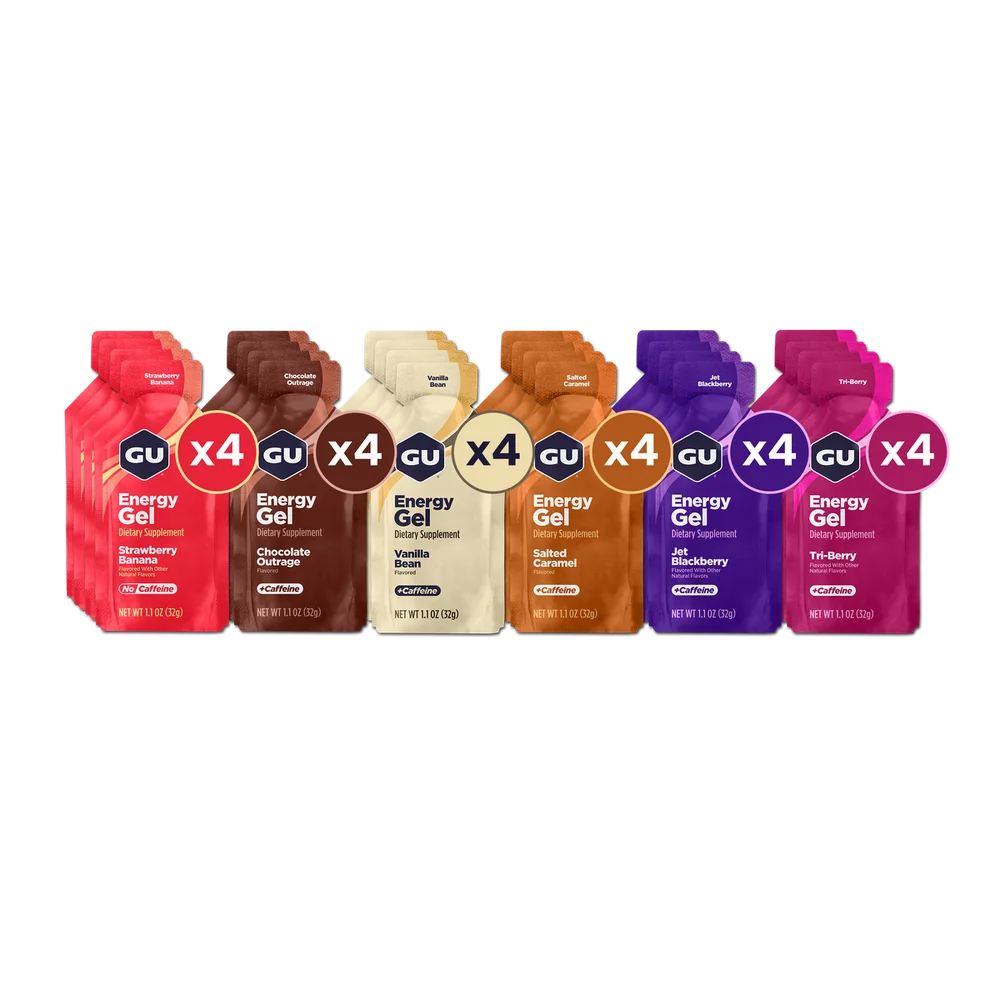
Three lines, one job. Original for everyday training, Liquid Energy for the same carbohydrate in a lighter, smoother form, and Roctane with up to three times the sodium and three times the amino acids for the longest, hardest days.
Shop all gelsPractise the plan on a long session,
not on race day.
Nothing new on the day. Test the timing in training, note what your stomach says, and adjust from there.