
Fuel guide
Fast vs steady energy: how fuel absorption works
Deep into a long run the focus drifts and the pace slips. That is when most people reach for a gel, and it is already late. Fuel only helps once it has been broken down, absorbed through the gut wall and picked up by working muscle, and each step has its own speed. This page explains the two carbohydrates inside every gel we sell, why one reaches your legs within minutes and the other a little later, and how to plan around it.
Three steps between the packet and your legs
Before a gel does anything useful, three things happen in order:
- Breakdown. The carbohydrate is split into simple sugars, mainly glucose and fructose.
- Absorption. Those sugars cross from the small intestine into the blood.
- Use. Working muscle pulls the glucose out of the blood and burns it.
How fast each step runs depends on the fuel's format, its ingredients, the water you take with it and how hard you are working. At high intensity the body sends blood to the muscles and away from the gut, so digestion slows; at an easy aerobic pace the gut has far more to work with. A plan for a hard 45-minute effort therefore looks nothing like a plan for a 12-hour day in Ladakh.
Fast lane, steady lane: maltodextrin and fructose
Every gel here carries two carbohydrates rather than one, and they behave differently in the gut.
Maltodextrin is glucose units joined in long chains, like carriages on a train. The chain is broken apart soon after it reaches the small intestine and the glucose crosses the gut wall through dedicated glucose transporters. As one large molecule it keeps osmolality lower than loose glucose would, so it empties from the stomach more easily and is gentler on the gut. Your muscles can tap the result within minutes.
Fructose uses a separate transporter that does not compete with the glucose one. It has a lower glycaemic index, so it takes longer to raise blood glucose, and it arrives several minutes behind the maltodextrin. That lag is the point: a fast lane and a steady lane overlapping give the muscle a continuous supply instead of one spike and the crash that follows.
| Per gel | Maltodextrin | Fructose |
|---|---|---|
| What it is | Long chains of glucose, made from corn | The sugar found in fruit and honey |
| Route into the blood | Glucose transporters | A separate, non-competing transporter |
| Ceiling on its own | About 60 g per hour, then the transporters saturate | About 30 g per hour |
| Time to usable energy | Within minutes | Several minutes later |
The two ceilings add up. Glucose-only fuel stalls at roughly 60 g an hour however much you swallow, because the transporters are full and the rest sits in your gut. Add fructose and peak carbohydrate use rises to about 90 g an hour.
The 30 minutes after a gel
Take a gel in the middle of a hard effort and this is the sequence, give or take a few minutes for your own physiology.
| Stage | What is happening |
|---|---|
| Swallow | No chewing and little digestion needed; the body starts on the semi-liquid texture straight away. |
| First few minutes | Maltodextrin is split and glucose starts crossing into the blood. Water speeds this up, so take every gel with 120–240 ml (4–8 oz). |
| Peak | Both lanes are open. Glucose and fructose arrive through different doors at once, so the muscle gets more fuel per hour than one sugar could deliver. |
| 20–30 minutes | The supply tapers. At moderate-to-high effort one packet covers roughly 20–30 minutes, so the next should already be on its way. |
By the time you feel the drop, you are behind. Fuelling before depletion works far better than fuelling in reaction to it. Start a repeating 25-minute alarm at the first gel so the decision is made for you once you are tired.
How effort changes the clock
Intensity changes how fast the same packet absorbs. A threshold session or a hard 10K burns carbohydrate quickly and restricts the gut at the same time, so you want fuel that needs almost no processing. A six-hour ride in the Western Ghats or an 80 km trail run asks for a rhythm you can hold for hours.
| Reach for fast energy (a gel) when | Lean on steadier delivery when |
|---|---|
| Intensity is high and you need carbohydrate now | You are managing output for hours, not surging |
| You are in the back half of a long effort and fading | You want a high hourly intake without gut trouble; slower delivery helps you absorb more |
| Hard intervals, race pace, or a triathlon transition with no time to chew | You are early in a long session and want to protect glycogen for later |
Steady delivery can come from chews, a carbohydrate drink or real food, which all move through the three steps more slowly than a gel. It can also come from the gel itself: on a fixed rhythm at an easy pace, each packet's fructose is still arriving when the next goes down. Long days usually go best stacking both; see gels vs real food and gels vs sports drinks.
Turning absorption into a plan
Dose
For most athletes 30–60 g of carbohydrate an hour is effective. Up to 90 g an hour is achievable, but only with a dual-source formula and a gut that has practised at that rate. Each of our gels is 100 kcal, with 21–23 g of carbohydrate (Original), 24 g (Liquid) or 19–21 g (Roctane), so the hourly budget is two or three packets.
| Effort | Carbohydrate target | Gels per hour | Rhythm |
|---|---|---|---|
| Hard, under 1 hour | Top-up only | 1 | 5–15 minutes before the start, with water |
| 1–2 hours | 30–60 g/h | 2–3 | One every 20–30 minutes |
| 2 hours and longer | 60 g/h, building towards 90 g/h with practice | 3, plus a carbohydrate drink to reach 90 g | One every 20 minutes, each with water |
Timing
Eat before you need it. New to gels? Begin with one every 45 minutes and shorten the gap as your gut adapts. Past an hour, or working hard, aim for one every 20–30 minutes. A gel 5–15 minutes before the start, even on an empty stomach, opens the fast lane from the first step.
Water
Water is part of the dose. Each gel is designed to go down with 120–240 ml of water, which helps the carbohydrate leave the stomach and cross into the blood. In Mumbai humidity those sips also replace some sweat; energy vs hydration covers how much more you need.
Caffeine, the second variable
Caffeine does not change how fast the carbohydrate absorbs, but it changes how the energy feels. For most endurance athletes 40–100 mg per serving is an effective dose for focus and endurance.
| Gel | Caffeine (caffeinated flavours) | Where it fits |
|---|---|---|
| Original Energy Gel | 20–40 mg | Every other gel, or the final 60 minutes |
| Roctane Energy Gel | 35–70 mg | High-intensity efforts and race day |
| Liquid Energy Gel | 20–40 mg | When a thicker texture is hard to face |
Every line also comes caffeine-free; on long events, alternate caffeinated and plain packets to keep the total in check. See caffeinated vs non-caffeinated and the flavour and caffeine chart.
Original or Roctane? Same maltodextrin-and-fructose base, same absorption. Roctane adds branched-chain amino acids, beta-alanine and taurine to help delay fatigue and support muscle on efforts over 90 minutes.† Under an hour, carry Original.
Practise the rhythm
The gut adapts. Take carbohydrate in training at the timing and quantity you plan to race with and you will absorb more of it, with less trouble, at 32 km of a Mumbai marathon. Never try a new product, dose or rhythm for the first time in a race. Train your gut walks through the build-up.
FAQ
How quickly does a gel start working?
Within minutes. The maltodextrin is converted to usable energy almost immediately; the fructose follows several minutes later and keeps the supply going. One packet covers roughly 20–30 minutes at moderate-to-high effort.
Why not just take more gels for more energy?
Because the transporters have a ceiling: about 60 g an hour for glucose, with fructose adding about 30 g more. Beyond roughly 90 g an hour the extra sits in your gut, pulls blood away from your muscles and causes the heavy, sloshing feeling runners blame on gels.
One gel an hour or two?
Start with one every 45 minutes and build from there. Once a session passes an hour, or the effort is hard, move to one every 20–30 minutes, which is two or three an hour.
Next steps
- Fuel calculator: turn session length and effort into a packet count and a timer interval.
- Train your gut: build towards 60–90 g an hour without race-day surprises.
- Marathon gel strategy: a worked 42.2 km plan on the fast-lane, steady-lane rhythm.
† These statements have not been evaluated by a regulatory authority. This product is not intended to diagnose, treat, cure or prevent any disease.
Next steps
Read it. Now use it.
Three places to go from here: the full plan, the calculator that does the maths for your distance and the weather, and the gels themselves.
Plan
How to fuel
The whole plan, hour by hour. One gel about five minutes before you start, then one every 20–30 minutes once you are out past the hour, with a few sips of water each time. Do not wait until you feel hungry or flat.
See the plan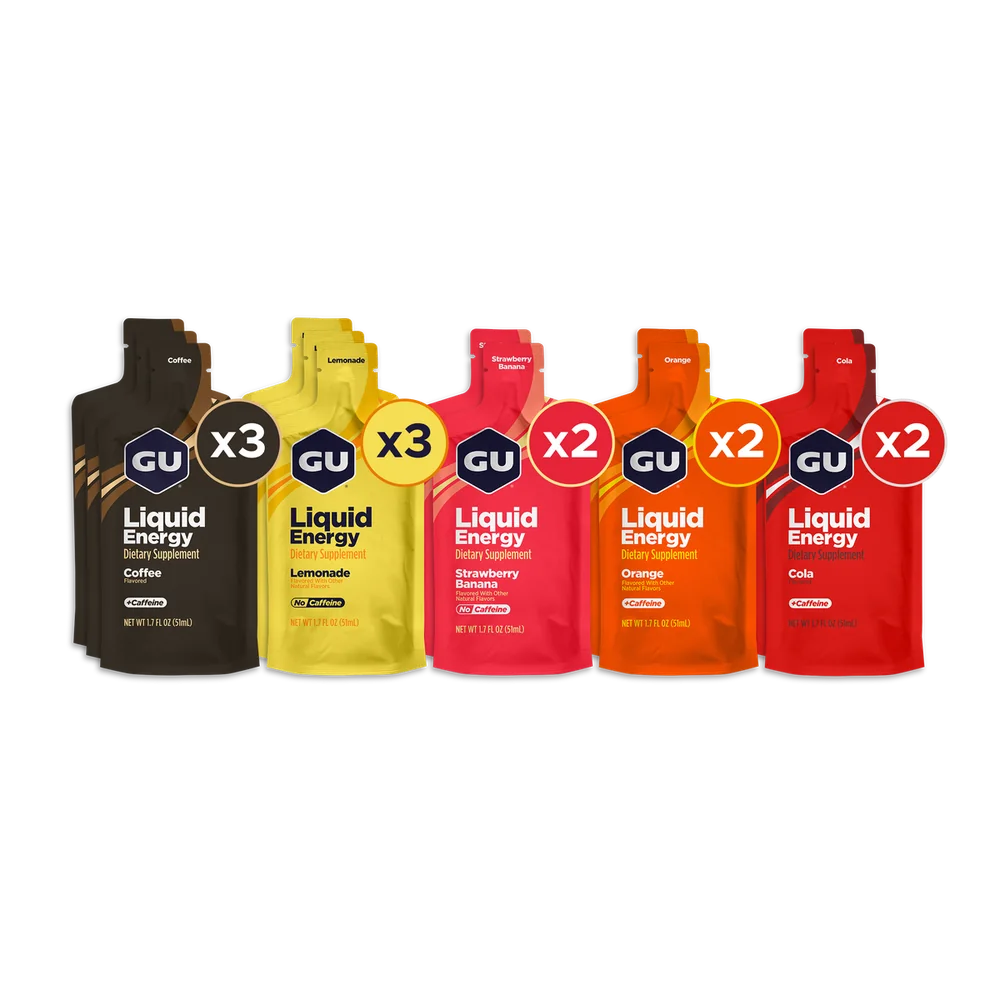
Tool
Fuel calculator
Activity, duration, intensity, body weight and the heat go in; carbs per hour, how many gels to carry and a minute-by-minute schedule come out. If the target feels high, start lower and build towards it over 6–8 weeks of gut training.
Get your numbers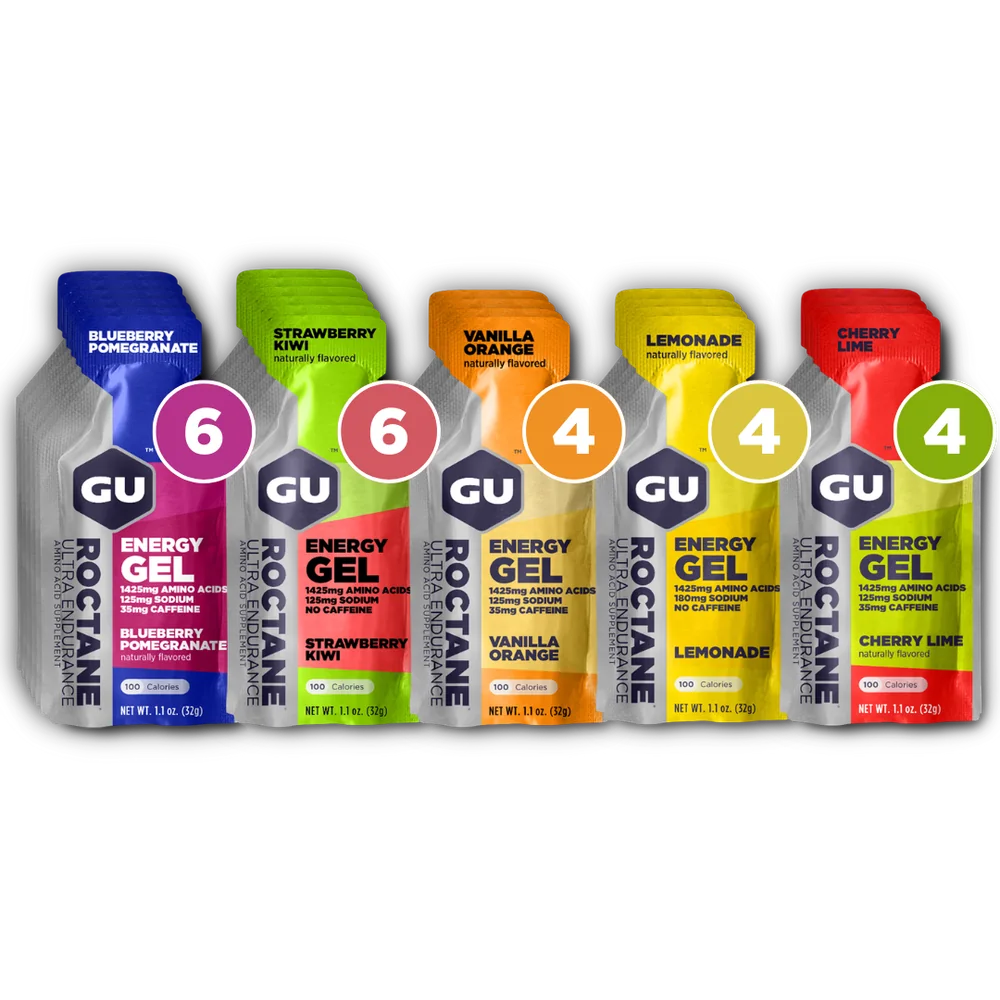
Shop
Shop the gels
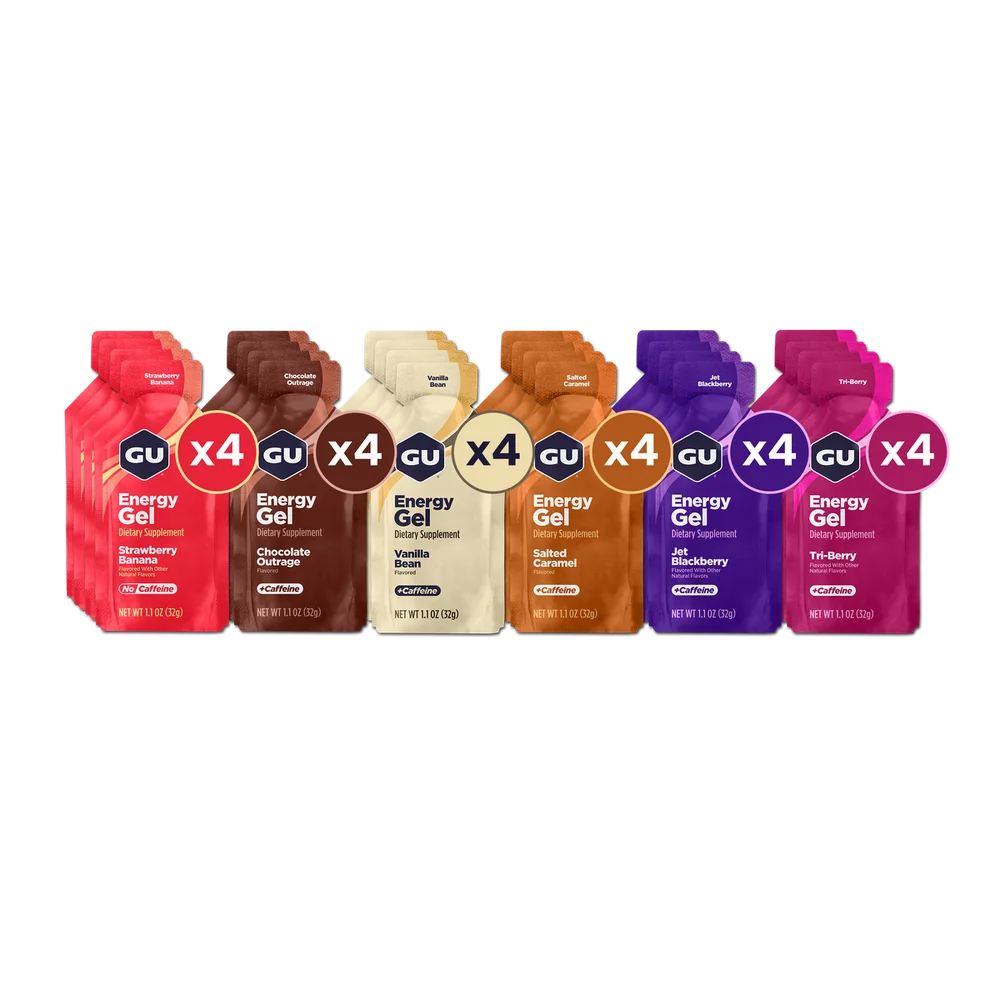
Three lines, one job. Original for everyday training, Liquid Energy for the same carbohydrate in a lighter, smoother form, and Roctane with up to three times the sodium and three times the amino acids for the longest, hardest days.
Shop all gelsPractise the plan on a long session,
not on race day.
Nothing new on the day. Test the timing in training, note what your stomach says, and adjust from there.