
How to fuel
Fuel before you fade.
A gel is simple: carbohydrate your muscles can use within minutes. Getting it right is about timing. Here is the whole plan, from the five minutes before you start to the thirty minutes after you stop, whether that is a 10K in Bengaluru or a long day of climbing in the Ghats.
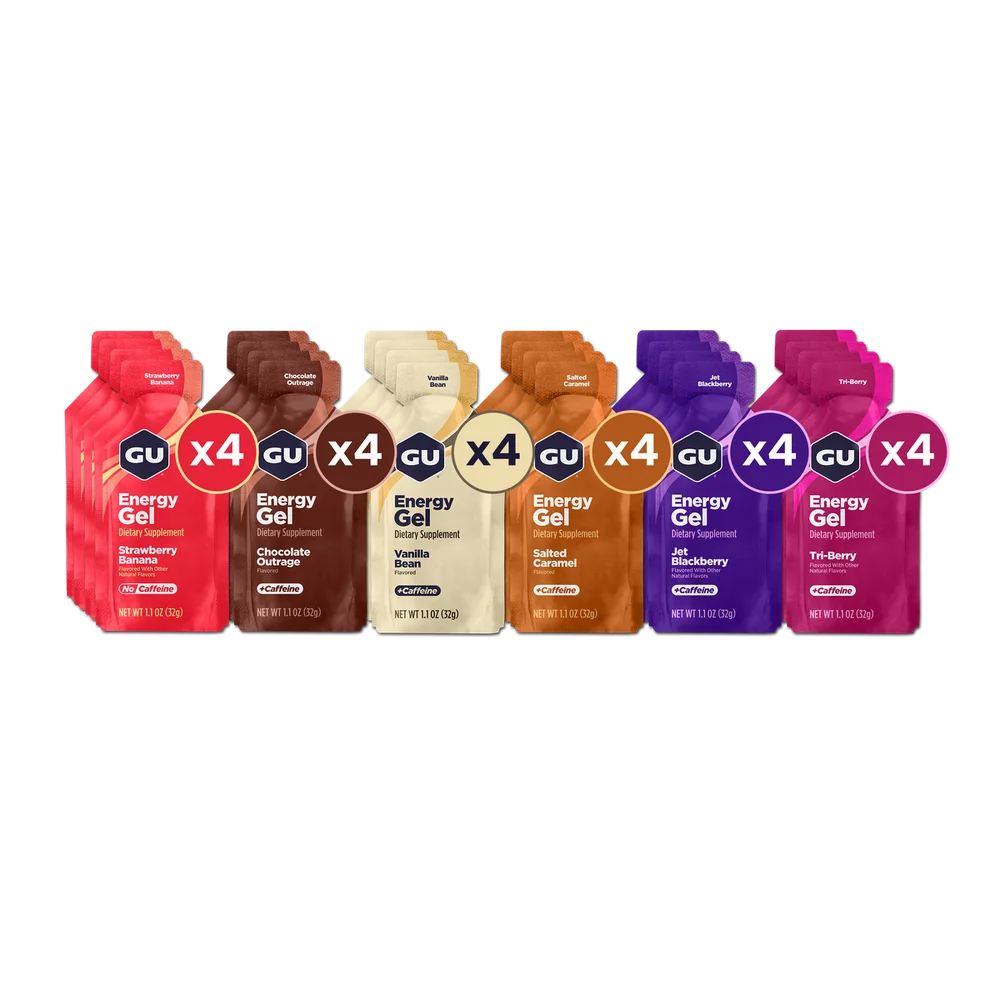
The timeline
Fuel by the hour, not by feel.
Your body stores enough carbohydrate for shorter, easier sessions. Go hard or go longer than about 45 minutes and the tank runs dry. Here is what to take, and when, for four lengths of effort.
one every 20–30 min →
-
0–1 h
Top off, then go.
For anything up to an hour the work is done before you start: arrive hydrated and with full energy stores. Take one gel about five minutes before you set off, with a few sips of water, and fuel is available from the first step. You rarely need anything mid-session.
Tip: Easy run under 60 minutes? 20–30 g of carbs 5–15 minutes before is plenty. That is one gel before a 45-minute jog.Energy gel 101 -
1–2 h
One gel every 20–30 minutes.
Past the hour mark you are burning stored carbohydrate faster than you can replace it, so refuel as you go. Aim for one gel every 20–30 minutes and keep drinking; water helps your body absorb the fuel. Do not wait until you feel hungry or flat. By the time you notice the drop, you are already behind.
Tip: New to fuelling? Start with one gel every 45 minutes and tighten the gap as your gut adapts.Marathon gel strategy -
2–3 h
Add electrolytes to the carbs.
The longer you go, the more your body asks for. Target 60–90 g of carbohydrate per hour (three gels gets you to the bottom of that range) and drink roughly 475–950 ml (16–32 oz) of fluid an hour with electrolytes, not plain water alone. On a humid Mumbai or Chennai morning sodium matters as much as sugar: Roctane Energy Gel carries up to 3x the sodium of Original.
Tip: Switch to Roctane for anything over 90 minutes or 16 km, and whenever heat and humidity are part of the day.Energy vs hydration -
3 h+
Eat what you can comfortably process.
On really long days you cannot replace everything you burn. The goal is to take in as much as your gut will comfortably handle, steadily, from the first hour. Keep the 20–30 minute rhythm, rotate formats (a Liquid Energy Gel goes down easier late in a hot race) and lean on Roctane, which is built for exactly these hours with up to 3x the amino acids and sodium of Original.
Tip: Gut-train for 6–8 weeks first. The intestine adapts to what you practise, not to what you attempt on race day.Train your gut
Train your gut
Your gut is trainable. Treat it like a muscle.
Mid-race stomach trouble is rarely random; it usually comes from unfamiliar fuel or too much, too fast. A systematic review of gut-training studies found that repeatedly taking carbohydrate during training cut gut discomfort by an average of 47% and carbohydrate malabsorption by 45–54%, after just a two-week structured protocol. Here is how to build up before your next start line.
-
Start 6–8 weeks out
If you are new to fuelling, or want to take in more carbohydrate than you do now, begin at least 6–8 weeks before race day. Practise your planned gel interval and count on long sessions at goal pace, not for the first time in race week.
-
Climb in small steps
If your target feels high, that is fine: progression beats perfection. Say you take 30 g of carbs an hour today and the calculator says 75 g. Week 1 stay at 30 g, week 2 go to 40 g, week 3 to 50 g, and keep building. Bloated or nauseous? Hold that level another week, vary the source (gel, liquid gel, drink), or step back one level. Jumps of 5 g an hour on long runs help you fine-tune tolerance.
-
Start every session hydrated
Starting dehydrated raises the risk of gut distress and undoes your fuelling. Drink 200–350 ml of fluid in the 1–2 hours before you head out, adjusting for body size, sweat rate and the weather. Sipping fluids with light electrolytes through the day helps too.
-
Save the big numbers for long days
Easy or recovery runs under 60 minutes do not need in-run fuel if you have eaten earlier. Just top off with 20–30 g of carbs 5–15 minutes before; one gel will do. Keep your higher hourly targets for the long or hard sessions where race-day practice matters most.
-
Nothing new on race day
Test every product, flavour, interval and quantity in training first, caffeine included. Race morning is for executing the plan, not for experimenting with it.
Fuel calculator
How many gels do you actually need?
Duration × target carbs per hour ÷ carbs per gel = your gel count. A runner chasing a 4-hour marathon at 50 g an hour needs about 2.4 gels an hour, or 9–10 across the race. Set your activity, time and conditions and we will build a minute-by-minute schedule and tell you which line fits.
Recommended line
Schedule
Reminders
General guidance for educational purposes, not medical or individualised nutrition advice. Needs vary with body size, training status, health history and conditions, and gels complement a balanced diet rather than replace one. Talk to a qualified sports dietitian or doctor before making big changes to how you fuel.
These statements have not been evaluated by a regulatory authority. This product is not intended to diagnose, treat, cure or prevent any disease.
Compare the three
Same carbs, three formats.
Every packet is built on the same dual-source carbohydrate blend (maltodextrin plus fructose), with about 100 calories and 21–23 g of carbs, so you can swap one for another without redoing the maths. What changes is texture, sodium and amino acids.
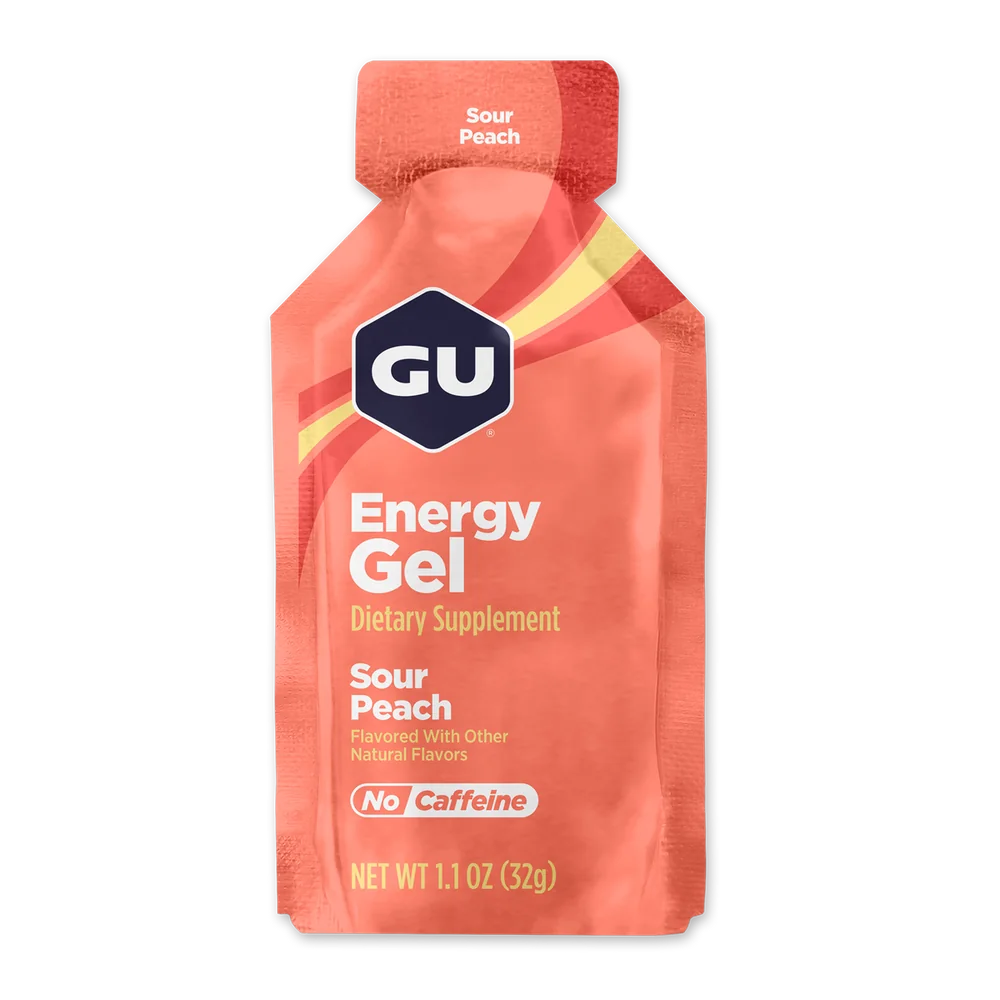
Original Energy Gel
Quick, effective, sustained energy for every kind of effort. The default for training and racing.
Shop Original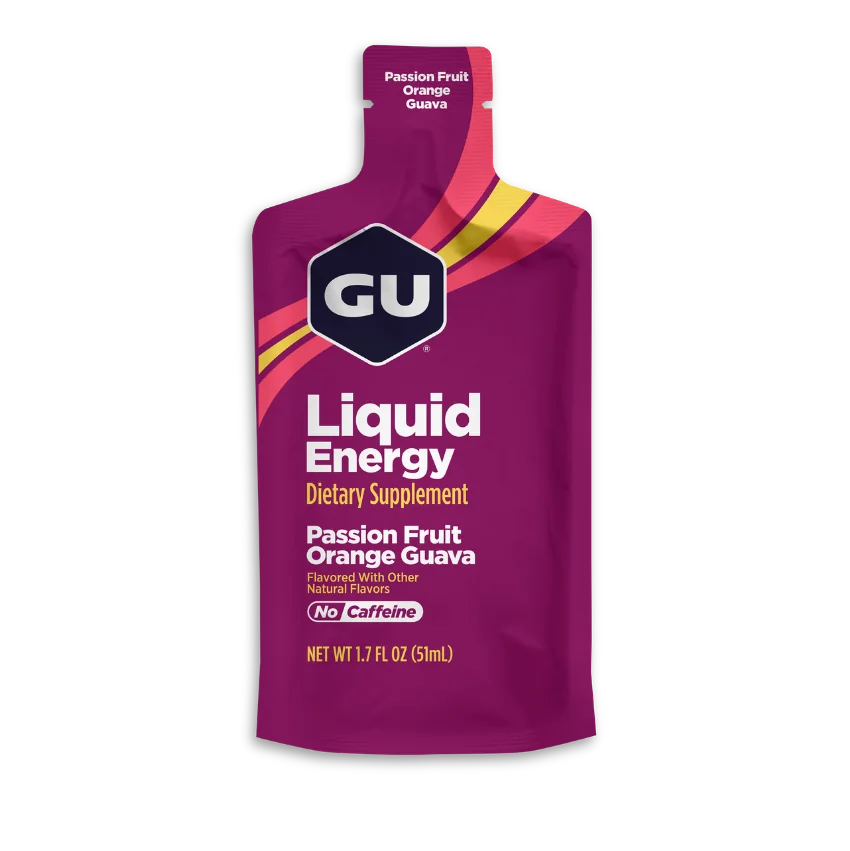
Liquid Energy Gel
The same fast-absorbing carbs as Original in a light, drinkable liquid. Easier late in a hot race or when a gel feels heavy.
Shop Liquid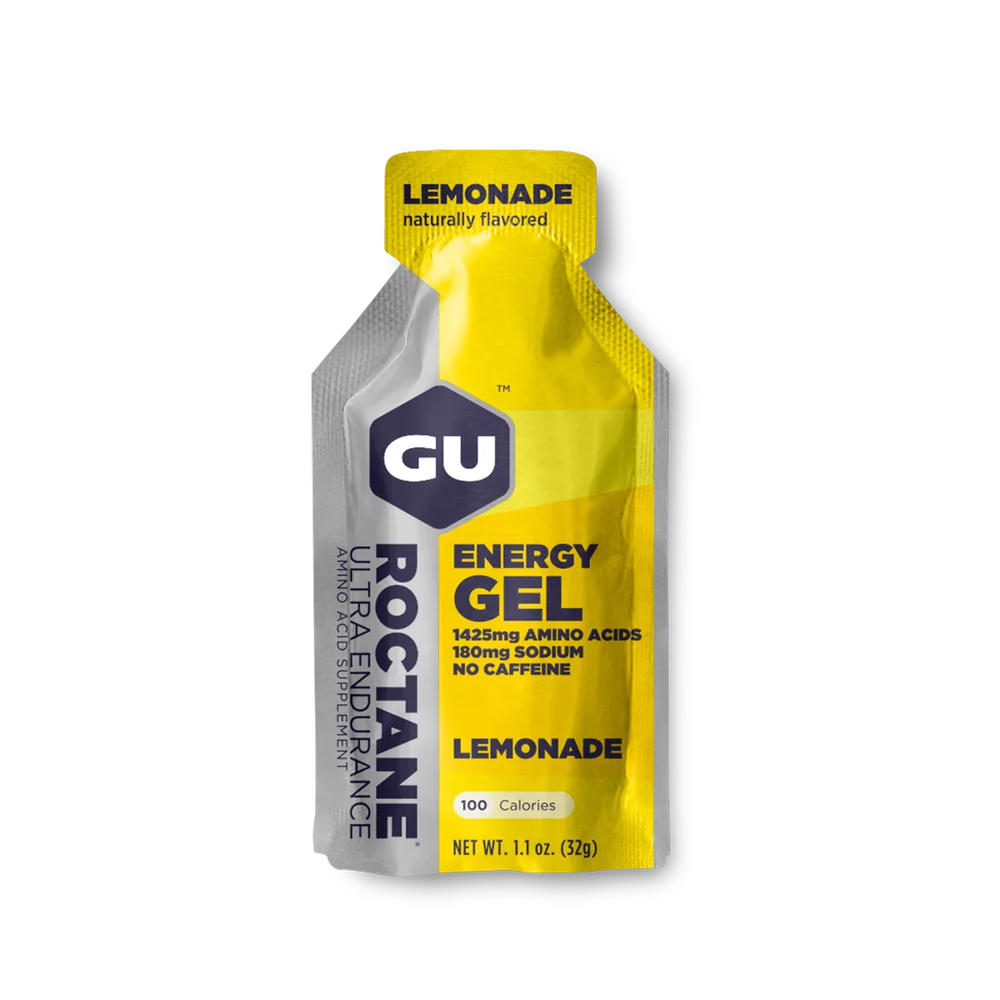
Roctane Energy Gel
Built for long, hot and high-intensity days, with up to 3x the sodium and 3x the amino acids of Original.
Shop RoctaneOriginal Energy Gel
Quick, effective, sustained energy for every kind of effort. The default for training and racing.
Shop Original- Packet
- 1.1 oz (≈31 g)
- Texture
- Smooth gel
- Calories
- 100 kcal
- Carbs
- 22 g
- Sodium
- 60–125 mg
- Amino acids
- 450 mg
- Caffeine
- 0, 20 or 40 mg by flavour
- Best for
- Everyday training, any distance
Liquid Energy Gel
The same fast-absorbing carbs as Original in a light, drinkable liquid. Easier late in a hot race or when a gel feels heavy.
Shop Liquid- Packet
- 2.11 oz (≈60 g)
- Texture
- Light liquid
- Calories
- 95 kcal
- Carbs
- 23 g
- Sodium
- 75 mg
- Amino acids
- 450 mg
- Caffeine
- 0, 20 or 40 mg by flavour
- Best for
- Hot days, sensitive stomachs, transitions
Roctane Energy Gel
Built for long, hot and high-intensity days, with up to 3x the sodium and 3x the amino acids of Original.
Shop Roctane- Packet
- 1.1 oz (≈31 g)
- Texture
- Smooth gel
- Calories
- 100 kcal
- Carbs
- 21 g
- Sodium
- 125–180 mg (up to 3x)
- Amino acids
- 1,425 mg (3x)
- Caffeine
- 0, 35 or 70 mg by flavour
- Best for
- Efforts over 90 min, heat, race pace
Timing questions
When, exactly?
The timing questions we get asked most, answered with the numbers we train by.
How long before I start should I take a gel?
About five minutes before, with a few sips of water. That tops off your energy stores so fuel is available from the first step. For an easy session under an hour, that single gel (20–30 g of carbs taken 5–15 minutes before) is usually all you need.
Further out, keep it simple: a high-carb, low-fibre breakfast 2–3 hours before a race, and 200–350 ml of fluid in the 1–2 hours before you start. Avoid fibre and protein close to the start; they are slower to digest.
How long does a gel take to work?
It starts almost immediately. The maltodextrin converts into energy your muscles can use within minutes; the fructose follows several minutes later. That lag is deliberate. The two carbohydrates use different absorption pathways, so you get a steady stream of energy rather than one spike and a crash.
One gel carries you roughly 20–30 minutes at moderate-to-high effort, which is exactly why the interval is 20–30 minutes.
How often should I take them, and how many is too many?
Past the first hour, one gel every 20–30 minutes. If you are new to fuelling, start at one every 45 minutes and close the gap as your gut adapts. For efforts of 2–3 hours and longer, target 60–90 g of carbohydrate an hour, which is roughly three to four gels.
Each packet is deliberately only about 100 calories. During exercise blood is diverted from the gut to working muscles, so small, frequent doses are far kinder to your stomach than one big hit. Aim for 200–300 calories an hour in total; the body can process about 300–400 an hour at the very most.
Do I really need water with every gel?
Yes. Take each gel with 120–240 ml (4–8 oz) of water. It speeds absorption and offsets the extra demand that concentrated carbohydrate puts on your gut. Swallow the gel, then drink; do not mix it into your bottle.
Over a session longer than an hour, aim for roughly 475–950 ml (16–32 oz) of fluid per hour with electrolytes, more in heat. Liquid Energy Gel is drinkable, but still take water alongside it.
When should I use a caffeinated gel?
Later rather than earlier. Carbohydrate is the foundation; caffeine is a tool for focus and lower perceived effort once fatigue builds. Most athletes run non-caffeinated gels early and bring caffeine in during the back half: every other gel, or in the final 60 minutes. Original and Liquid Energy flavours carry 20–40 mg; Roctane flavours 35–70 mg.
Test it in training first, and skip it for evening sessions if it affects your sleep. Caffeinated vs non-caffeinated goes deeper.
How soon after I finish should I eat?
Within 30 minutes. Refuel with carbohydrate, protein and electrolytes as soon as you can, then keep drinking for the rest of the day to replace what you sweated out. A rough guide: 1–1.5 litres of fluid for every kilogram lost (16–24 oz per pound).
In heat and humidity this matters more, not less.
Stock the box.
Practise the plan.
Pick a line, pick a flavour, and run the schedule on your next long session, not on race day.