Your guide to training and racing in the heat
Planning to run, ride or race outdoors between March and the monsoon? Then you need a heat plan, not just a fuelling plan. The good news is that the body adapts to heat remarkably quickly once you ask it to, and there is a well-tested toolkit of tricks for the days when you cannot adapt in time. Here is how the pieces fit together.
Two timescales for keeping cool
Heat management splits into long-term and short-term work. The long-term, or chronic, approach is heat training: repeated exposure over days and weeks so your body gets better at shedding heat. The short-term, or acute, approach is what you do on the day, and it splits again into pre-cooling (just before you start) and per-cooling (while you are moving). Within both you can cool from the inside, with cold or frozen drinks, or from the outside, with cold packs, fans and cold water. Most athletes end up using a bit of everything.
The long game: heat training
Heat training does three useful things. It reduces strain on your cardiovascular system, it makes hot conditions feel more comfortable and lets you perform better in them, and it lowers your risk of exertional heat illness. The adaptations run across several systems at once: temperature regulation, cardiovascular function and fluid-electrolyte balance.
How much is enough? For most people, 1–2 weeks of daily heat exposure in sessions of about 90 minutes does the job. If you have more time, 2–4 weeks or longer, you can use shorter sessions of about 60 minutes and build up gradually. One detail matters: adaptation is specific to the type of heat and to the intensity you train at. Dry heat in Delhi or Hyderabad in May is a different stress from the humid heat of Mumbai or Chennai, so the best preparation is to copy the conditions you will actually race in.
Acclimatisation or acclimation?
The two words get used interchangeably, but they describe different routes to the same place.
- Acclimatisation happens in a natural environment: training outdoors through a hot summer to race in similar conditions later.
- Acclimation happens in a simulated environment, such as a heat chamber (the research-lab standard) or a sauna. It suits someone training through a cooler season or in a milder city, say a Bengaluru winter, before a hot race.
Either way, the dose is the same: a gradual 2–4 week build, or a condensed 1–2 week block.
Ways to get your heat dose
Active methods
- Exercise in the heat: outdoors in the warm part of the day, hot yoga in a heated room, or a heat chamber if you have access to one.
- Train outdoors or indoors in extra layers: long sleeves, full-length tights and a warm hat.
Passive methods (resting)
- Sauna, dry or steam: a 20–30 minute session, ideally straight after a workout so your core temperature stays elevated for longer.
- Hot tub or hot bath: 20–40 minutes, again ideally after exercise, in water around 40 °C (104 °F) or as hot as you can tolerate, submerged up to the neck.
Daily exposure works best if you can manage it. Start at the lower end, about 60 minutes, and work up to 90. What drives the adaptation is keeping your core temperature elevated for the whole session. Substantial adaptations show up in the first 7–10 days and are usually complete by two weeks.
Know what you are aiming for
Beyond feeling more comfortable, the goals of heat training are a lower exercising heart rate, a lower core temperature at a given effort, and a better sweat response: sweating starts earlier, you sweat more, and the sweat is more dilute. Heart rate is the easy one to track: note it at a steady, repeatable effort early in the block and watch it fall over the following days.
Adaptations fade if you stop. Without further heat stress you lose about 2.5% of your acclimation per day, and about 35% of the gains are gone after two weeks out of the heat. Keep that in mind when you plan travel and your taper. A sensible structure is a full block several weeks out from the target event, followed by short top-up sessions in the run-in to race day.
Treat recovery seriously too. Heat sessions are dehydrating, so rehydrate properly afterwards, and get carbohydrate and protein in after exercise to support both recovery and the adaptation itself.
Heat block at a glance
- Condensed: 1–2 weeks, daily, about 90 minutes per session.
- Gradual: 2–4 weeks or longer, daily where possible, about 60 minutes building towards 90.
- Passive add-ons: sauna 20–30 minutes or hot bath 20–40 minutes, straight after training.
- Big gains by day 7–10; mostly complete by day 14.
- Decay: about 2.5% per day without heat; about 35% lost after two weeks.
- Match the stress: humid for a humid race, dry for a dry one, and at race intensity.
Race week and race day: cooling before and during
Acute strategies complement a heat block; they do not replace it. Two rules apply to all of them: tailor them to you, and practise them in training before a race. The menu:
- Ice towels, ice vests, ice socks, or ice packed into clothing: neck bandanas, hats, sports bras and arm sleeves.
- A facial spray, a dousing of ice water over the head and torso, or a cooling fan.
- Light-coloured, loose-fitting clothing in breathable, sweat-wicking fabric.
- Sun protection, meaning a hat or visor and sunglasses, which cuts the heat you absorb from solar radiation.
- Cold drinks or slushies before and during exercise in hot or humid conditions, to hold core temperature lower for longer. Adding solutes such as carbohydrate and electrolytes lowers the freezing point of water, so a sports-drink slushie can sit below zero. The only side effect is brain freeze (sphenopalatine ganglioneuralgia, to give it its proper name).
Cold water immersion is considered the most effective pre-cooling strategy of the lot. It delays the rise in core temperature once you start moving, so you feel cooler and perform better. Aim for 10–20 minutes in water at 15–22 °C just before the start. Not every race village has a paddling pool, which is why ice towels and slushies are so popular: they travel.
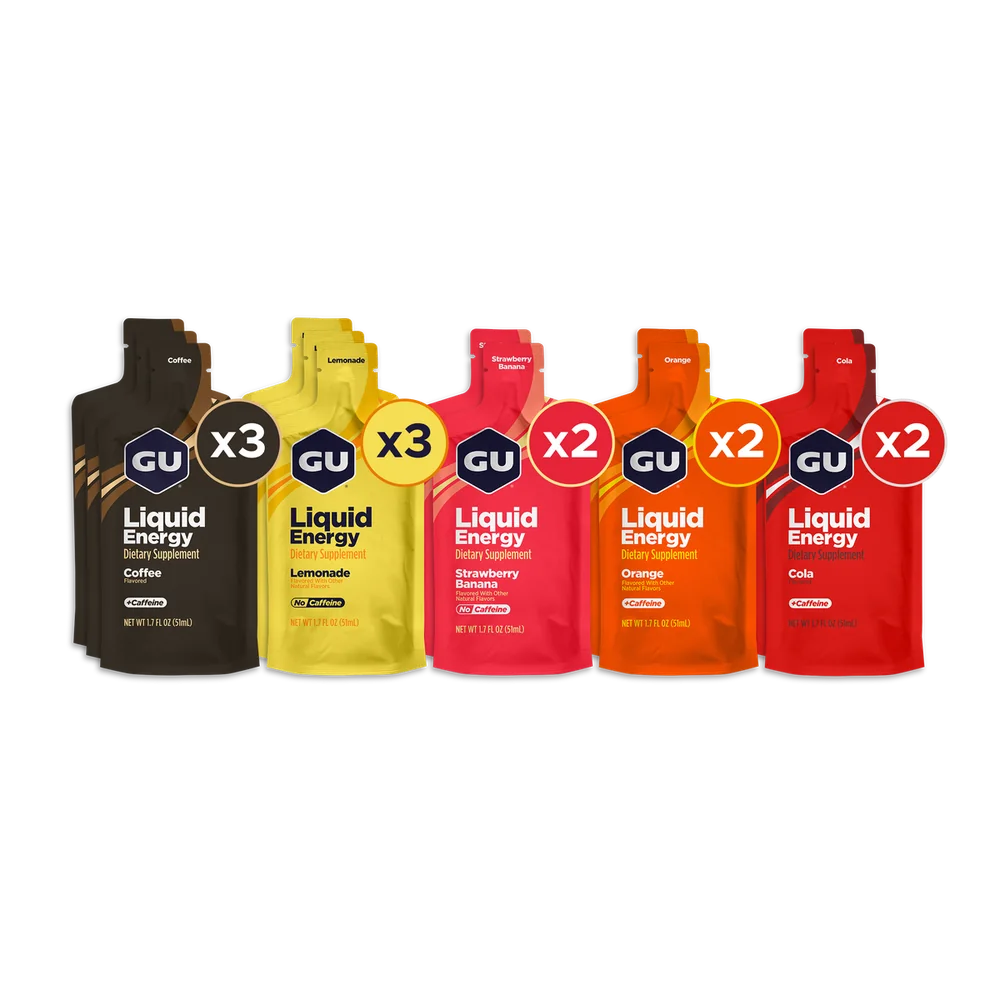
A fuelling note: thick, sweet things get harder to swallow as the temperature climbs, so many athletes switch to a thinner gel such as Liquid Energy Gel, washed down with cold fluid. Practise that in the heat block too.
Keep your cool
Heat is a stress you can train for, just like distance or climbing. Put in the block, track your heart rate, top up before the race, and keep a few cooling tricks in your kit bag for the day itself. Fuelling changes in the heat too. We cover the common slip-ups in summer fuelling mistakes, and the fuel calculator will give you a starting plan for hot-weather sessions.
These statements have not been evaluated by a regulatory authority. This product is not intended to diagnose, treat, cure or prevent any disease.