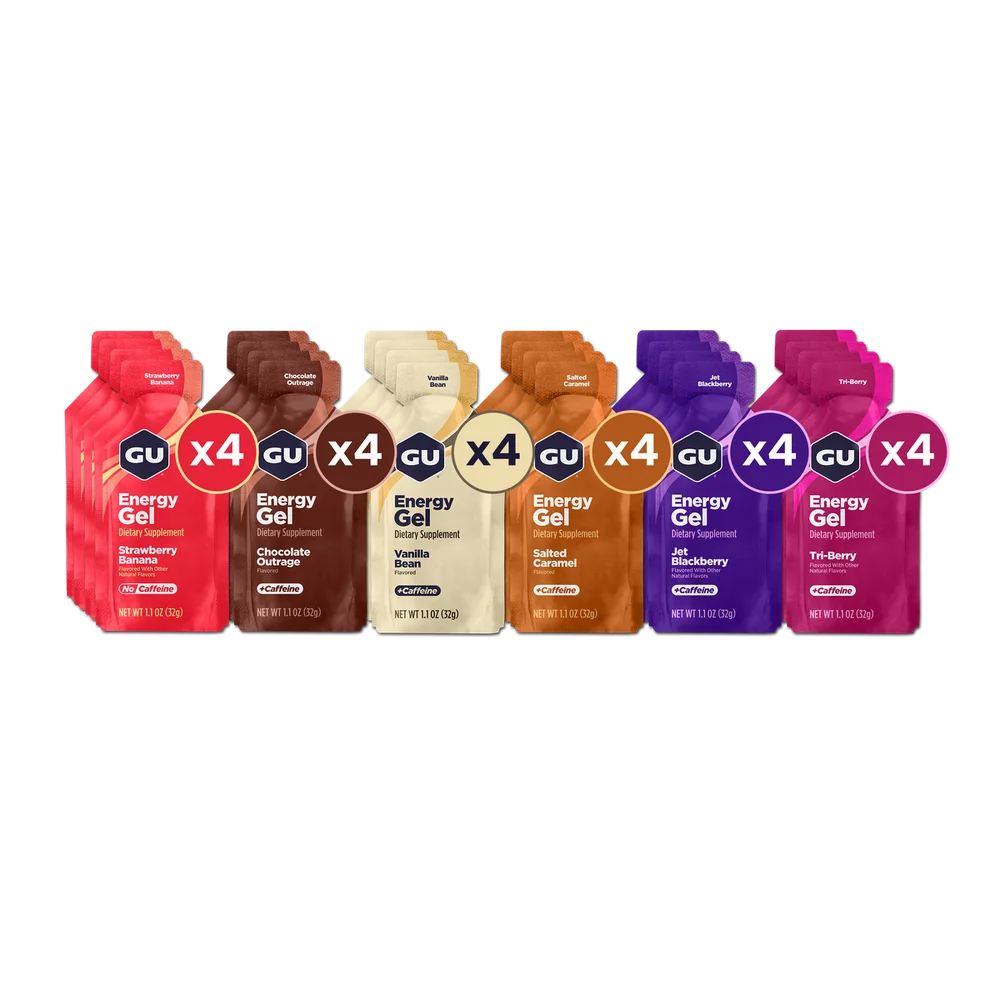
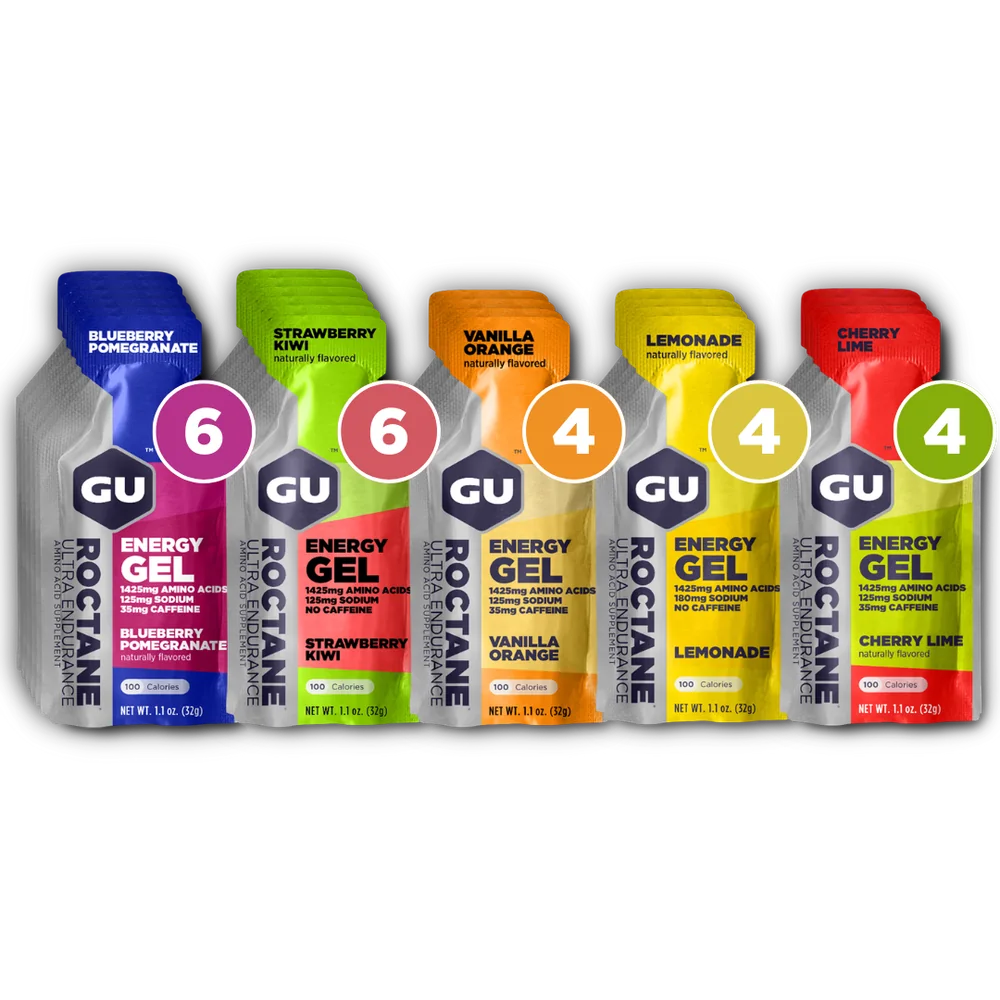
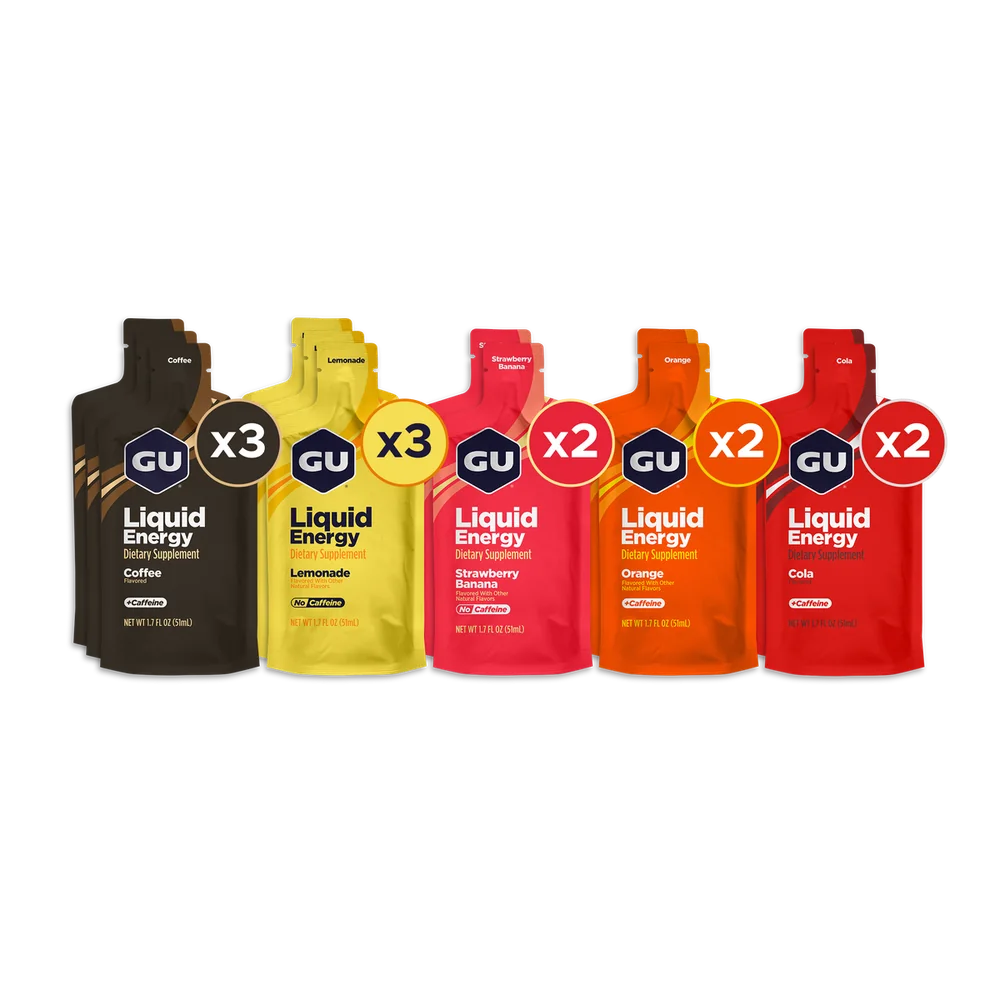
7 ways to carry gels on the run
Walk into any running shop and there is a whole wall of ways to carry your fuel: vest packs, waist belts, hand-held bottles with straps. They all work. But on race day, when every extra gram is one more thing to haul over 42 km, most runners want something lighter. Here are seven tricks, a few of them borrowed from professional runners, for carrying a gel with nothing more than what you are already wearing.
1. Start with the obvious: pockets
A gel packet fits into almost any pocket, including the tiny key pocket sewn into most running shorts. The packaging is tough, so bend it, fold it and squeeze it in until you need it. One rule of thumb: elastic is your friend. Pockets at the waistband or on the lower back hold the packet tight against you, so it does not bounce with every stride. Any of our gels will fold down small enough.
A word of warning. If the gel goes in the key pocket, put the key somewhere else. The packets are strong, but 16 km of rubbing against a sharp key edge is a reliable way to end up with a gel explosion in your shorts.
2. The safety pin
When runners run out of pocket space, the old-school fix is a safety pin. It takes about twenty seconds:
- Tuck the gel into your shorts on the outside of your hip, between you and the waistband.
- Position it so about two-thirds of the packet sits below the waistband.
- Fold the top tear-tab over the outside of the waistband. This stops the packet jostling as you run.
- Push the safety pin through the tab (the part with no gel in it) and fasten it to the outside of the waistband.
- Tighten the drawstring to a comfortable fit and you are set.
The clever part comes when it is time to eat: leave the tab pinned to your shorts and tear the packet away from it. The pin keeps the torn-off tab and there is nothing to drop on the road.
3. The sports bra
A supportive sports bra doubles as storage. Tuck a packet into the side band next to your rib cage, or slide one under the back strap between your shoulder blades, where it sits flat and barely moves.
If you are prone to chafing, put an anti-chafe balm or chamois cream on the skin under the packet before you set off. And keep the balm and the gel well apart: only one of them is food.
4. Just hold it
It sounds too simple, but a packet is small and light enough to carry in your hand for a long time. If your grip gets tired, loop a rubber band or a hair tie around your palm to hold it in place.
Holding your fuel is also the easiest way to carry several gels at once. Alex Varner, a professional trail runner sponsored by Nike, squeezes four or five gels into a soft flask and adds a splash of water to thin the mixture, so it flows easily from the nozzle. Soft flasks made for exactly this exist, some sized for five servings, with a high-flow nozzle that sits comfortably in the palm. The bonus: small sips every few minutes instead of a whole packet every half hour, which spreads your carbohydrate out more evenly.
5. Dress for the conditions
What you wear changes where you can stash a packet.
In the heat
On a hot day your cap is spare capacity. A small strip of duct tape will hold a gel to the brim or to the side of the hat. If the cap has a roomy crown, a trucker cap for instance, you can simply drop a loose packet inside before you put it on. The cap is also a handy place to tuck empty packets, provided you do not mind a little gel in your hair. On a humid Mumbai morning, test the tape on a training run first; sweat and adhesive are not natural friends.
In the cold
There is an old running legend about a runner in a freezing race who squeezed a whole gel onto the back of her hand, where it froze, then licked it off over the next mile. We do not recommend it, but it makes the point: cold weather means more layers, and more layers mean more places to put things. Caitlin Smith, a professional runner sponsored by Salomon, tucks a gel or two into her arm warmers, near the shoulder or at the wrist. A packet slipped inside a running glove stays warm against your palm, so it is soft and ready to eat instead of stiff and cold. On a winter morning in Delhi, or up in Ladakh, that is the difference between a gel you swallow and one you chew.
In the dark
Night and pre-dawn running has its own hazards, but it brings one more storage spot: the elastic band of your headlamp. A gel tucked under the strap sits firmly and is easy to find by feel. On a trail race that starts before sunrise this works neatly, because your first gel of the morning comes out at the same moment the headlamp comes off. Plenty of Indian road races start in the dark to beat the heat, so it is a trick worth remembering.
6. Lycra is your friend
Running kit keeps getting tighter: compression fabrics, three-quarter tights, snug calf-length socks, buffs. Every close-fitting layer is another place to tuck a packet. The best spots are close to your centre of gravity, such as the outside of your hips or the small of your back, where tight fabric keeps slipping and bouncing to a minimum.
7. Bottleneck it
This one comes from cyclists, and it is brilliant. Unscrew the cap of your bottle, lay the top tab of the gel across the mouth, and screw the cap back down over it. The tab is pinched in the thread and the packet hangs off the side of the bottle. When it is time to fuel, rip the packet free and the tab stays trapped under the cap. If you run with a hand-held bottle, this keeps the gel and the water you need to wash it down in the same hand.
The rule that goes with all seven. Take every gel with 90–120 ml of water (3–4 oz), roughly three or four good mouthfuls. However you carry the gel, make sure you can also carry or reach water, whether that is a hand-held bottle, a vest flask or the next aid station.
Pick two and practise
You do not need all seven. Pick the two that suit your kit and your race, then use them on a long training run before you trust them on race day. Fumbling with a safety pin at 30 km is not the plan. Once the carrying is sorted, the only thing left to decide is the timing, and that is covered in our marathon gel strategy guide and our race-day nutrition checklist.