A hiking fuelling strategy
The day starts at the kitchen counter with the pack open. Water, obviously. A rain layer, probably. Then the harder question: what to eat, and when. You already know that about 6 km in, the trail turns upward and gains close to 900 m in barely 3 km. Fuelling a hike well comes down to one idea: carry two kinds of fuel, and do not mix them up.
A steady baseline carries you through hours of moderate effort; quick hits are held back for a hard climb or the final push to a summit. Confuse the two and you either run out of gas on the flats or burn through every gel before the climb that needed it.
Why hiking fuels differently from running
A run holds you at a sustained, elevated intensity. A hike almost never does, even on a hard day: pace shifts with grade, footing and group, so a typical hike is easier, effort for effort, than a training run, even though it lasts far longer. Field research on outdoor uphill walking found effort and intensity vary far more between sessions than in the controlled effort of a run (Eisenberger et al., 2022).
Intensity decides which fuel your body draws on. At low intensity most energy comes from fat; push towards the effort of a moderate run and the balance tips to muscle glycogen and blood sugar (Ramadoss et al., 2022). A hiker at cruising pace burns a higher proportion of fat than a runner. Gut symptoms in runners also rise measurably as duration and exertion increase (Gaskell et al., 2023); a walking pace spares you most of that until the trail tilts up.
What actually runs down on the trail
Burning more fat does not mean you can skip eating: over many hours, muscle glycogen and blood glucose still draw down. A case study of a thru-hiker on a multi-month trek found that eating fewer calories and less carbohydrate than she was burning led to measurable declines in body composition, and eventually ended the hike early through fatigue and injury (Saenz et al., 2024). A hike that never feels hard can still run you dry. Steady fuel is not a gel every kilometre; it is consistent calories, so your stores never quietly drain away.
Altitude, heat and cold change what your body wants
Altitude. Above 5,000 m, food can become the last thing you want, right when your body needs it most. A study of trekkers and porters on a multi-week Himalayan expedition found both groups ate well below what the trek demanded and finished with measurable losses of muscle and body water (Bondi et al., 2021). Losing your appetite on a high pass in Ladakh is a known response, not a sign you need less. Eat on a schedule, not on hunger.
Heat. As core temperature rises, your body sends more blood to the skin to shed heat and less to the gut, so digestion slows and stomach trouble becomes more likely (Sumi et al., 2023). On a baking, exposed ridge in the Western Ghats, smaller and more frequent intake sits better than one big, dense snack.
Cold. Cold can raise daily calorie needs while blunting thirst. The same thru-hiking research noted swings from well below freezing to above 30 °C with elevation as a complication for calorie and hydration planning (Saenz et al., 2024). In winter, the hikers least willing to stop and eat are usually the ones who need it most.
How often should you eat on a hike? Every one to two hours is a sensible baseline on a multi-hour day; shift towards the shorter end in heat, at altitude or on steep terrain, where demand rises faster than a flat trail suggests. Set a repeating alarm: appetite is unreliable once you are high, hot or cold.
The fuel spectrum: steady, middle and quick hit
| Fuel | Calories | Carbs | Sodium | Amino acids | Best for |
|---|---|---|---|---|---|
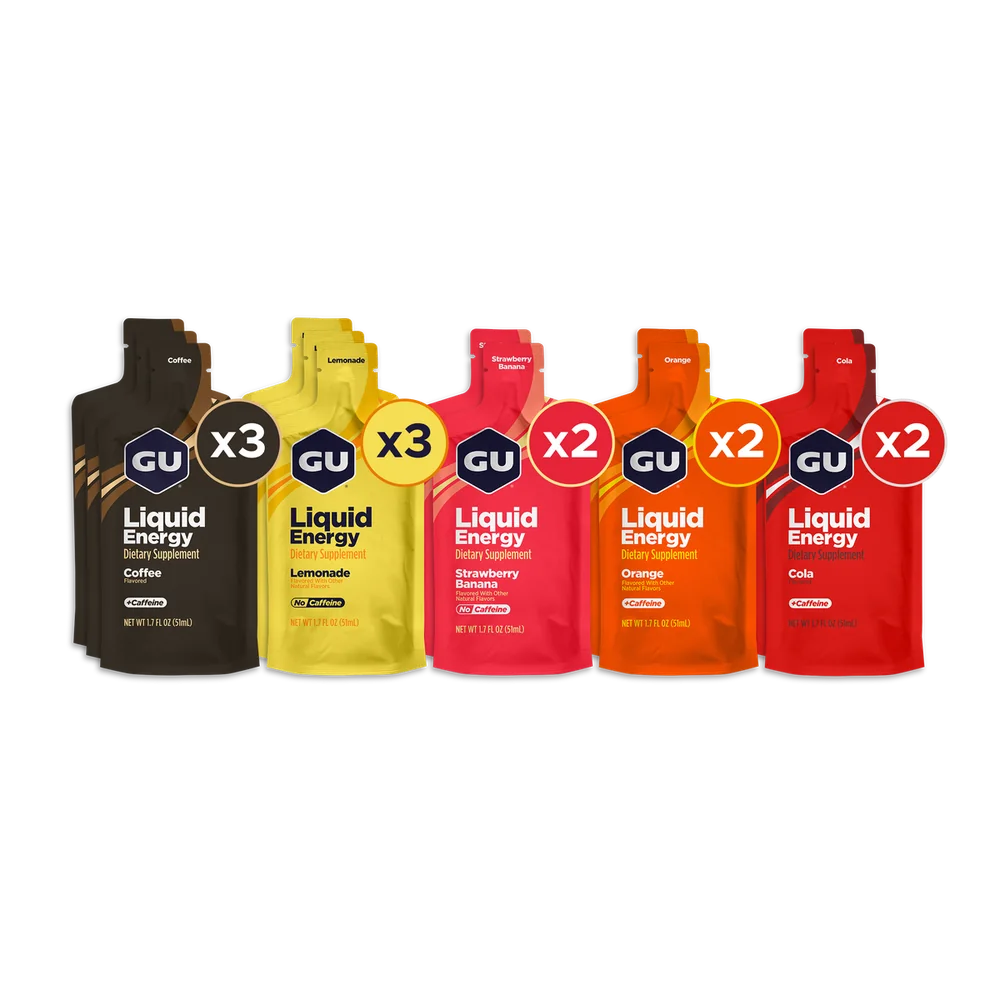
| Liquid Energy Gel | 100 | 24 g | 75 mg | 450 mg | Hot, exposed climbs; when solids will not go down |
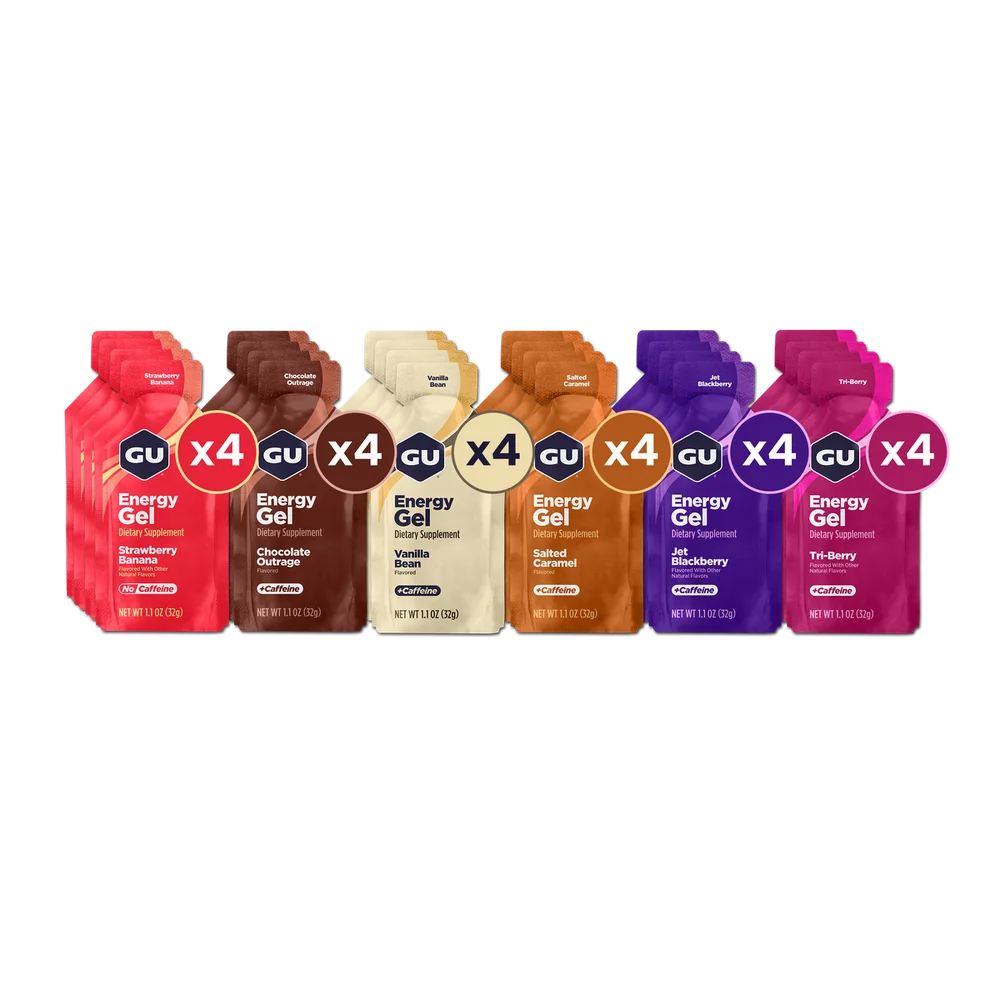
| Original Energy Gel | 100 | 21 to 23 g | 60 to 125 mg | 450 mg | Quick hits, climbs, bonking moments |
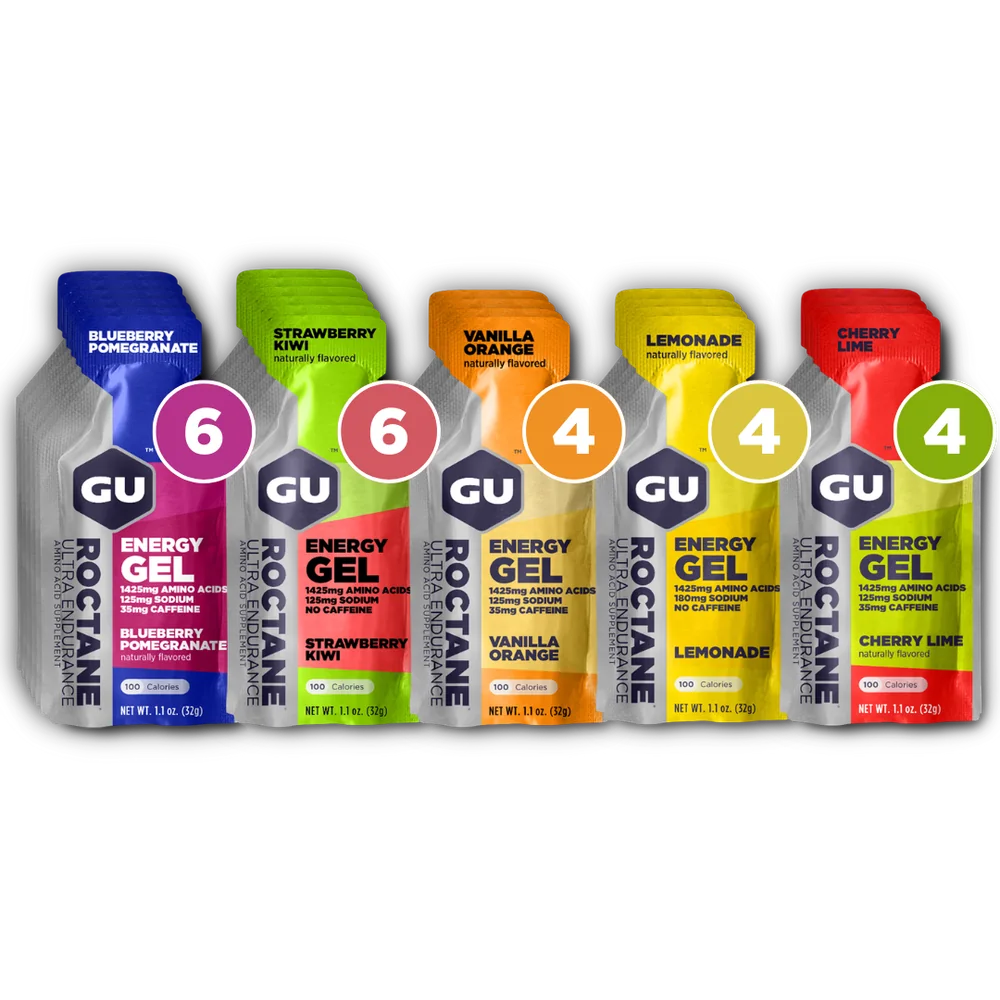
| Roctane Energy Gel | 100 | 19 to 21 g | 125 to 180 mg | 1,425 mg | Heat, high intensity, longer summit pushes |
Steady: real food. The first hours at a moderate pace belong to solid, portable food you can eat while walking: an energy waffle (an hour or more of steady effort, no water needed), a banana, a bar of peanut chikki or a handful of trail mix. Most ultra-endurance athletes mix engineered and whole foods to manage gut symptoms over long efforts (Ryan et al., 2023); trail mix next to a waffle is simply how experienced hikers eat.
The middle: chews. A portion of chews is a measured amount: intake keeps ticking over through the middle hours without committing to a full gel, and without gel fatigue.
Quick hit: gels. Original and Roctane are built for a fast, concentrated dose. With two to three times the sodium and amino acids of Original, Roctane earns its place on the hottest, longest and hardest stretches. Liquid Energy Gel offers the carbohydrate of Original in a runnier packet that is easier to swallow, which helps on a hot, exposed climb or at altitude, when a regular gel can feel unexpectedly hard to get down.
Fuelling by scenario
- The long, flat approach. The first two hours are steady-fuel territory: a waffle at the trailhead, trail mix along the way, not a gel in sight.
- The steep climb. A 900 m gain in 6 km is the moment for a concentrated dose. Take an Original or Roctane gel before the grade turns hard, not after your legs have told you it is too late, with a few sips of water.
- The multi-day trek. Recovery between days matters as much as fuelling within one: a carbohydrate drink mix with amino acids covers both in one bottle at camp, when you just want calories in before pitching the tent. Rotate flavours and formats to sidestep flavour fatigue.
- The first-timer's day hike. No optimised plan needed: one gel or a pack of chews as backup alongside normal food and water. The goal is confidence in what your body needs, not maximum performance.
Hydration and electrolytes on the trail
Hiking rarely produces the dripping sweat of a hard run, so fluid loss is easy to underestimate. Large-scale sweat testing has found meaningful, variable sodium losses that depend on heat, sweat rate and body size (Baker et al., 2022). On hot, exposed sections, where sweat outpaces what the climb alone suggests, add a low-calorie electrolyte tab to the bottle and lean on Roctane's higher sodium.
Steady fuel for the hours, a quick hit for the climb, and a schedule you follow even when appetite disappears. For doses and timing by trek length, read fuel for hiking, then pick the gels for your next big climb.
These statements have not been evaluated by a regulatory authority. This product is not intended to diagnose, treat, cure or prevent any disease.