How to fuel a 100-mile ride
A hundred miles, 160 km, is the distance where fitness alone stops being enough. Past the halfway mark the rider who ate and drank on schedule is still turning the pedals; the one who felt fine at 60 km and skipped a couple of gels is sitting on a verge waiting for the feeling to pass. In the week before Unbound Gravel, the big gravel race in Kansas, GU Energy Labs asked Yuri Hauswald, a professional gravel racer who also works for them as an athlete and community manager, to share how he fuels a day that long. He is not our athlete, but the gels he reaches for are the ones we sell, and his plan transfers straight to a Western Ghats epic or a 200 km brevet. Here it is in our words, with his numbers kept exactly as he gives them.
One plan does not fit everyone
Yuri's first tip is the one most riders skip. A nutrition plan for something like Unbound can take many forms and use many products: liquids, gels, solids and capsules, in whatever mix suits you. His advice is to experiment until you land on the combination that fits your needs. Good fuelling, in his view, shows up as a stronger ride and, just as important, a more enjoyable one, which counts for a lot when you are going to be out there all day.
The hourly target: 200 to 300 calories
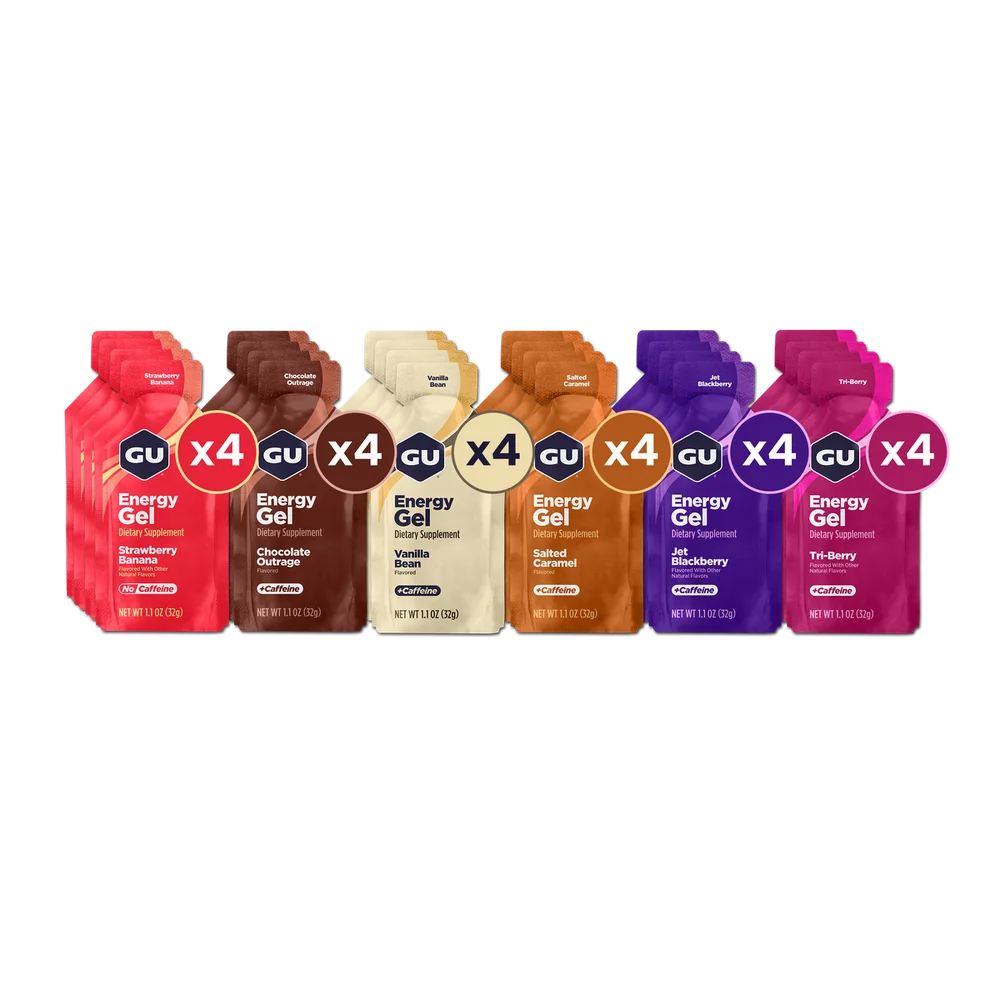
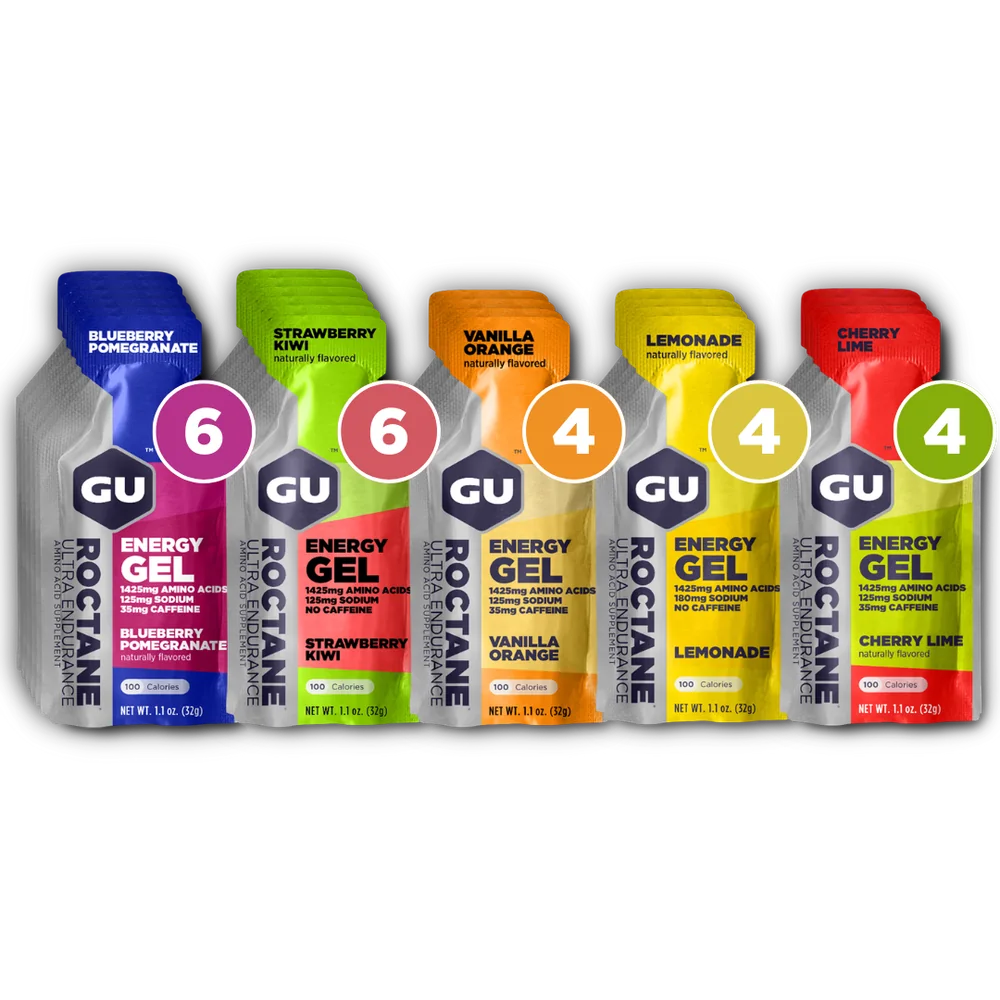
Aim to take in 200 to 300 calories every hour, in liquid, gel or solid form. The gel arithmetic is simple: each packet is 100 calories, so a gel every 20 minutes is 300 calories an hour and a gel every 30 minutes is 200. Yuri does not get it all from gels, though, and neither should you. Three things carry his day.
- Liquid. His high-carb secret is a bottle of Roctane Energy Drink Mix, which is made for long, hard efforts and packs enough carbohydrate and electrolytes to stand in for a gel or a solid. We only stock gels, so use whichever carbohydrate drink your stomach already knows; the principle is the same. A bottle that counts as food takes the pressure off your pockets.
- Gels. Roctane Energy Gel, on a fixed schedule. More on that below.
- Solids. He keeps real food simple: soft Hawaiian-style buns with peanut butter and jam, or an energy waffle. And he only packs solids when he expects the event to run longer than eight hours. Under that, gels and liquids do the work, and they are far easier to eat from the saddle.
Drink to the thermometer
Drink at least one 21 oz bottle, roughly 620 ml, every hour. Once the temperature is above 80 °F, about 27 °C, that rises to one and a half to two bottles an hour, and if you are a heavy sweater you need more again. Outside the winter months most Indian rides cross that 27 °C line before the morning is out, so plan on the higher figure and decide before you leave where the refills are: a dhaba, a village shop, a support car. Running out of water at 110 km is a worse problem than running out of gels.
If you cramp, start early
If you are prone to cramping and the day is going to be hot, Yuri takes two electrolyte capsules before the start and carries more with him. His storage trick is worth stealing: an empty hydration-tab tube, with its flip-top lid, keeps capsules dry and opens with one hand. He rides with two tubes, one of BCAA capsules and one of electrolyte capsules. We do not sell capsules, but whatever electrolyte you already use fits the same tube. If cramp is a recurring problem for you, our piece on muscle cramps and electrolytes goes deeper.
The Roctane rhythm
Yuri is, in his own words, a Roctane gel guy through and through. The extra branched-chain amino acids (BCAAs) in Roctane Energy Gel, up to three times what the Original gel carries, are an integral part of what keeps him going, he says. His timing is easy to copy.
- One Roctane gel 5 to 10 minutes before the start.
- One every 20 to 30 minutes from then on. Where you sit in that range depends on how hard the effort is and how long you will be out.
- A few sips of water after every gel. No exceptions.
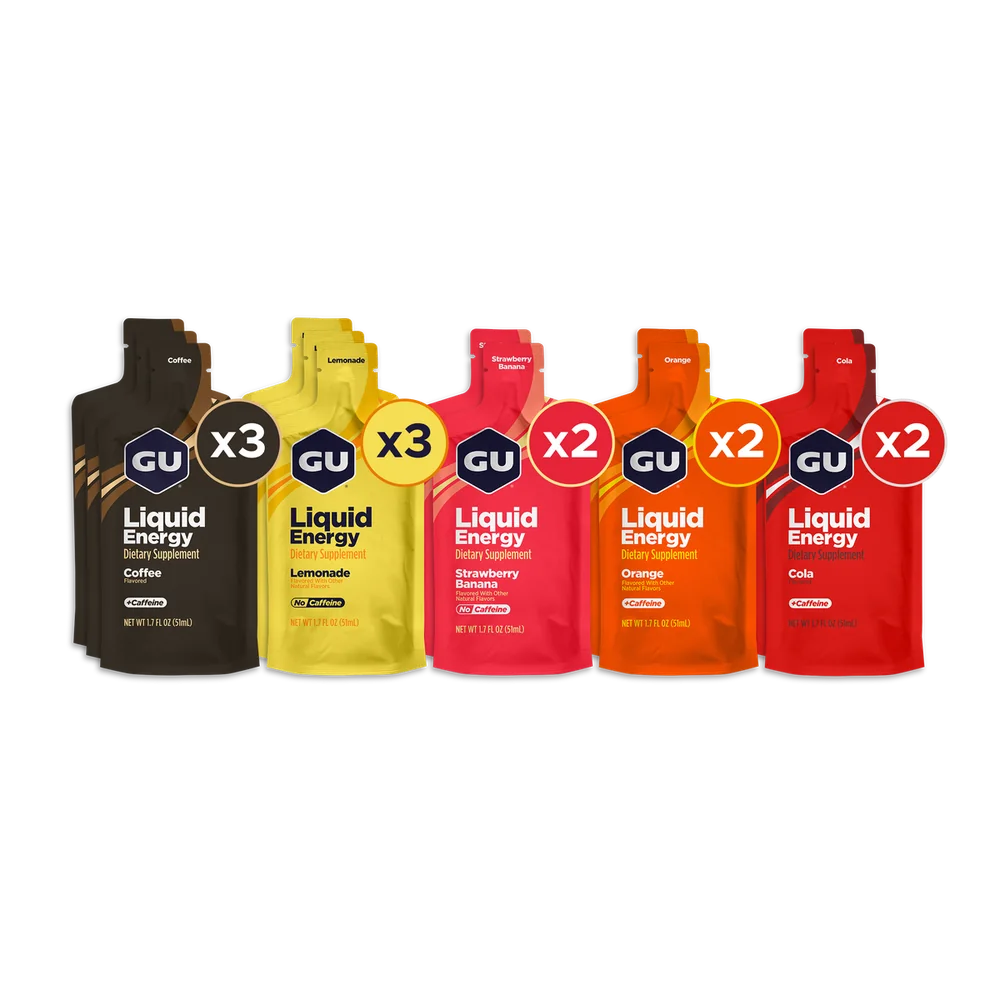
The water is the part riders drop when the road gets rough, and it is the part that keeps a gel sitting comfortably. If the thicker texture gets hard to take late in the day, the thinner Liquid Energy Gel is easier to swallow on the same schedule.
The cuff trick. Yuri keeps at least one gel tucked into the leg cuff of his shorts at all times. It does two jobs: every time you look down it reminds you to eat, and your thigh warms the gel, so it is smoother and easier to get down than one straight out of a back pocket.
Yuri's plan on one page
| When | What |
|---|---|
| 5–10 min before the start | One Roctane gel, a few sips of water. Two electrolyte capsules if it is hot and you cramp. |
| Every 20–30 min | One gel, always followed by water. Swap in a mouthful of carbohydrate drink or, on a day over eight hours, a bun with peanut butter and jam. |
| Every hour | 200–300 calories in total. At least one 620 ml (21 oz) bottle; 1.5 to 2 bottles above 27 °C. |
| All day | One gel in the cuff of your shorts. Capsules in a flip-top tube within reach. |
Train it before you race it
You can have all the fitness in the world, and if you do not fuel properly you will not ride to the level of it. That is Yuri's closing line and it is the whole article in a sentence. Start testing your plan now, on long training rides, in the heat you expect on the day: different combinations of gels, liquids and solids, until the routine is boring and your stomach stops noticing it. The more fuel in the tank, the farther you will go.
For hourly targets by ride length, from a one-hour session to a 200 km brevet, read our guide to fuelling for cycling. And if 200 to 300 calories an hour sounds like more than your gut can take, train your gut explains how to build up to it.
These statements have not been evaluated by a regulatory authority. This product is not intended to diagnose, treat, cure or prevent any disease.