Carb loading made easy
Carb loading usually brings to mind a big bowl of pasta the night before a race. This guide is about the other, easier kind: getting carbohydrate into your body while you are actually moving. Carb energy gels make that simple, and once you know what is in one, why your body wants it and when to take it, fuelling a long run or ride stops being guesswork.
What a carb energy gel is
A gel is a small sachet of fast-digesting carbohydrate built to deliver energy mid-effort. It is light, fits in any pocket and takes a few seconds to swallow, which is exactly what you want two hours into a ride when chewing feels like work.
Each of the gels we stock contains around 22 to 23 grams of carbohydrate. That figure is deliberate: enough to make a real difference, not so much that your stomach complains. The carbohydrate itself is a blend. Simple sugars that your body absorbs quickly and turns into usable energy within minutes, plus complex sugars that release more slowly so the lift does not turn into a crash.
It is not only carbohydrate, either. The gels also carry branched-chain amino acids, which help reduce muscle fatigue, and electrolytes to support hydration.
Why carbohydrate matters when you push hard
Carbohydrate is the fuel your body reaches for first when the intensity goes up. Here is what that means on the road:
- Fast fuel. Carbohydrate converts to glucose quickly, so a gel gives you energy within minutes rather than after a long wait. For endurance athletes, that is the whole point.
- Sustained energy. As your glycogen stores run low, a gel helps top them back up and keeps you clear of the bonk, that sudden, heavy-legged emptiness every endurance athlete dreads.
- Delayed fatigue. Low glycogen means low power. Taking carbohydrate at regular intervals keeps your output steady and your head clear, which matters when you are trying to hold pace through the last 10 km.
- Better recovery. After a session, carbohydrate refills your energy stores and pairs well with protein to help muscles rebuild and repair.
So are carbs the best energy source for athletes? When endurance and intensity are involved, yes.
What happens after you swallow one
The carbohydrate in a gel is broken down into glucose, which enters your bloodstream. From there it goes one of two ways: it is burned straight away as fuel, or it is stored as glycogen in your muscles and liver for later. Either way, you are stopping the tank from running dry.
There is research behind this, too. A study published in the National Library of Medicine found that carbohydrate can enhance performance during endurance sport. The mechanism is not mysterious: steady energy lets you push through the point where you would otherwise fade, and finish strong instead of just finishing.
The timing that makes it work
Timing is where most people go wrong, and the rule is short:
- 5 minutes before you start, take one gel. This tops off your glycogen stores before you ask anything of them.
- Every 20 to 30 minutes during anything longer than half an hour, take another. This keeps replenishing glycogen and holds your energy level steady.
- Always with water. A few sips help absorption and keep you from getting dehydrated, which matters doubly on a humid Mumbai or Chennai morning when you are sweating from the first kilometre.
A 90-minute run, planned out: one gel at the start line, then one at roughly 25, 50 and 75 minutes, each with a few sips of water. Set a repeating alarm on your watch rather than relying on how you feel; by the time you feel empty you are already behind. Our fuel calculator builds a schedule for your own distance and pace.
Before, during and after
It helps to think of fuelling in three parts.
Before: one gel 5 minutes out, as above. Nothing more complicated than that.
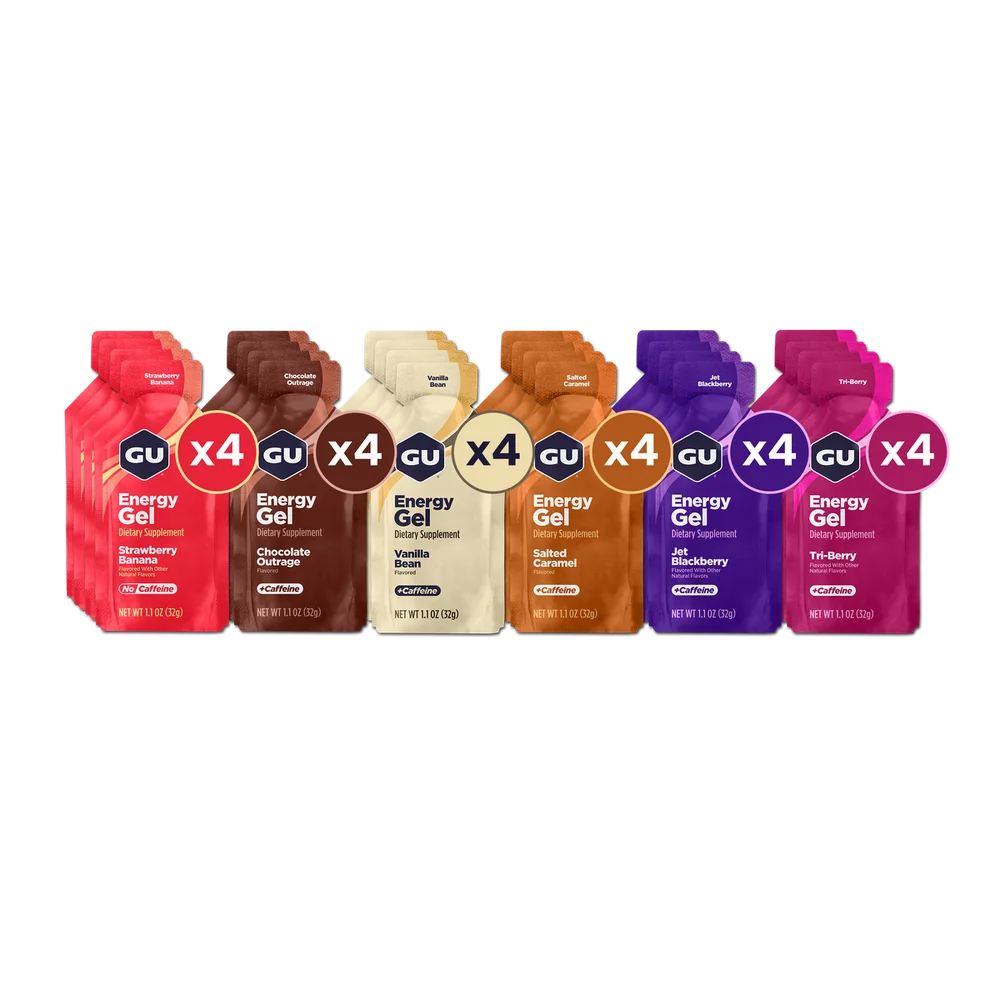
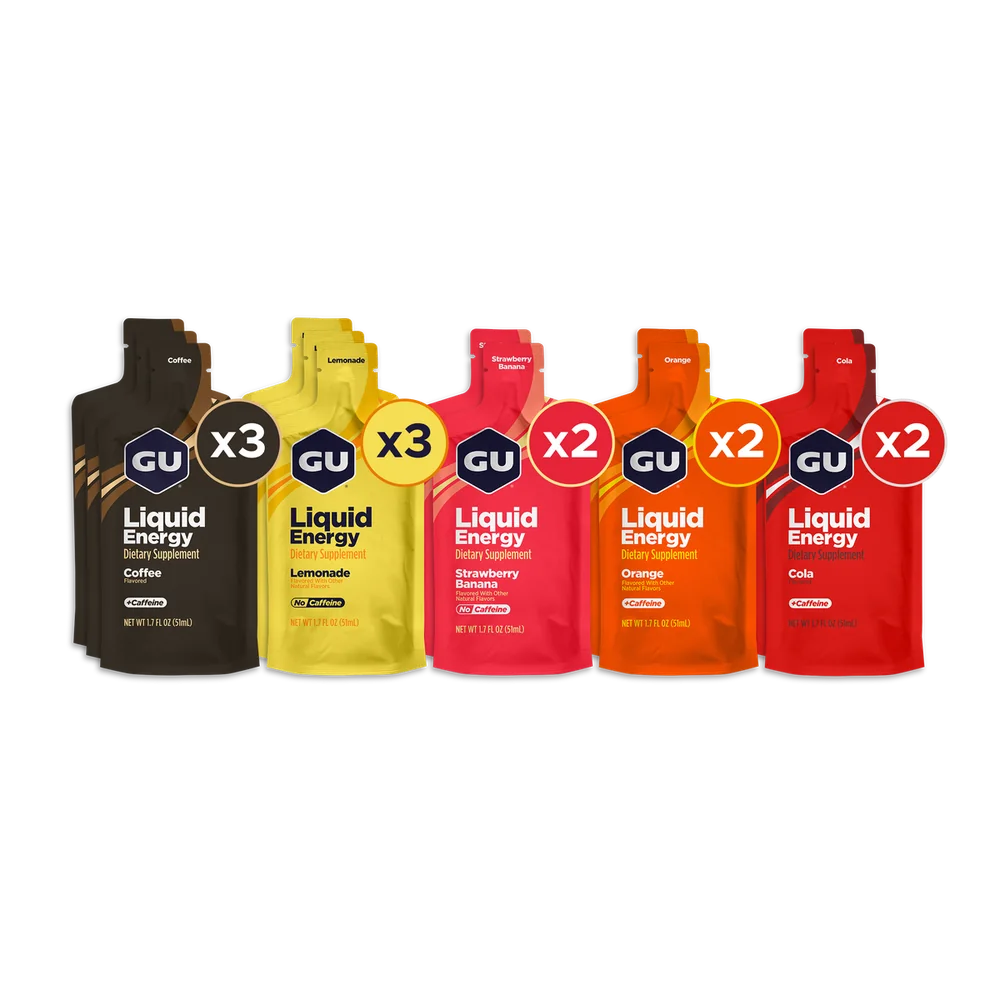
During: a gel every 20 to 30 minutes once you are past the half-hour mark. This is also the time to mix things up. Alternating between the thicker Original Energy Gel and the thinner, more drinkable Liquid Energy Gel stops the routine feeling monotonous.
After: combine a gel with something rich in protein. The carbohydrate restocks your energy stores while the protein helps your muscles repair, and together they speed up recovery.
What else is in the sachet
Not every carbohydrate gel is built the same way. Beyond the carbohydrate, each of the gels we stock includes:
- carbohydrate from two sources, maltodextrin (a glucose chain) and fructose
- 450 milligrams of amino acids for muscle support
- sodium and other electrolytes to help maintain fluid balance
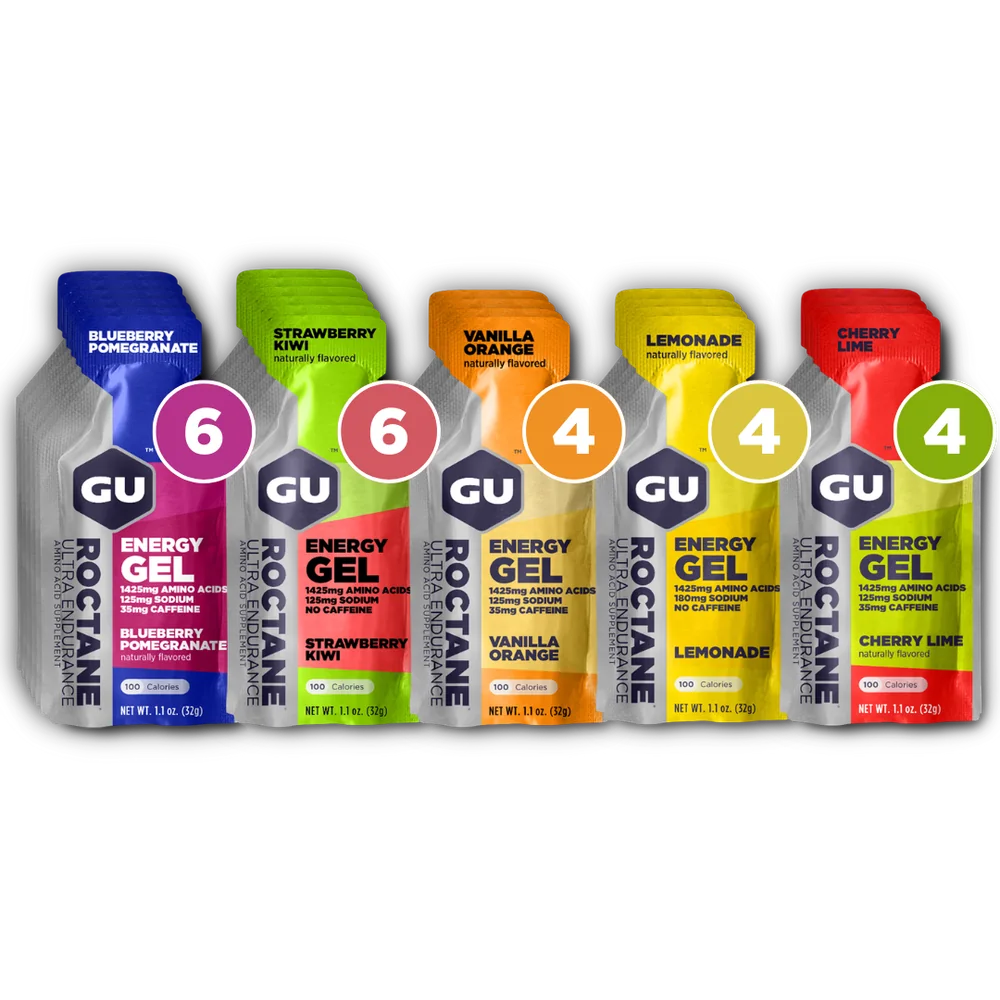
Which one you choose comes down to texture and how long the day is. Want something smoother that goes down easily when you are breathing hard? Liquid Energy Gel. Heading out for a long, hard effort and want extra electrolytes and amino acids in every sachet? That is what Roctane Energy Gel is for. All three are made by GU Energy Labs, and all three deliver the same core thing: fast carbohydrate, calibrated to keep you going.
Three common problems and how to fix them
Even experienced athletes get tripped up by nutrition. The usual culprits:
Stomach trouble. Gels can cause digestive discomfort, especially early on. Start with small amounts and build up gradually so your gut adjusts, and drink plenty of water to help digestion. Our train your gut guide shows how to build up without upsetting your stomach.
Flavour fatigue. The same flavour every half hour gets old fast. Rotate flavours, and alternate textures between Original and Liquid so your taste buds stay interested. The flavour and caffeine chart lists every option, including which ones carry caffeine.
Energy slumps. If you keep hitting flat spots, look at your timing first. A gel taken too late leaves you running on empty, and it is hard to catch up once you are there. Stick to the regular schedule, slump or no slump.
Quick answers
What is an energy gel? A concentrated source of carbohydrate designed to give quick, sustained energy during endurance activity.
How much carbohydrate is in one? Approximately 22 to 23 grams per sachet.
When should I use one? 5 minutes before you start, and every 20 to 30 minutes during longer sessions.
Do gels work for every type of workout? Yes. They are useful across running, cycling, hiking and more. A long day on the trails in the Western Ghats runs on the same fuel as a city marathon.
That is carb loading, the easy way: 22 to 23 grams of carbohydrate per sachet, one gel 5 minutes before, one every 20 to 30 minutes with water, and some practice in training so race day holds no surprises. For the fuller picture on building a plan, start with how to fuel, then pick a gel and test it on your next long session.
These statements have not been evaluated by a regulatory authority. This product is not intended to diagnose, treat, cure or prevent any disease.