Marathon hydration and nutrition tips
Race season is nearly here. The big city marathons fill the cooler months, your training plan is dialled in and the target race is circled on the calendar. But have you given your nutrition plan the same attention? If not, you are leaving an easy performance gain, and a faster recovery, on the table. Here are five tips worth building into the last few weeks.
1. Hydrate early and often
Do not wait until race morning to start drinking. Think of hydration as a three-stage job.
- Two to three days out: aim for 2–4 litres of fluid a day in the 48–72 hours before the race.
- Race morning: about four hours before the start, drink roughly 6.5 ml per kilogram of body weight (the old rule of thumb is one-tenth of your body weight in pounds, in ounces). For a 70 kg runner that is around 450 ml. Four hours gives your body time to flush out whatever it does not need before the gun goes.
- During the race: use the aid stations rather than carrying extra weight. From the first few kilometres onwards, aim for about 475–900 ml an hour (16–30 oz) of water or sports drink.
Why bother? Dehydration makes it harder for your heart to push blood to the muscles doing the work, and because of its effect on the central nervous system it also makes the same pace feel harder than it is. One study found that runners who drank to a schedule performed better than those who drank only when thirsty. So set a schedule and stick to it. On a humid Mumbai or Hyderabad morning, work towards the top of that hourly range; on a cool Bengaluru dawn, the bottom end may be plenty.
2. Sip and nibble, do not gulp and gorge
Think of race fuelling as an IV drip, not a buffet. The aim is a steady trickle of calories and fluid in small, frequent doses, not one big hit every hour. Take in something every 15–20 minutes, even if it is tiny: half a gel, a mouthful of sports drink, a few sips of water. Done this way, the trickle keeps nutrients and energy flowing to your working muscles, and it is far gentler on your stomach. Most race-day gut trouble comes from large doses landing all at once, so trickle-feeding is also your best insurance against an emergency stop at the portable toilets.
Pro tip: set a repeating alert on your watch for every 15–20 minutes. Once the race gets hard you will not remember on your own, and the beep does the thinking for you.
3. Train your nutrition, not just your legs
However you decide to fuel, practise it. Race day is not the day to try anything new. By the start line your plan should be fixed, right down to which flavours you know sit well at 30 km. Flavour fatigue is real, so rotate a few during training and keep the ones you genuinely enjoy.
Fluid needs rehearsal too. Find out how much you can drink before you get that sloshing feeling in your stomach. If you do get sloshy, you are probably drinking too much. Run the whole plan on the weekly long run in the build-up, adjust, and run it again.
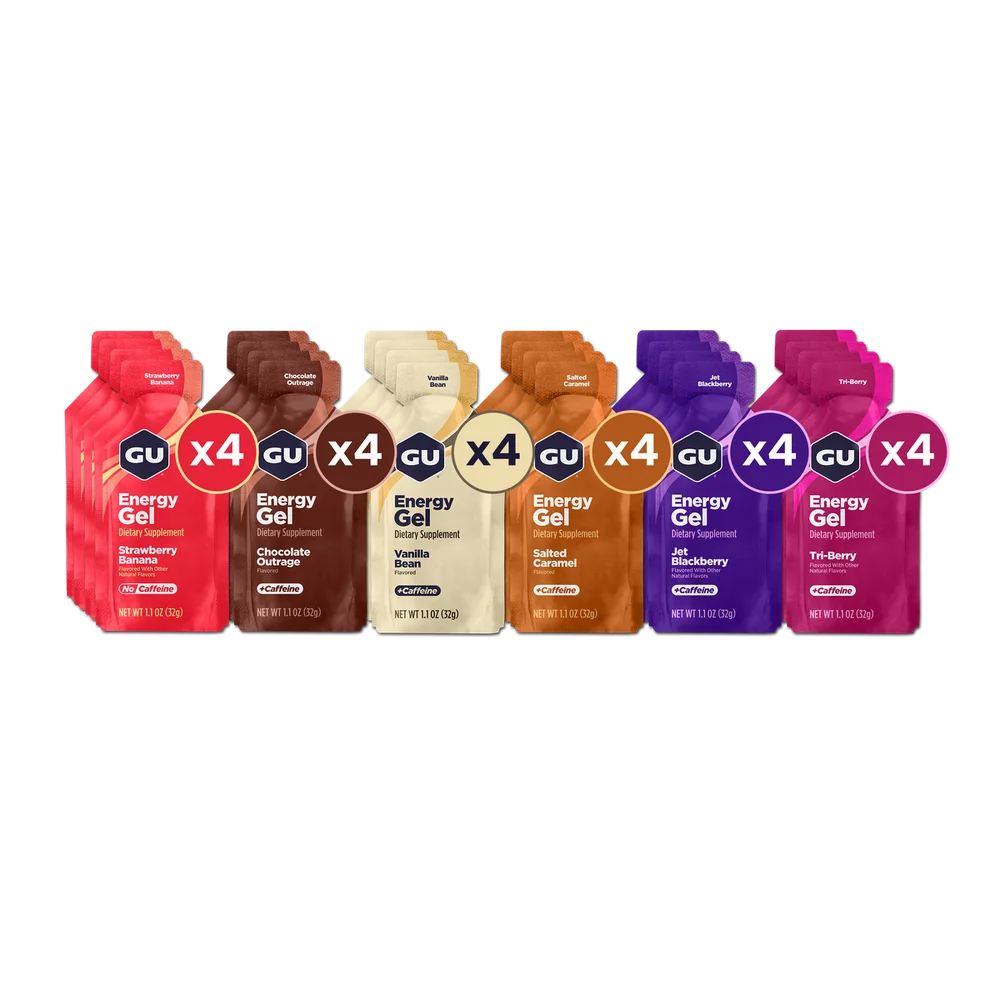
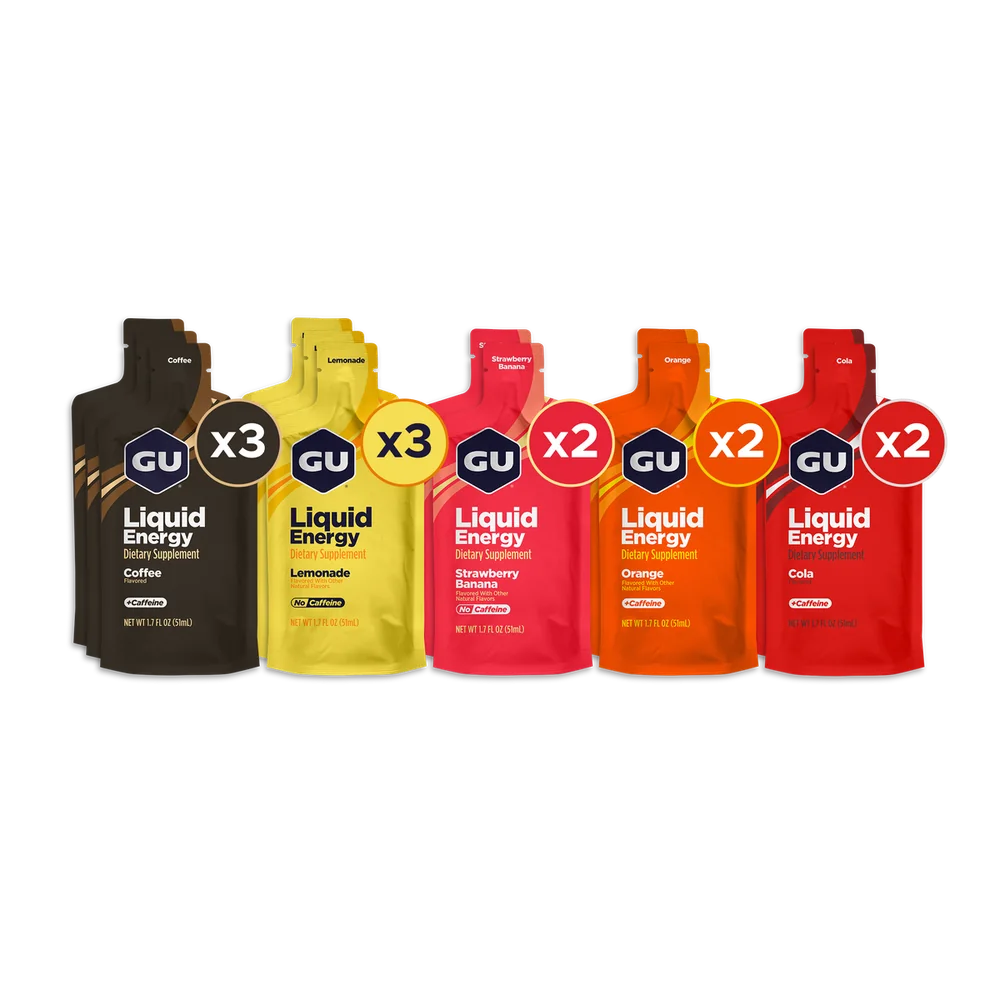
A good starting target is 200–400 calories an hour for any run longer than about 90 minutes. That is two to four gels an hour, or fewer gels topped up with sports drink. Calories come in many forms, and gels, chews, waffles and drink mixes all count. If that intake sounds like a lot, our guide to training your gut shows how to build up to it over a few weeks.
4. Protect your muscles
During long, hard efforts like a marathon, your body starts breaking down its own muscle tissue to free up amino acids for energy. Branched-chain amino acids (BCAAs) are the ones that matter most for muscle repair and rebuilding, and they have a useful quirk: they are metabolised directly inside the muscle, so they double as an extra fuel source while you run.
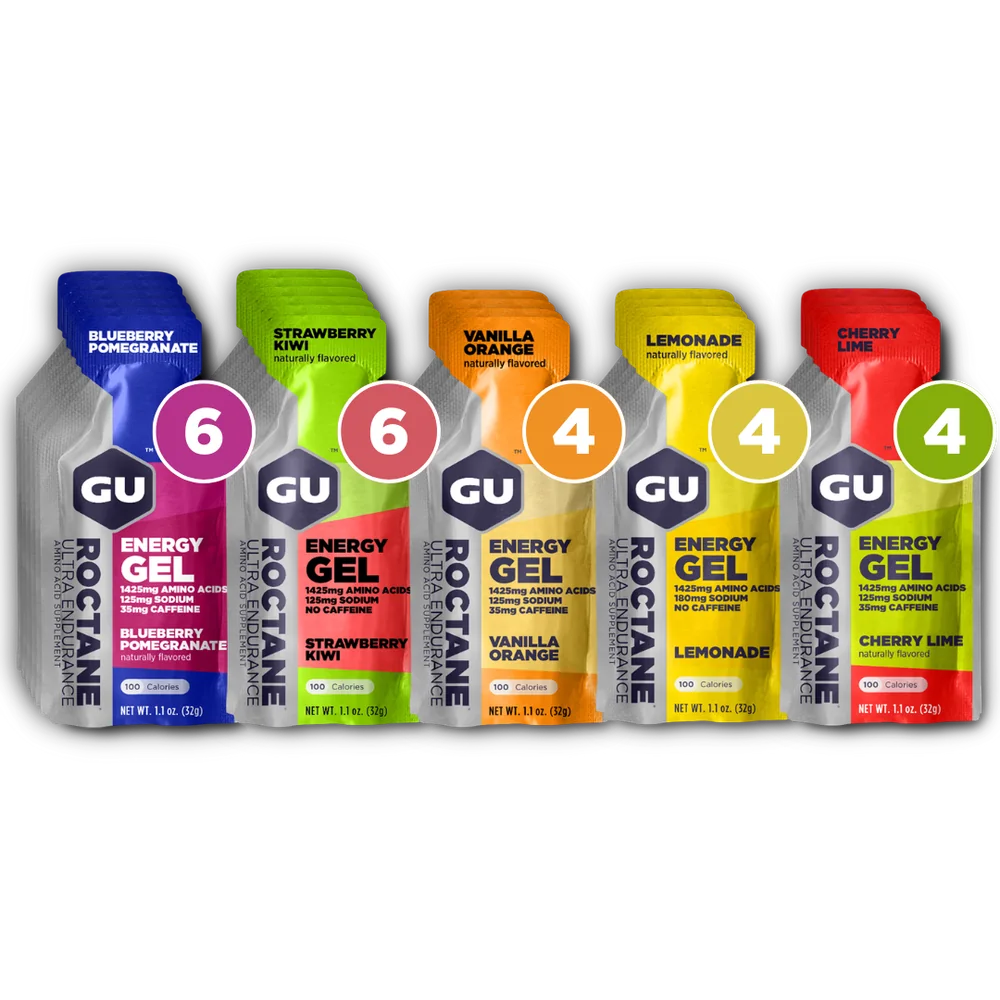
The protocol we suggest is four BCAA capsules before the race and four after, to limit breakdown, kick-start recovery and spare you the stiff-legged stair shuffle the next morning. During the race itself, Roctane Energy Gel carries 1,425 mg of amino acids per sachet, about three times the Original Energy Gel, so switching to Roctane for the second half is an easy way to keep some BCAAs coming in on the move.
5. Carb-load over days, not at one dinner
The all-you-can-eat pasta night before the race is a tradition, but not a great one. You usually end up overeating foods you are not used to digesting and paying for it at 5 a.m. A better approach is to raise your carbohydrate intake over the 2–3 days before the race while cutting back on fat and fibre. Combined with your taper (you are tapering, right?), this fills your muscle and liver glycogen stores, the fuel tanks, without leaving you bloated and uncomfortable the night before.
| Nutrient | Daily target | For a 68 kg (150 lb) runner |
|---|---|---|
| Carbohydrate | 3–5 g per lb of body weight (about 6.5–11 g per kg) | 450–750 g a day for 2–3 days |
| Fat | Under 0.5 g per lb (about 1.1 g per kg) | Under 75 g a day |
The night before, keep it simple: a rice- or potato-based dish, a palm-sized serving of protein, some well-cooked starchy vegetables such as peas and carrots, and plenty of fluid to wash it down. A chicken or tofu and vegetable stir-fry over rice is a reliable choice; so is a plain dal and rice or a soft khichdi. The one rule, as with everything on race day, is that it should be something you eat regularly.
When the plan meets race day
A plan matters, but marathons rarely follow one to the letter. The hotel breakfast will not have your usual oats, a gel will vanish in the scrum at the start, or you will sail past an aid station without noticing. When something goes sideways, stay calm, smile and remember that running is supposed to be fun. For the gel-by-gel version of the plan, read our marathon gel strategy, and for the full method behind tip five see carb loading made easy.
These statements have not been evaluated by a regulatory authority. This product is not intended to diagnose, treat, cure or prevent any disease.