So you want to do a triathlon
A triathlon asks three questions in a row. Can you swim without panicking, ride without fading, and then run on legs that have just spent an hour pedalling? The sprint distance is the friendliest place to find out, and with a sensible training week and a fuelling plan you have actually rehearsed, it is well within reach of an ordinary runner or cyclist.
What a sprint triathlon actually is
The sprint is the standard entry distance:
- Swim: 750 m
- Bike: 20 km
- Run: 5 km
None of the three legs is long on its own. The difficulty is stacking them back to back and getting through the changeovers, called transitions, without losing your head. Training means building endurance in each sport and learning to switch between them smoothly.
A week that covers all three sports
You do not need a professional's training load. You need a routine you can repeat for a couple of months that gives each discipline its turn. A sensible week looks like this:
- Two swims. Work on technique and pacing rather than speed. If you can get into open water, a lake or a calm beach, do it, because a pool gives you a wall every 25 m and a race does not.
- Two rides. One longer steady ride, and one shorter session with hard intervals.
- Two runs. Alternate easy running with brick sessions, a ride followed straight away by a run, so your legs learn what the race will feel like.
- One full rest day. Recovery is part of training, not time off from it.
Then practise the transitions. T1 is swim to bike, T2 is bike to run. Rehearse the sequence of goggles off, helmet on, shoes changed, and walk through where everything sits. It feels silly in the driveway and it saves minutes on race day.
New to swimming? Smooth, relaxed strokes beat fast, frantic ones; efficiency is what gets you to the first buoy with your heart rate under control. A local swim group or a few sessions with a coach will fix more in a month than a year of thrashing up and down alone, and open-water practice before race day is ideal if you can find it.
Fuelling: a race in three parts
Triathlon nutrition is a three-part act, and each leg wants something different because your body keeps changing gear. The plan below is for a sprint; longer races run the same shape for longer.
Before the start
Eat 2–3 hours before the gun: a light, carbohydrate-rich meal such as porridge, toast or an energy waffle. It should digest easily, give steady energy and not sit heavily in your stomach when you hit the water. A little caffeine with breakfast, from coffee or a coffee-flavoured waffle, is a gentle way to wake the system up.
Then, 30–45 minutes before the start, drink something with electrolytes in it. You cannot eat or drink during the swim, so this is your last chance to replace the sodium you are about to sweat out and to get fluid on board. Starting well hydrated also helps prevent the cramps that so often show up in the swim leg. Pick a light flavour; strong ones are hard to face at six in the morning.
The swim
Nothing to eat here, and nothing to worry about if you have done the two things above. Cramping that only ever appears in a race swim is usually nerves, dehydration and the shock of cooler water arriving together with the adrenaline of a mass start. Hydrate beforehand and warm up properly, so your body is already moving before the hooter goes.
The bike
This is where the race is won or lost on fuel. The bike is the one leg where you can eat comfortably, and many triathletes who hit the wall on the run did not run out of training; they ran out of carbohydrate because they ate too little on the bike. Treat the ride as the place you fuel the run. Good options are things you can portion and eat on the move, such as chews, or a drink mix that delivers carbohydrate, electrolytes and amino acids together from the bottle. Both delay the mental and physical fatigue that otherwise arrives late in the run.
Take one last portion in the final minutes before T2, so you leave transition with a full tank.
The run
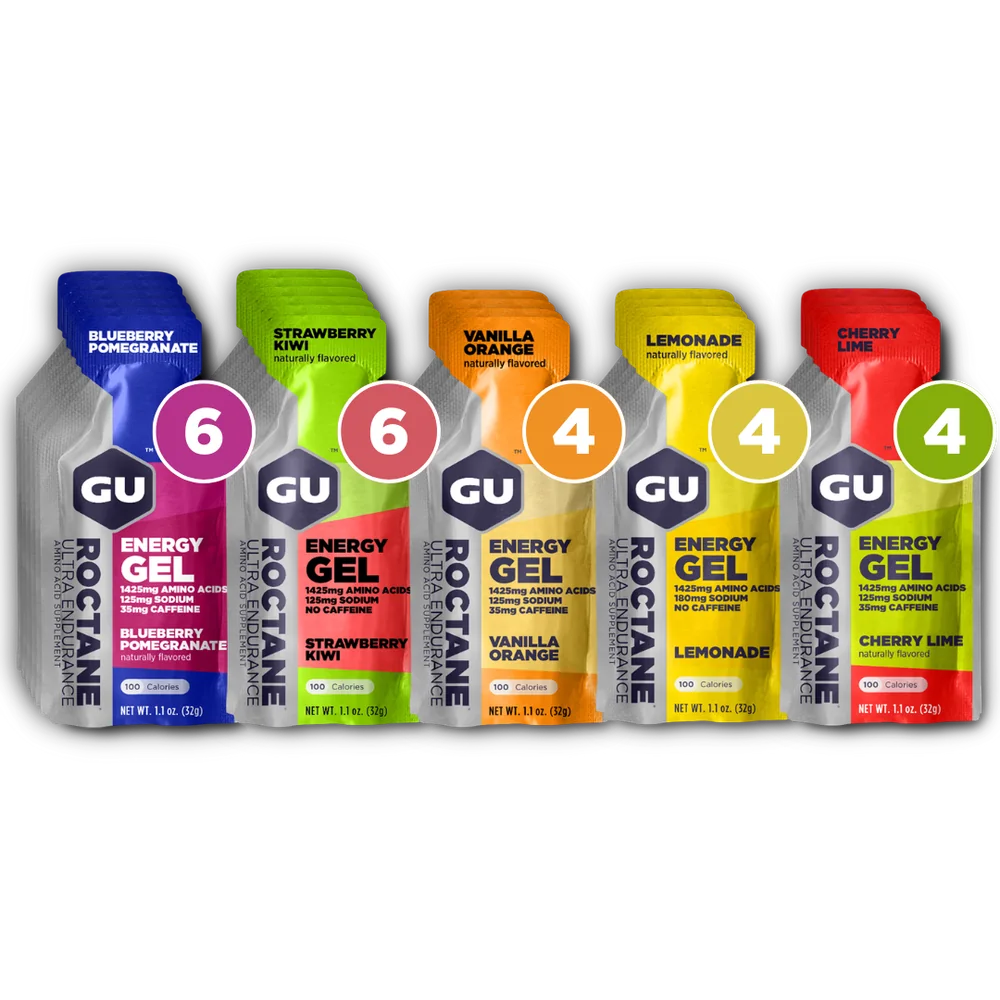
Running off the bike is hard. Your legs feel borrowed for the first kilometre, and the only way to have energy for it is to have planned for it. If you ate well on the bike, the run only needs small top-ups: one Roctane Energy Gel every 20–30 minutes, with a few sips of water at the aid station. A gel is quick carbohydrate at exactly the moment you need it, it is small enough to tuck into a tri-suit pocket, and the caffeinated flavours help you hold focus when the finish line is still a few kilometres away. On a hot course, Salted Lime and Strawberry Kiwi are the flavours racers reach for.
In a sprint that is one or two gels; in a standard-distance race the same interval just runs for longer.
Practise your fuel, not just your sport
The best nutrition for a sprint is a balanced mix of carbohydrate, electrolytes and amino acids: something solid before, chews or a drink mix on the bike, and a gel on the run. But the right products only work if your stomach has met them before at race intensity. Use your brick sessions to rehearse the whole sequence: the pre-race breakfast, the electrolytes before the swim, eating on the bike, the gel before T2 and the gel on the run. Fix what felt wrong there, not on race morning.
It matters twice over in Indian heat. A dawn start in Chennai or Mumbai is humid enough that a gel which went down easily in a cool session can feel heavier at 30 °C, and only practising in similar conditions tells you whether you need more water with each gel or more sodium before the swim.
Common questions
How do I have energy for the run after the bike?
Eat on the bike. It is the best place in the whole race to replenish, and waiting until the run to start refuelling means you are already behind. A gel or a few chews taken just before T2 gives the run a strong start.
Why do I only cramp during the swim in a race?
Nerves, dehydration and cold water, all at once. Electrolytes 30–45 minutes before the start, a proper warm-up and a relaxed first hundred metres solve most of it.
Training for a triathlon is about more than logging hours. It is about listening to your body, dialling in what you eat, and building enough confidence through practice that race day feels like a rehearsal. For a gel plan by race distance and session length, see fuel for triathlon, and if your stomach needs convincing, start with train your gut.
These statements have not been evaluated by a regulatory authority. This product is not intended to diagnose, treat, cure or prevent any disease.