How a gel flavour gets made
Most of us think about a gel flavour for about three seconds: once at checkout, and once at 32 km when we are deciding whether we can face another sachet. Someone else thought about it for months. When GU Energy Labs, the Berkeley, California company that makes the gels we stock, launched Salted Lime Roctane Energy Gel, it published a Q&A with Brandon Kirchmeyer, its product development manager and the person responsible for how every one of its products tastes. It is a rare look behind the foil, and it explains why a flavour you would never order as a juice can be exactly right at hour four.
It starts with a problem, not a flavour
Salted Lime did not begin as "let's do lime". It began with a race. The Western States Endurance Run is a 100-mile (161 km) trail race in California where the heat is brutal and the air is dry, and the lab wanted a flavour athletes could keep taking down in exactly those conditions. The brief was written around the environment first; the fruit came later.
That order matters, and the problem is one any of us recognises from a 6 am long run in Mumbai in May or an exposed climb in the Western Ghats at noon. Rich, sweet flavours that are lovely on a cool December morning can become hard work once the temperature climbs. Something tart and salty tends to stay drinkable long after chocolate has stopped being appealing.
Five concepts, one winner
After an internal brainstorm, the team narrowed the field to five candidates: Salted Lime, Watermelon Lime, Blood Orange Lemonade, Strawberry Hibiscus and Raspberry Lemon. Notice the pattern. Every one leans on citrus or tartness, and not one is a dessert flavour. When the use case is heat, the shortlist more or less writes itself.
Rather than picking in a meeting room, they took the five concepts to the Western States community, the people who run and support that race, and asked what they would actually want in the canyons. Salted Lime won. The finished flavour pairs a higher-than-usual hit of sea salt with sharp lime, and the aim throughout was something that quenches thirst rather than something that tastes like pudding.
Version after version
Was it good from the first batch? Not even close. Kirchmeyer went through a long run of versions before he was satisfied, and he is clear that countless hours of adjustment is simply what one gel flavour costs. It is also, he says, the part of the job he is best at and enjoys most.
Only once the lab was happy did the prototypes go out to a small group the company calls its supertasters, who try new flavours out in the field rather than at a bench. Their verdict on Salted Lime was an enthusiastic yes, and that was the version that went into the sachet.
Asked whether he has ever made a flavour that tasted genuinely awful, his answer was yes, too many to count. That is the real lesson of the process. The terrible versions exist; you just never meet them. What reaches the shelf is the survivor of a long elimination.
Test the way the lab tests. A flavour that was tuned for hot trails and signed off by athletes out on the course deserves the same trial from you. Try a new flavour on a warm long run, not on the sofa, and carry two or three different flavours on anything over two hours so your palate does not tire of one.
Why "any flavour" is harder than it sounds
Can the lab make any flavour imaginable? Kirchmeyer's honest answer is that some are far harder than others. He goes in assuming anything is possible, with a working motto along the lines of the bigger the challenge, the bigger the win, but the chemistry is not the hard part. The hardest thing, in his words, is building flavours that everyone will enjoy. A gel has to taste right to thousands of different palates, at 5 km and at 40 km, on a cold morning and through a humid afternoon.
His own favourite project was Hoppy Trails, a beer-inspired gel with bitter notes that he built because he loves a good IPA. You will not find it in our range, but it shows how far the brief can stretch once someone is allowed to play.
From the customer service desk to the flavour lab
The route into the job is worth telling. Kirchmeyer graduated in 2009 with a degree in nutrition and food science, and already knew the brand from his school days because his father ran marathons and raced triathlons. He wanted a research and development role; there was none open. There was a customer service position, so he took that, reasoning that answering questions about every product all day was the fastest way to learn them.
About six months later, the R&D associate left for graduate school. He went straight to HR, interviewed with the head of the department and got the role. Close to twelve years on, when the Q&A was published, he had moved from entry-level technical associate to product development manager, responsible for the company's entire product range.
There is a quiet point in that story. A good share of what ends up on a flavour page was shaped by someone who spent half a year reading emails from athletes about what did and did not work for them.
What is in the sachet today
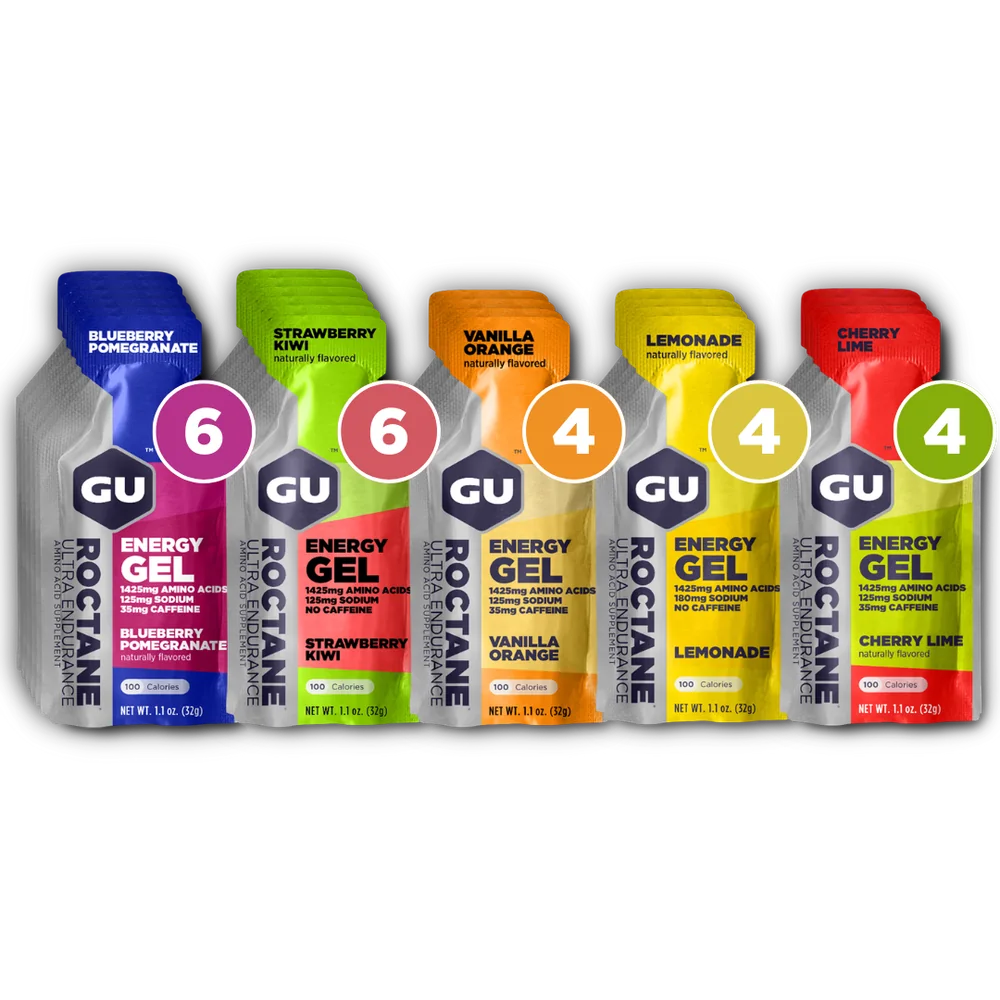
The flavour that came out of all this is the Salted Lime you will find in our Roctane range: tart lime, a salty finish, 35 mg of caffeine, and the 125–180 mg of sodium per sachet that Roctane Energy Gel carries. It was designed for hot, dusty training and racing, which describes a fair share of the Indian calendar.
If you want to try it, it is in the flavour list on Roctane Energy Gel. To see where it sits against every other flavour and caffeine level we stock, the flavour and caffeine chart has the whole range on one page.