Caffeine and endurance: what the science says
Most of us already use caffeine before a workout. The more interesting question is what it does two hours into a run or a ride, and whether taking it in a gel, mid-effort, is worth the trouble. Here is what the research says, how much caffeine is in each gel, and how to time it so it helps your race rather than wrecks your sleep.
What caffeine does to a tired athlete
Caffeine works by blocking adenosine, a neurotransmitter that nudges the brain towards relaxation and sleepiness. With adenosine held back you feel more alert, and, more usefully for endurance sport, the same effort feels easier. That drop in perceived effort is the headline benefit: at the 30 km mark the pace has not changed, but your sense of how hard it is has.
In a long event the battle is often with your head before it is with your legs. Caffeine helps you stay focused on the job in front of you, which is why it is so widely used in endurance sport.
There is a physical story too. Research suggests that moderate caffeine intake improves endurance by increasing fat oxidation, which spares muscle glycogen and pushes back the point at which you run out of fuel. One study found that taking a caffeinated energy gel significantly improved endurance performance, particularly in prolonged, high-intensity efforts. The research is also reassuring on dose: even a relatively small amount, around 70 mg taken during exercise, has been shown to improve performance. More is not automatically better.
Why a gel rather than a coffee
Coffee is wonderful before an early-morning Mumbai or Delhi marathon start. It is less practical at 32 km. A caffeinated gel gives you the carbohydrate you were going to take anyway, with a measured dose of caffeine in the same sachet, from a packet that fits in a shorts pocket. The caffeine in these gels is naturally derived from green tea leaves.
Because each sachet carries a modest dose, taking caffeinated gels at your normal interval works as a trickle feed: a steady supply across the event rather than one big hit. That is what keeps you alert without the jitters.
How much caffeine is in each gel
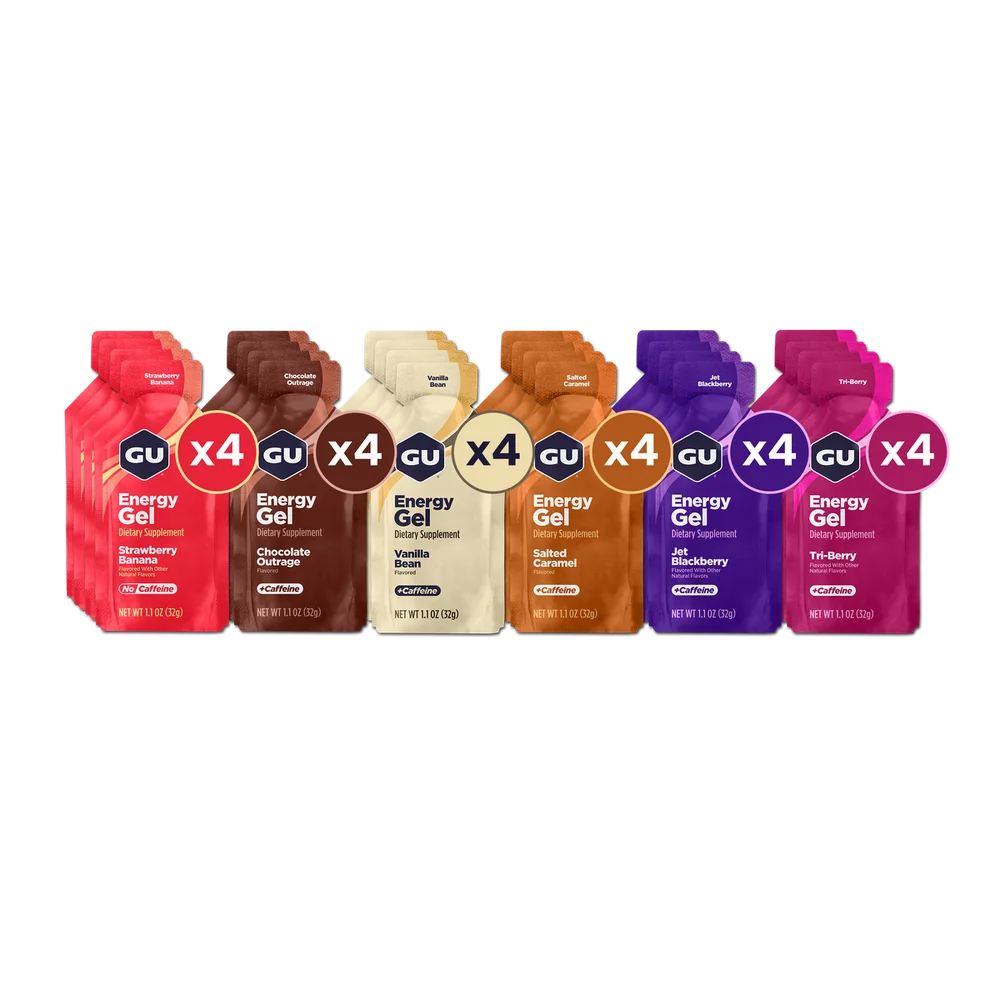
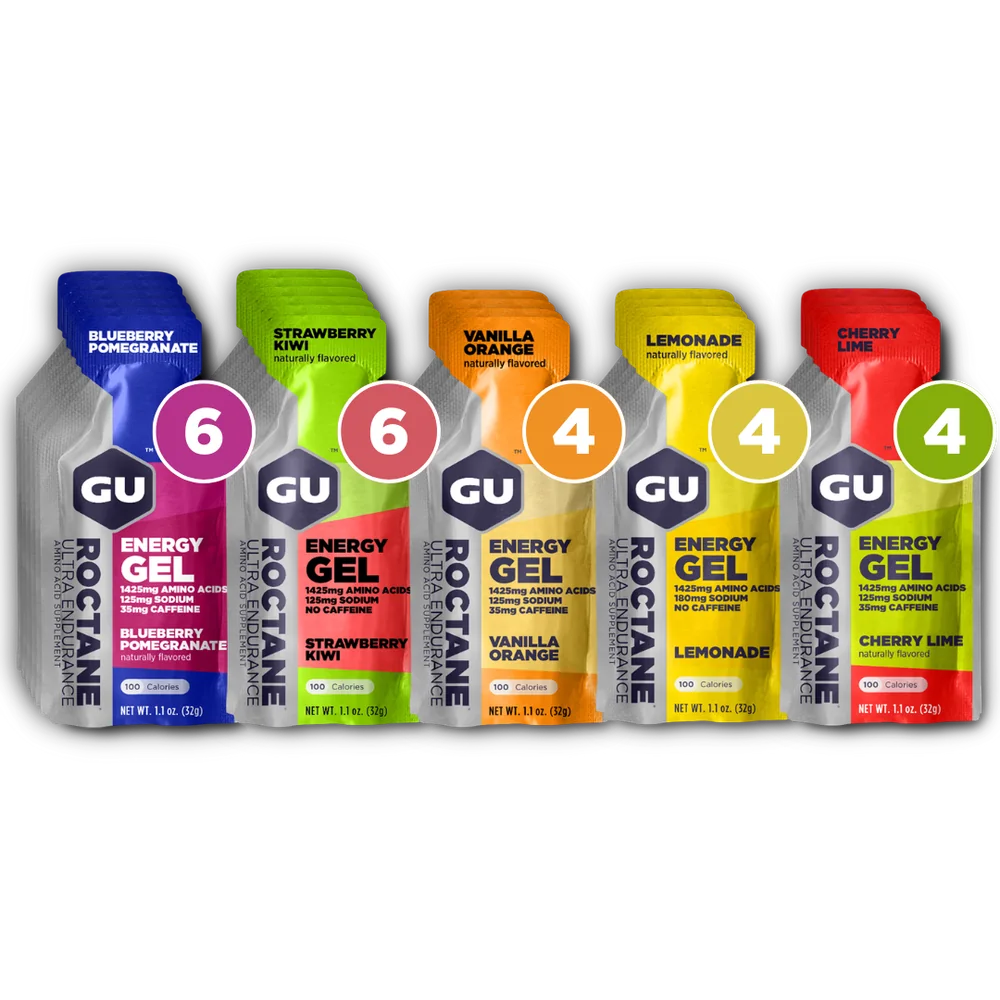
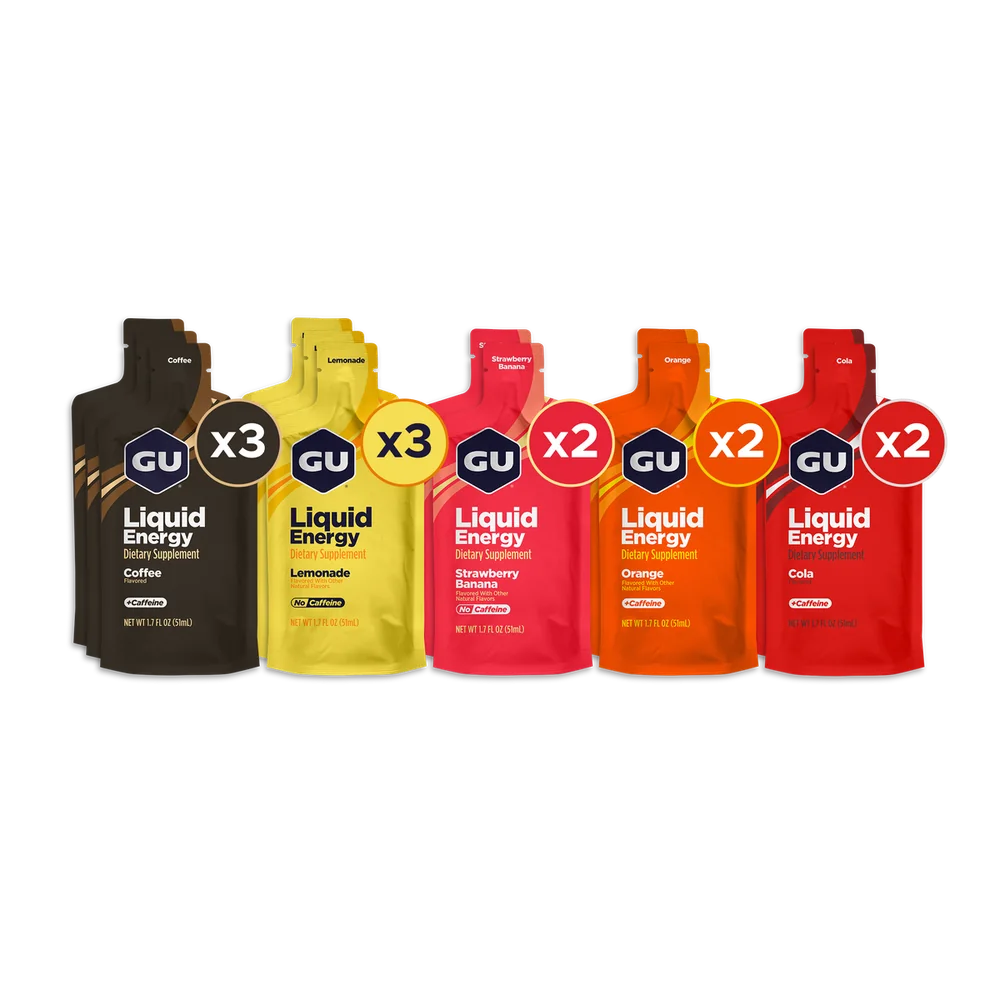
Plenty of flavours across all three gels are caffeine-free. The caffeinated flavours range from 20 mg to 70 mg per sachet, which lets you match the dose to your tolerance and to the stage of the race.
| Gel | Caffeinated flavours |
|---|---|
| Original Energy Gel | 20 mg in most caffeinated flavours; 40 mg in Espresso Love, Caramel Macchiato and Jet Blackberry |
| Liquid Energy Gel | 20 mg or 40 mg; Coffee carries 40 mg |
| Roctane Energy Gel | 35 mg in caffeinated flavours; Cold Brew Coffee carries 70 mg, double the others |
The full flavour-by-flavour list is in our flavour and caffeine chart.
When to take it
- Before you start. A caffeinated gel 5–15 minutes before a session gives you a jump start, so you begin alert rather than spending the first 20 minutes waking up.
- During the effort. Keep to the normal cadence: one gel about five minutes before you start and one every 45 minutes after that. Use the caffeinated ones deliberately. The higher-caffeine Roctane flavours are at their most useful in the later stages of a race, when body and mind are both flagging.
- Afterwards. Taper off. Caffeine is still in your system after the finish, so loading up late in the day can cost you the sleep your recovery depends on. For an evening run around Cubbon Park, stick to caffeine-free flavours.
Know your ceiling. Up to 400 mg of caffeine a day is considered safe, and the coffee you drank at breakfast counts towards it. Cold Brew Coffee Roctane is capped at five sachets a day and is not recommended for pregnant or nursing women, anyone under 18, or people who are sensitive to caffeine.
A worked example: the four-hour marathon
Say you are aiming for about four hours. One gel five minutes before the gun and one every 45 minutes comes to six gels. If all six were 40 mg flavours you would take in 240 mg, comfortably inside the daily 400 mg. If all six were Cold Brew Coffee Roctane at 70 mg you would be at 420 mg, over the daily ceiling and past the five-sachet limit.
So the sensible pattern is a staircase. Caffeine-free or 20 mg gels in the first half, a step up to 35–40 mg flavours from the halfway point, and a single 70 mg sachet held back for the last 10 km if you have already tested it in training. You get the late-race lift where it matters, and you stay well inside the limits.
Starting out, and what to watch for
If you have never taken caffeine mid-exercise, start with a 20 mg flavour on a long training run and see how your stomach handles it. Caffeinated gels are generally safe, but too much brings jitters, a racing heart rate and broken sleep. Heat and humidity matter here: on a sticky morning in Chennai or Kolkata your heart rate is already running higher than usual, which is one more reason to start low. Our train your gut guide covers how to build up without surprises.
And never try a caffeinated flavour for the first time on race day. If it works for you, you will know by the end of your training block and can plan around it with confidence.
One cyclist reviewing GU's gels, John W. Kello, put it simply: with one in his jersey pocket the ride was more enjoyable and he could hold the pace he wanted the whole way through. That late-ride lift is the everyday version of what the research describes.
Caffeine is one of the few supplements with solid evidence behind it, and in a gel it is easy to dose precisely. If you are still deciding which side to be on, read caffeinated vs non-caffeinated, then pick a flavour and test it on your next long run.
These statements have not been evaluated by a regulatory authority. This product is not intended to diagnose, treat, cure or prevent any disease.