A half-marathon nutrition plan
A half marathon sits in an awkward spot. At 21.1 km it is long enough that running on breakfast alone leaves you flat in the final 5 km, but short enough that many runners never bother with a plan. The good news is that the plan is simple. There are four things to sort out (hydration, carbohydrate, flavour and format) and a ten-minute planning exercise that ties them together. Here is how we would approach it.
Start with what your body actually needs
It is tempting to begin with products. Begin with nutrients instead. Over a hard two hours your body can only process so many calories in an hour, and alongside those calories it wants water, electrolytes, amino acids and, later, protein. A good plan covers each of those rather than stuffing gels in a pocket and hoping.
The other thing to accept early is that there is no single right answer. Your body size, the air temperature, the type of activity, how hard you are going and what you can stomach all change the numbers, and they change from one day to the next. A humid Mumbai start and a cool Delhi winter morning are two different fuelling problems, even for the same runner at the same pace. That is why mixing and matching products, and testing the mix in training, beats copying someone else's plan.
Carbohydrate: 30–60 g per hour
Carbohydrate is the body's main fuel when you are working hard, and your stored supply is not large. Keep topping it up through the race and you stay clear of the wall; let it run down and the last few kilometres become a slog.
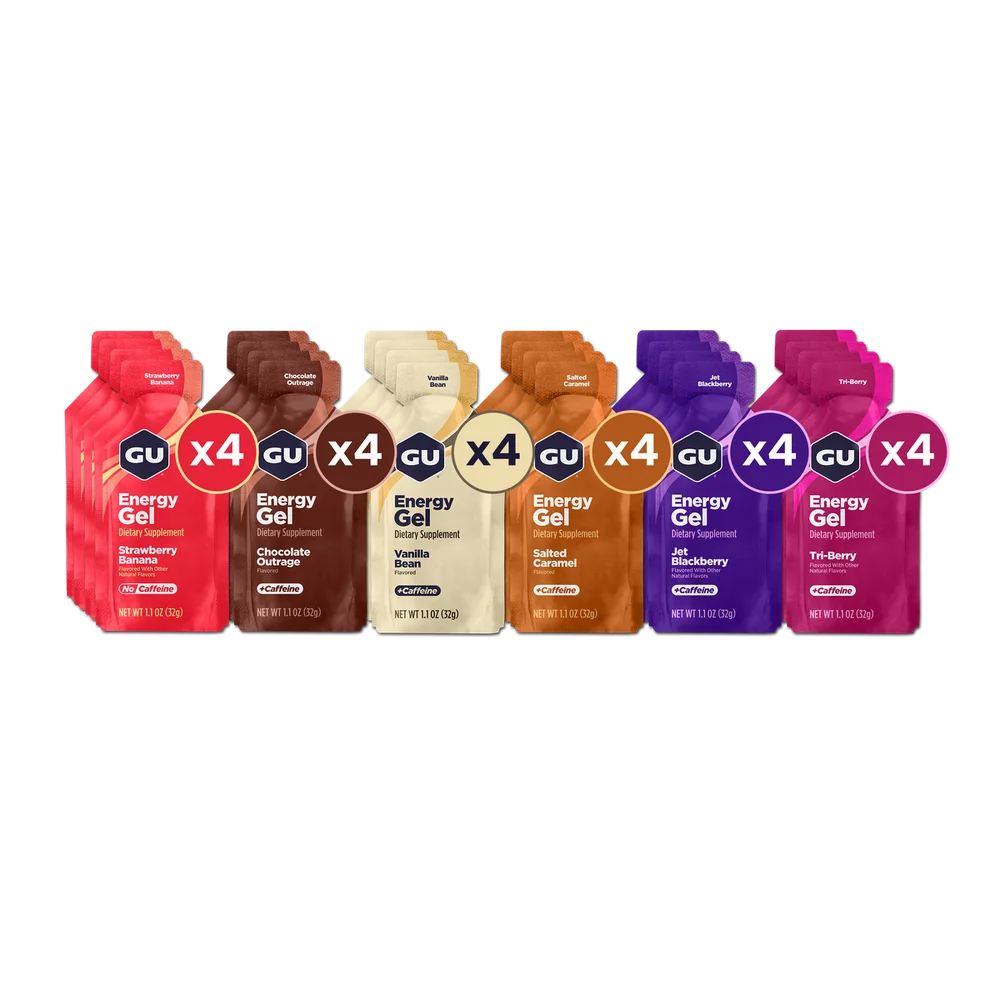
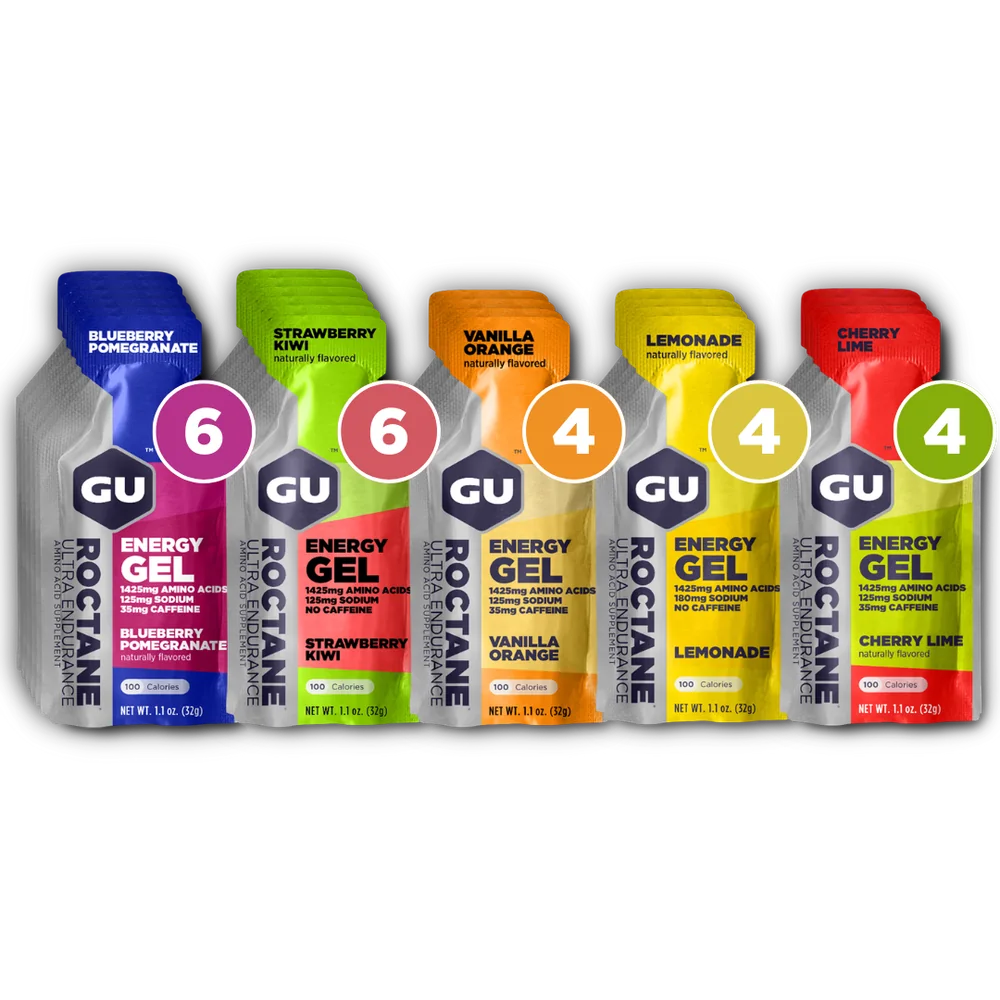
The target is 30–60 grams of carbohydrate per hour of running. In practice that is about two energy gels an hour. Each of the gels we stock carries around 22–23 grams, so two sachets land you comfortably inside the range. The Original Energy Gel is the natural starting point; the Roctane Energy Gel adds more electrolytes and amino acids for runners who want a bit more in each sachet.
Take the gels on a clock, not on feel. By the time you feel empty you are already behind, and a half marathon is too short to recover lost ground.
Hydration: 500 ml to a litre per hour
Drink roughly 500 ml to 1 litre of fluid per hour of running (the original guidance is 16–32 oz). Where you land in that range depends on how hot it is and how heavily you sweat; in heat and humidity you will be nearer the top end.
Water alone does not replace what you lose. Add electrolytes with a hydration tab or an electrolyte drink to put back the sodium you are sweating out. We do not sell electrolyte tabs, so pick one you like and use it in training first.
Two practical jobs before race week:
- Read the aid-station map. Find out where the water tables are and how far apart they sit, then decide which ones you will rely on.
- Carry your own if the gaps are long. If you want fluid more often than the course provides it, practise running with a handheld bottle or a hydration pack on your long runs so it feels normal on race day.
Beat flavour fatigue
Four gels of the same flavour over two hours gets old fast, and when a flavour starts to turn your stomach you stop taking it, which is exactly when you need it most. The fix is to rotate. There are 17 flavours of the Original Energy Gel in our range, from salty to sweet to sour, so you can line up a different one for each stop. Our flavour and caffeine chart lists which ones carry caffeine, which is worth knowing if you want to save a caffeinated gel for the final 5 km.
Change the format, not just the flavour
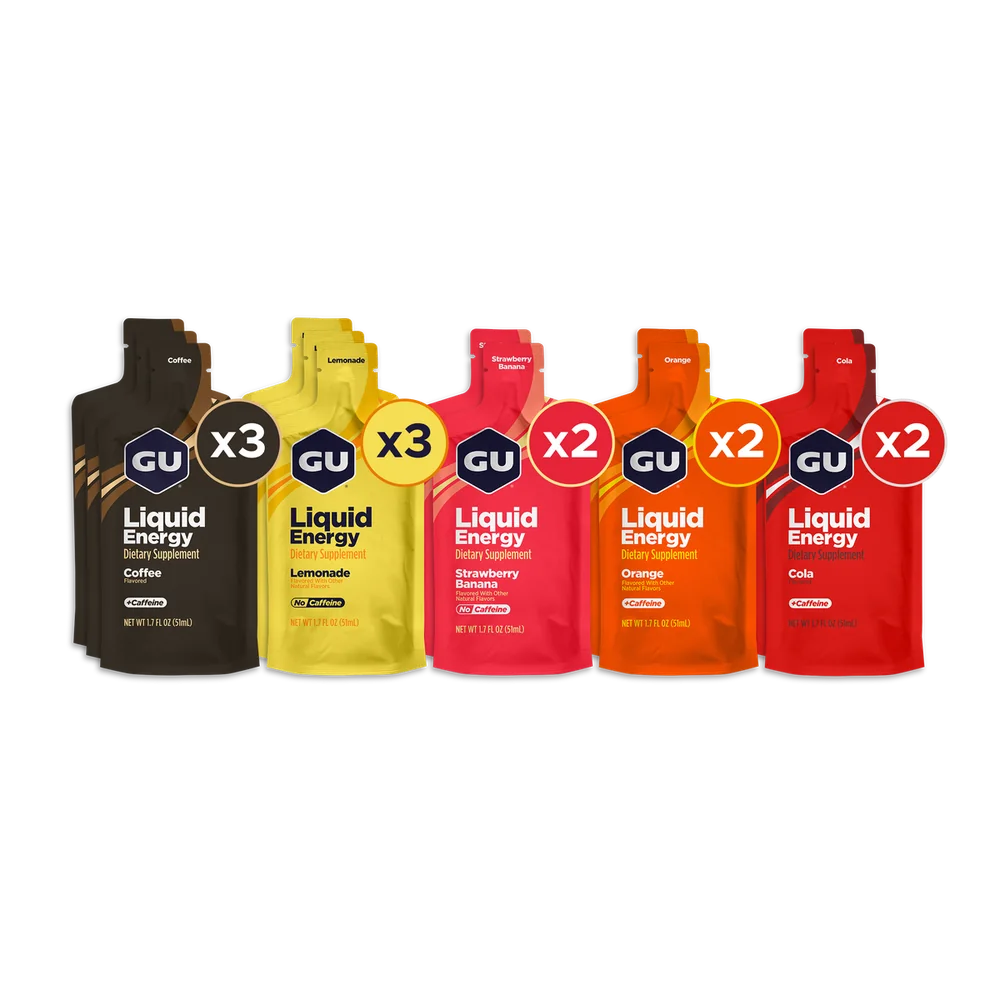
Flavour is one lever; texture is the other. Alternate a thicker Original gel with a Liquid Energy Gel, which is thinner and goes down more easily when you are breathing hard. If you use energy chews, they slot into the rotation too. The point is simply to keep each fuelling stop feeling a little different from the last one, so that 21.1 km on the same fuel never gets boring.
Build the plan in four steps
Here is the planning exercise. It takes ten minutes and you only need to do it once per race.
- Pick a goal finish time and work out the average pace it implies. That tells you how long you will be out on the course.
- Work out your total need for the event. Multiply the hourly carbohydrate and fluid targets above by your expected time, and note your electrolyte need alongside.
- Mix and match products and flavours until the totals add up. Count the carbohydrate, sodium and amino acids in each item and sum them.
- Check that every element is covered: calories, electrolytes, amino acids, water and protein. If one is short, swap something in.
Worked example: a 2-hour half marathon. At 30–60 g of carbohydrate per hour you need 60–120 g in total, which is four gels taken roughly every 30 minutes, each with a few sips of water. Fluid comes to 1–2 litres over the race, so plan on every aid station plus a 500 ml handheld if the gaps are long. Rotate four different flavours and make the second and fourth gels Liquid Energy Gels. Things will change on the day, but now you have a plan to change from.
Save the finished plan somewhere you will see it on race morning. Then rehearse it: your last two or three long runs should use exactly the gels, flavours and fluid routine you intend to race with. If your stomach objects in training, that is useful information; our train your gut guide explains how to build up tolerance before race day.
Keep it to this
Two gels an hour, half a litre to a litre of fluid an hour with electrolytes, flavours and textures rotated so nothing palls, and a plan on paper before the bib arrives. That is a half-marathon nutrition plan. Use our fuel calculator to turn your goal time into a gel schedule, then read race-day nutrition: best practices for what to eat before the gun and after the finish.
These statements have not been evaluated by a regulatory authority. This product is not intended to diagnose, treat, cure or prevent any disease.