Race-day nutrition: best practices
Race morning. The training is done, the bib is pinned and the kit was laid out the night before. The one variable still in your hands is what you eat and drink: before the start, through the middle kilometres and in the hour after you finish. Get it right and the race you trained for actually happens. Get it wrong and the last third turns into damage control. Here is a practical plan, start to finish.
Why fuelling decides your race
Your muscles run mainly on glycogen, the carbohydrate your body keeps in store. That store is small. In a short race it is enough; in a marathon or a long triathlon it runs low, and when it does the pace drifts, the legs turn heavy and the finish gets further away. Fuelling during the race keeps it topped up.
Hydration is the other half. Losing just 2% of your body weight in fluid is enough to dent endurance noticeably, bringing cramps, dizziness and a slower pace with it. Fluid regulates your body temperature, keeps blood flowing to working muscles and keeps them contracting properly. On a humid January morning in Mumbai, or a Hyderabad start that is already warm by 7 am, you reach that 2% sooner than you would expect.
Start with the event
How much you need depends on how long you will be out there. A sprint triathlon or a 10 km needs a sensible pre-race meal and light fuelling, perhaps a single gel. A marathon, a long-course triathlon or an ultra needs a proper plan: regular fuelling, regular drinking and a schedule you have rehearsed.
Before the gun
- Eat breakfast 2–3 hours before. Make it high in carbohydrate and low in fibre so it is digested by the time you start: oats with a banana, toast with nut butter, or a couple of plain idlis if that is what you are used to.
- Pre-hydrate, steadily. Sip water or an electrolyte drink in the hours before the start. Small, regular amounts, not a bottle in one go.
- Do not overdo it. Drinking far more water than you need dilutes the sodium in your blood, a condition called hyponatremia.
During the race
This is where the plan earns its keep. Three habits cover most of it.
- Take a gel on a schedule. One gel every 30–45 minutes, followed by a few mouthfuls of water, keeps glycogen topped up. At an easier effort you can stretch that to 45 minutes to an hour.
- Alternate water and electrolytes. Drink plain water with your gels and an electrolyte drink in between. Electrolytes replace the sodium you sweat out; plain water on its own does not.
- Fuel before you need to. Do not wait for tiredness or thirst. A dry mouth or a light head means you are already behind and will spend the rest of the race catching up.
Balance matters as much as quantity. Gel after gel without enough water sits heavily in the stomach, and water with nothing else gradually dilutes your electrolytes. Alternating the two keeps both energy and hydration steady.
What gels and drinks each bring
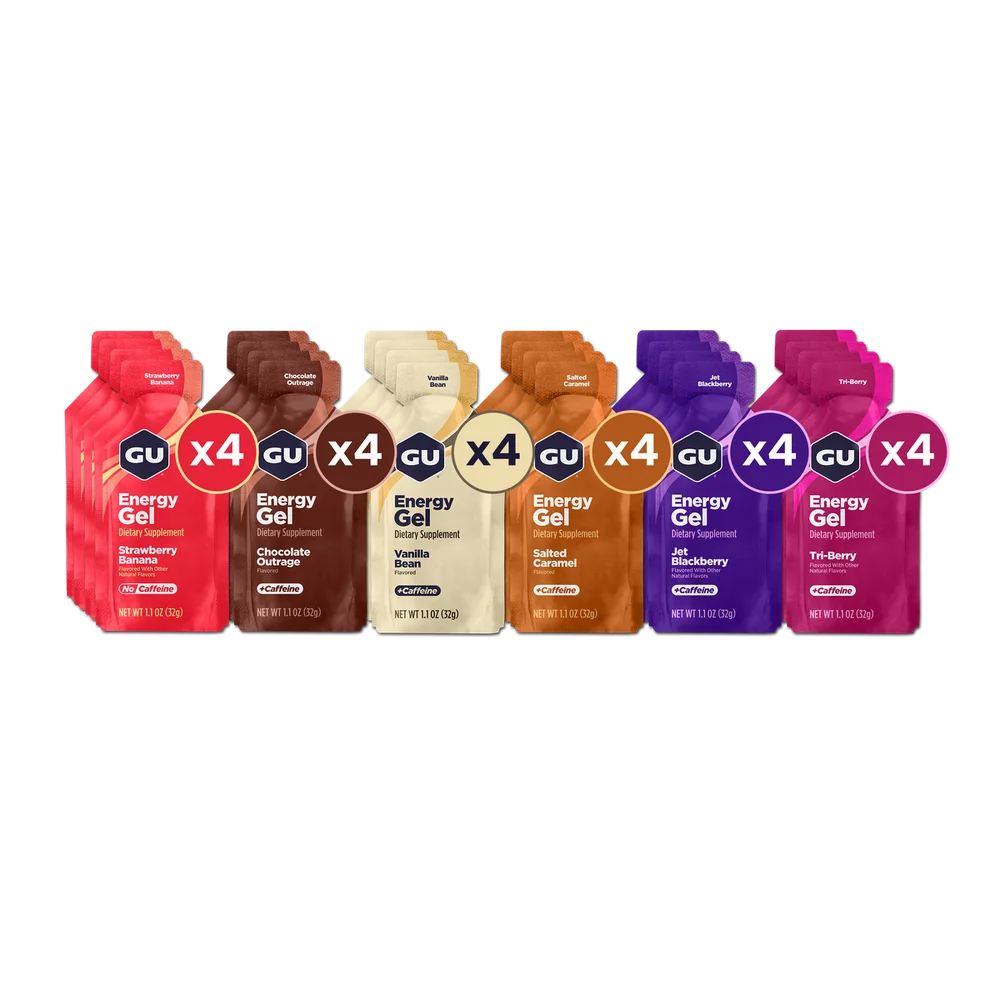
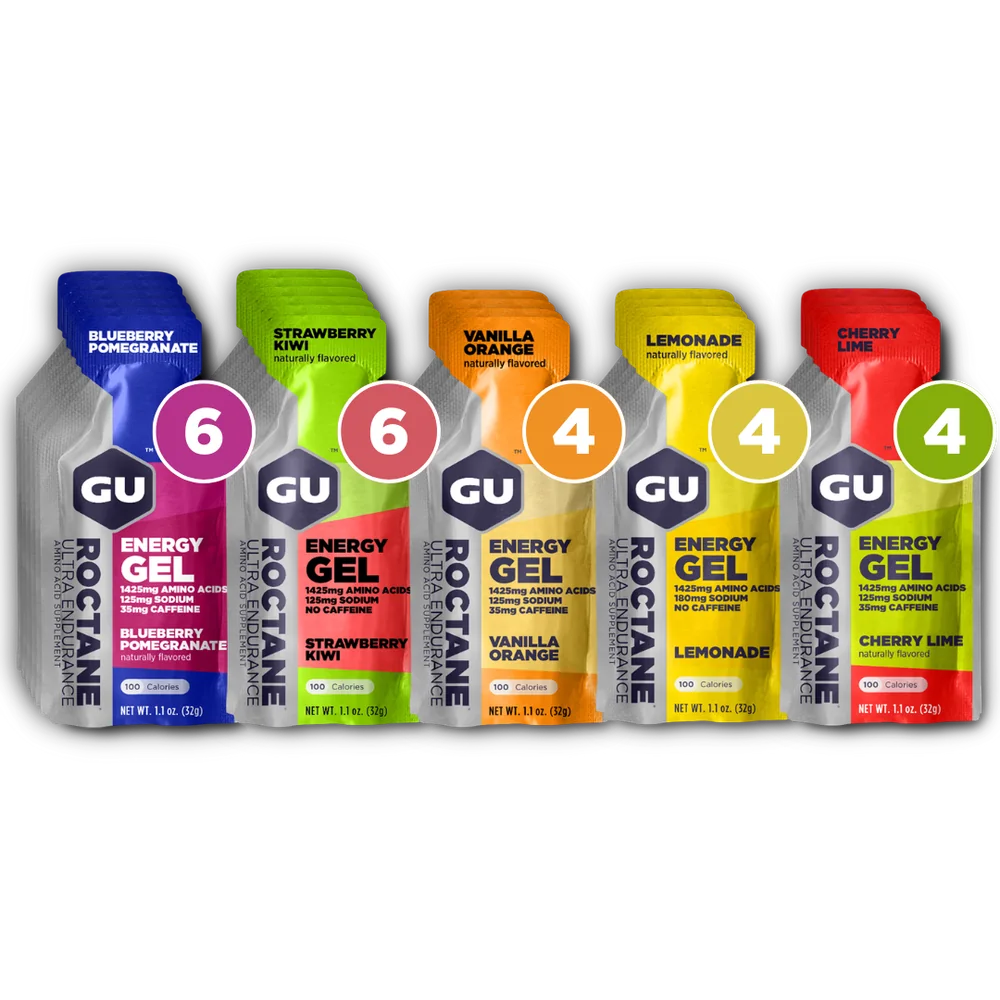
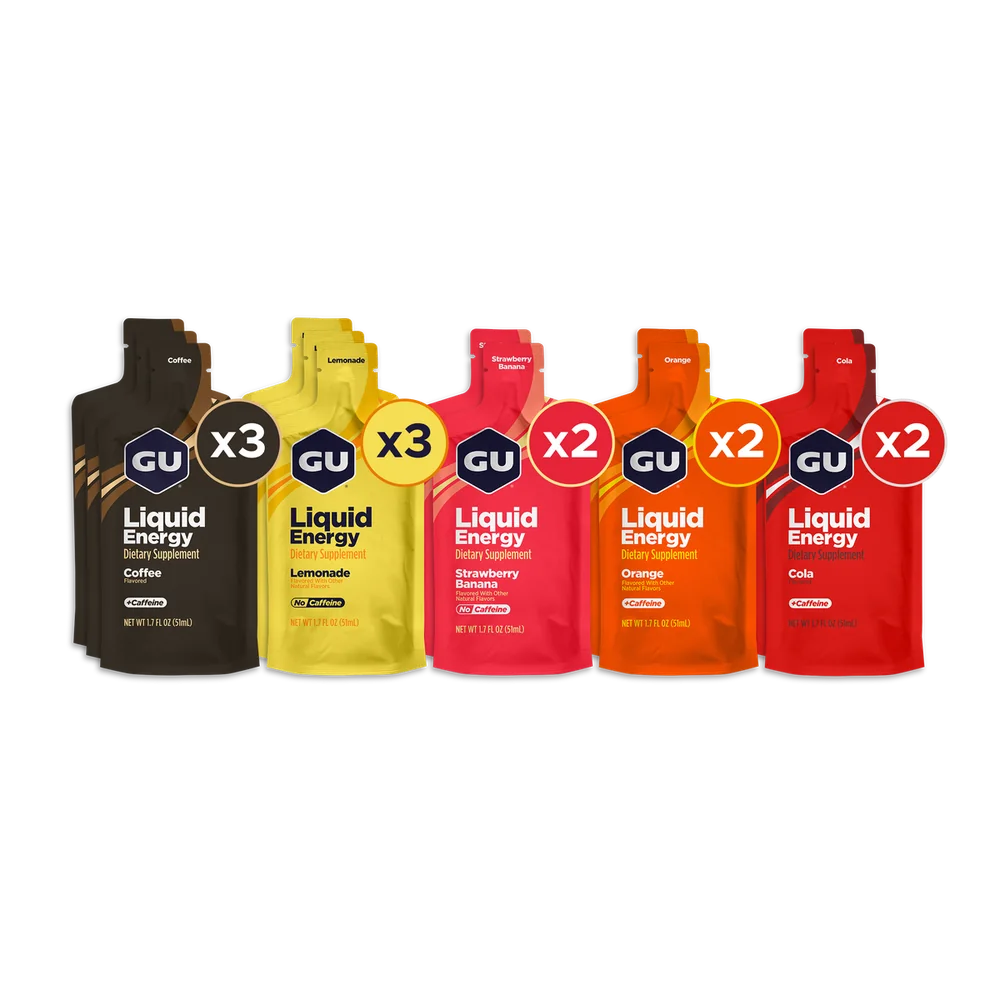
Gels are concentrated, easy-to-digest carbohydrate in a packet that weighs almost nothing: the quickest way to get fuel into working muscles mid-race. The three we stock also carry amino acids to help reduce muscle fatigue and electrolytes to support hydration, and selected flavours add caffeine. The Original Energy Gel is the everyday choice, the Liquid Energy Gel goes down more easily when you are breathing hard, and the Roctane Energy Gel is built for long race days.
Carbohydrate drink mixes put fuel and hydration in the same bottle, with fast-digesting carbs and electrolytes together. Liquid calories are often easier on the stomach late in a long event, when a solid snack or even a thick gel starts to feel like too much. We do not sell drink mixes, so choose one you like and test it in training alongside your gels.
Three supplements worth considering
- Electrolytes. They help balance the fluid in your body and head off dehydration-related fatigue and cramping. Use an electrolyte tab or drink before the start and through longer events.
- Caffeine. A proven performance aid that sharpens focus and makes the same effort feel easier. Roctane gels and several Original Energy Gel flavours contain it, which makes them useful for a mid-race lift; our flavour and caffeine chart lists the dose in each.
- BCAAs and recovery protein. Branched-chain amino acids support muscle repair and reduce soreness. The natural slot is after the finish, in a protein recovery drink.
After the finish
Recovery starts the moment you stop the watch.
- Refill glycogen within 30 minutes. A carbohydrate-rich snack or drink in that window restocks what you have burned.
- Add protein. It gives the muscles what they need to repair. A recovery drink that combines carbohydrate and protein covers both in one go.
- Replace what you sweated out. Aim for roughly 1–1.5 litres of water or electrolyte drink for every kilogram of body weight you lost during the race (the original guidance is 16–24 oz per pound). Electrolytes in that fluid restore sodium and potassium faster than water alone.
Test it before you trust it
The golden rule: nothing new on race day. Not a new gel flavour, not a new drink mix, not a new breakfast. Everything you take on race morning should have been through at least one long training session first.
Use your long runs and rides as dress rehearsals. Carry the gels you will race with, take them at race intervals and drink the way you plan to drink. Metabolism, sweat rate and gut tolerance vary a lot between athletes, so adjust from your own notes rather than someone else's plan. Our train your gut guide walks through how to build up the volume over a few weeks.
The most common mistakes are easy to avoid: eating too much too close to the start, drinking too little through the middle of the race, and opening a product for the first time at the expo the day before.
Quick answers
How should I use gels on race day?
One gel every 30–45 minutes, each followed by water so it absorbs well.
Can I combine gels and drinks?
Yes. Mixing formats keeps the stomach happy and gives you fuel and hydration from two sources.
How do I avoid stomach trouble?
Rehearse the whole plan in training and keep only what your body tolerates.
Do gels work for triathlon?
Yes, from sprint distance through to long-course.
Race-day nutrition is not about scraping across the line; it is about running the race you prepared for and enjoying it. Plan the fuel, plan the fluid, rehearse both, and the finish line looks after itself. For a kilometre-by-kilometre version, read our marathon gel strategy, then work out exactly how many gels you need with the fuel calculator.
These statements have not been evaluated by a regulatory authority. This product is not intended to diagnose, treat, cure or prevent any disease.