Energy gels vs real food: how endurance athletes actually fuel
Ask a room full of runners whether they fuel with gels or real food and you will start an argument. Ask what they actually ate last Sunday and the answer is nearly always both: toast or poha before, gels during, dal and rice after. The two are not rivals. They do different jobs at different hours of the day, and once you see which job each one is good at, the planning gets simple.
Why you have to eat while you move
Your muscles and liver store carbohydrate as glycogen, and that store is what long efforts run on. It is also small. As a long run or ride goes on, glycogen drops, and if nothing comes in to replace it you get the slow fade, then the heavy legs, then the full stop runners call hitting the wall.
That is why the usual target for longer sessions is 30–60 g of carbohydrate an hour. The hard part is not the number. It is getting those grams into a stomach that is bouncing along at race pace, from something you can carry in a shorts pocket, on a humid morning in Mumbai.
Where real food earns its place
Real food is the foundation of the day, not the enemy of gels. Bananas, oats, rice, toast and dates give you carbohydrate plus the vitamins and minerals that keep day-to-day training and recovery ticking over. Three moments where it is clearly the right choice:
- Before training. A meal one to three hours before you start tops up liver glycogen and raises blood glucose, so you begin the session with a full tank rather than an empty one.
- After training. A balanced plate with carbohydrate and protein refills glycogen and gives your muscles what they need to repair.
- Very long, easy efforts. On an ultra, a long day in the saddle or a multi-day stage ride, some athletes nibble small amounts of real food because the pace is low enough to digest it.
Where it struggles is the middle of a hard session. Fibre, fat and protein all slow digestion, and when you are working hard that slowdown often shows up as stomach trouble. That is how a perfectly good banana turns into a side stitch at 25 km.
Why gels exist at all
An energy gel is the answer to that specific problem. It is carbohydrate concentrated into a small packet, with electrolytes and amino acids alongside, and nothing in it that asks much of your stomach. It weighs almost nothing, fits anywhere and goes down in seconds, so you fuel on the move instead of stopping to unwrap something.
The routine most people settle on:
- One gel about 5 minutes before you start.
- One gel every 20–30 minutes during the session.
Each packet delivers roughly 21–23 g of carbohydrate, so two an hour puts you inside that 30–60 g window without any arithmetic mid-run.
Try this on your next long run. Set a watch alert for every 25 minutes and take a gel each time it buzzes, with a mouthful of water. Keep the rhythm going even when you feel fine. By the time you notice the fade, you are already behind.
Three gels, three jobs
We stock three, and they are not interchangeable.
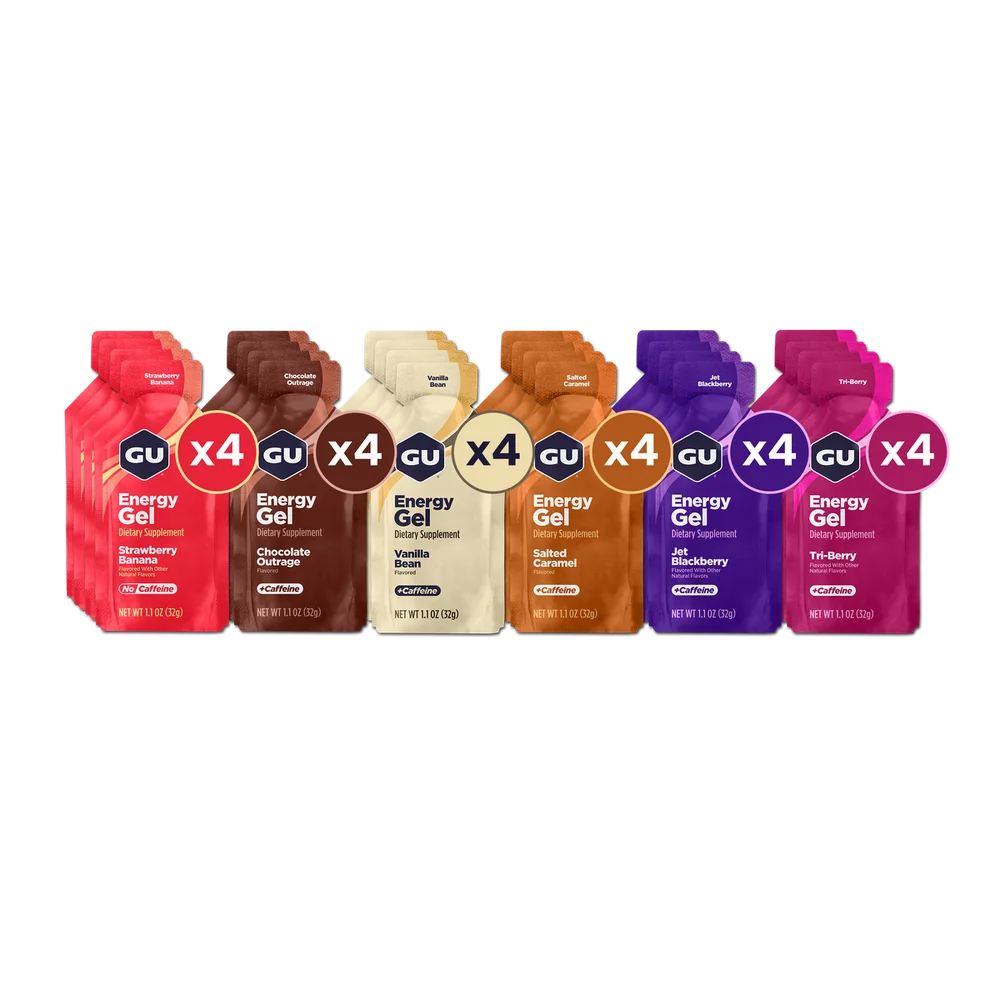
Original Energy Gel
The classic. Fast-absorbing carbohydrate with electrolytes and amino acids, and the one most people reach for on long runs, cycling workouts, races and ordinary endurance training. If you are not sure where to begin, begin with the Original Energy Gel.
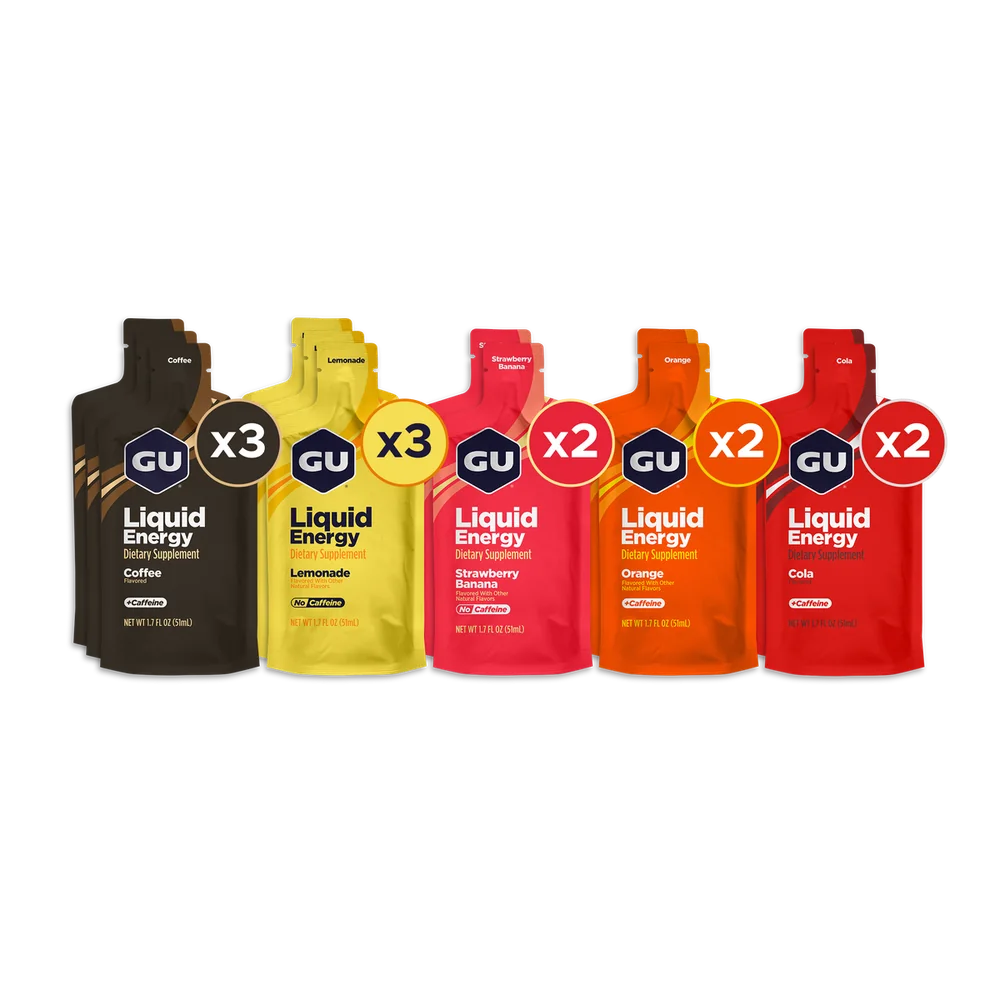
Liquid Energy Gel
The same fast carbohydrate in a thinner, more fluid texture. Some athletes find it easier to get down when breathing is hard, so the Liquid Energy Gel suits high-intensity sessions, quick fuelling in races and anyone who dislikes a thick gel.
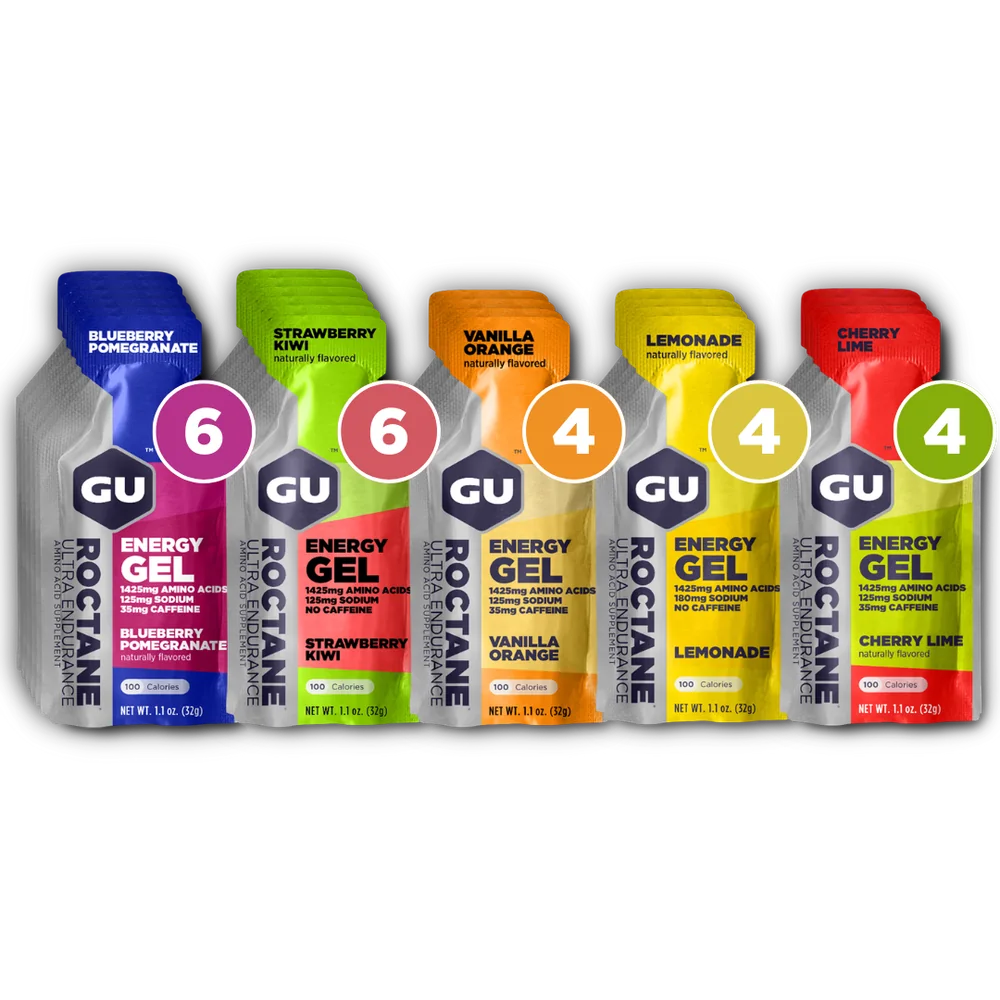
Roctane Energy Gel
Built for the long and the brutal. The Roctane Energy Gel carries more electrolytes and more amino acids than the standard gel, and is aimed at marathons and ultras, long cycling events, Ironman and triathlon racing, and any extended or high-intensity session where the ordinary gel starts to feel thin.
A day that uses both
Put it together and a long-session day looks like this:
| When | What |
|---|---|
| 1–3 hours before | A carbohydrate-focused meal: oats, toast, fruit, or whatever sits well with you |
| 5 minutes before | One gel |
| During the session | One gel every 20–30 minutes, with water |
| After | A proper meal with carbohydrate and protein for recovery |
Nothing exotic. Real food covers the hours around the effort, where there is time to digest. Gels cover the effort itself, where there is not.
The honest summary
Real food is for daily nutrition and the pre-workout plate. Gels are for the hours when you need energy that is quick to digest and simple to carry. Combine them and you fuel steadily, skip the crash and finish long runs, hill rides in the Western Ghats and race days with something left in the legs.
Want the detailed version, with the digestion science and a worked plan? Read our guide to gels vs real food, then put your own numbers into the fuel calculator.
These statements have not been evaluated by a regulatory authority. This product is not intended to diagnose, treat, cure or prevent any disease.