The ABCs of sports nutrition
In 2020, with races cancelled and everyone stuck at home, GU Energy Labs, the Berkeley company that makes the gels we sell, ran an eleven-week webinar series called the ABCs of Sports Nutrition. Pitched at anyone who moves, each week paired one basic of fuelling with pro tips from guests such as triathlete Mirinda Carfrae, gravel racer Alison Tetrick, ultrarunner Mike Wardian and mountain biker Sonya Looney. Here is the series condensed into one read, with the numbers filled in from the manufacturer's own fuelling guidance.
Week 1: nutrition without a race
Carfrae and Tetrick opened with training when nothing is on the calendar. The idea underneath it is one GU calls eating is training: you eat to support the work you are doing today, every day, not just in the hour around a session. A workout you cannot recover from is a wasted workout, race or no race. So when the race disappears the plan gets simpler, not looser: eat enough, eat around your sessions, and keep the long ones fuelled.
Week 2: the good carbs
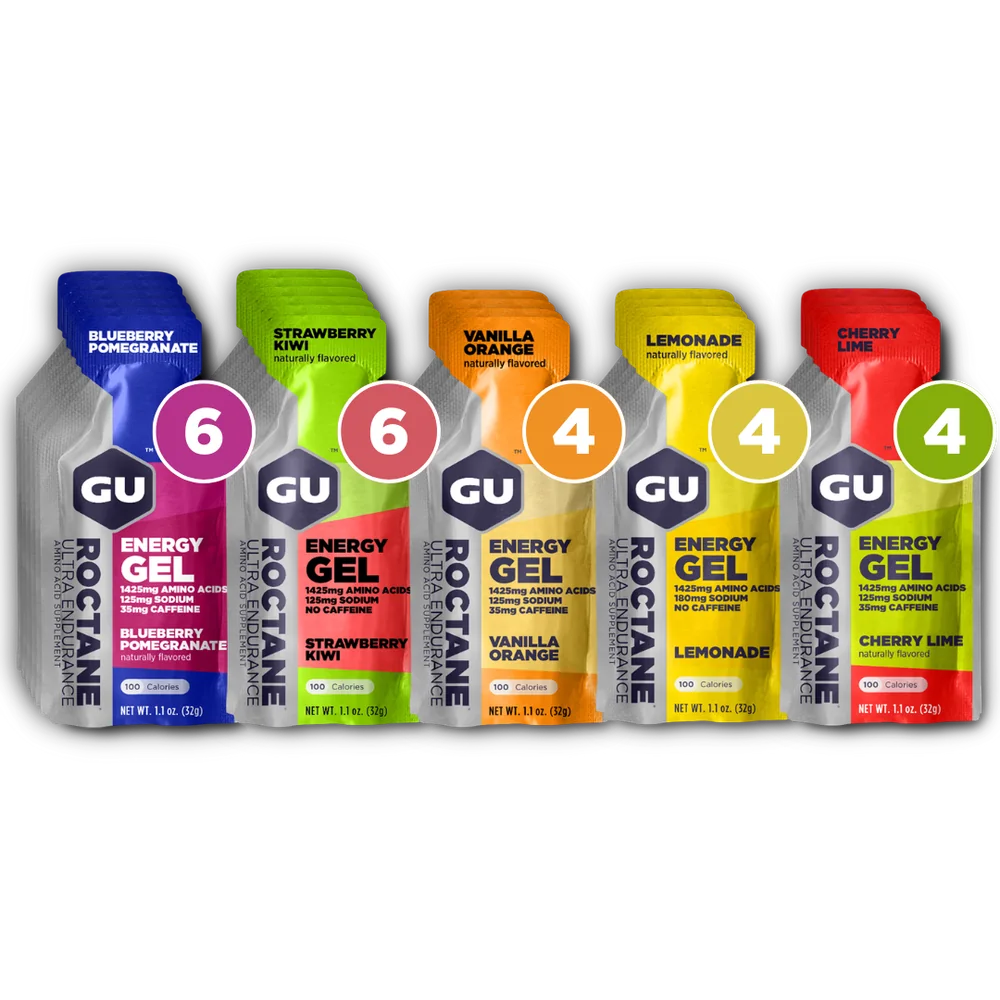
Ultrarunner Jeff Browning, Looney and exercise physiologist Dr Greg Grosicki took carbohydrate, which is what endurance exercise runs on. Daily meals stock enough for short or easy sessions, but go hard or past about 45 minutes and the readily available supply runs out. While you are moving, the gut can process roughly 120–240 calories an hour; more than that pulls blood from working muscles to digestion and invites stomach trouble. A gel sits inside that window: 100 calories and 21–24 g of carbohydrate in a form the body absorbs quickly. The "good" in good carbs is about timing, not virtue. Fast, simple sugar is exactly what you want at kilometre 30; rice, rotis, potatoes and fruit are what you want at the table.
Week 3: need a drink?
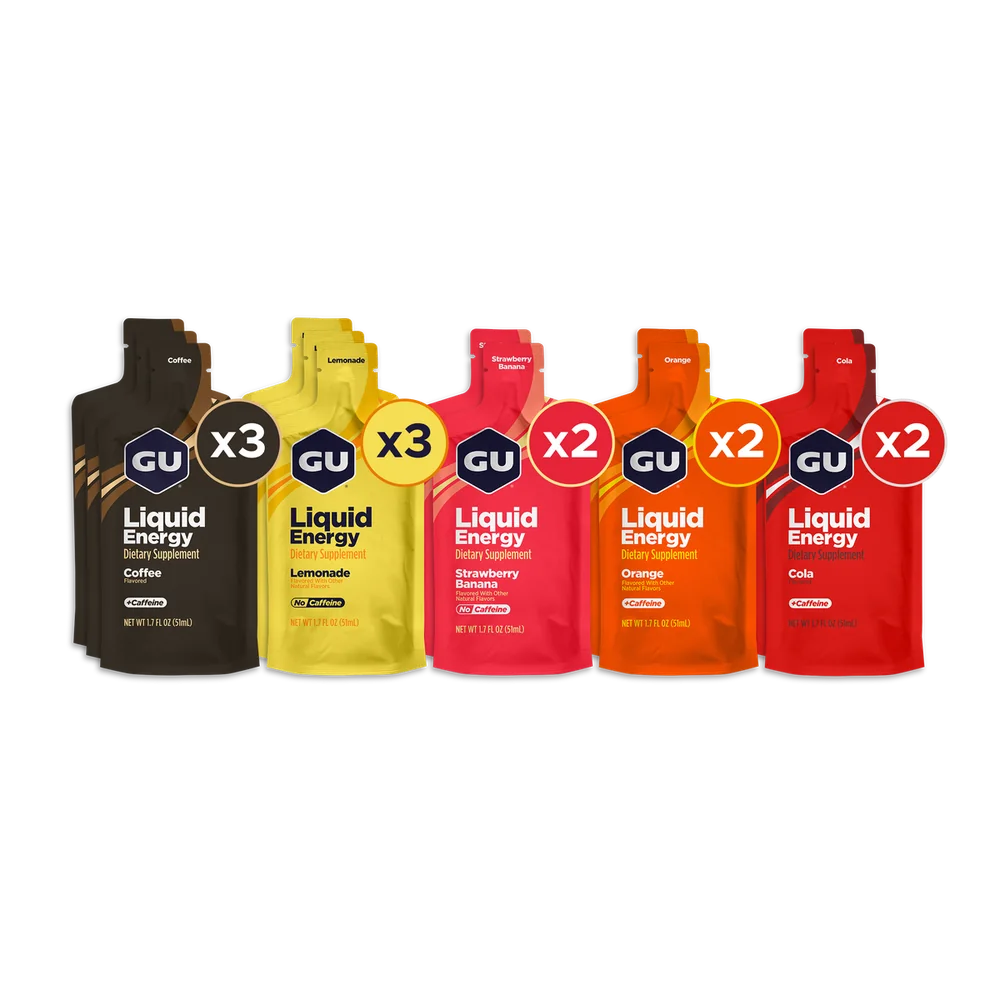
Erin Huck and Corrine Malcolm covered hydration, and the first lesson is that energy and hydration are different jobs: a gel is not a drink and plain water is not fuel. For anything over an hour, the guideline is 475–900 ml (16–30 oz) of water with electrolytes per hour. A humid pre-dawn start in Mumbai puts you at the top of that range; a cool Bengaluru morning, nearer the bottom. And chase every gel with a few sips of water, because the gut handles concentrated carbohydrate far better diluted.
Week 4: flavours make you fast
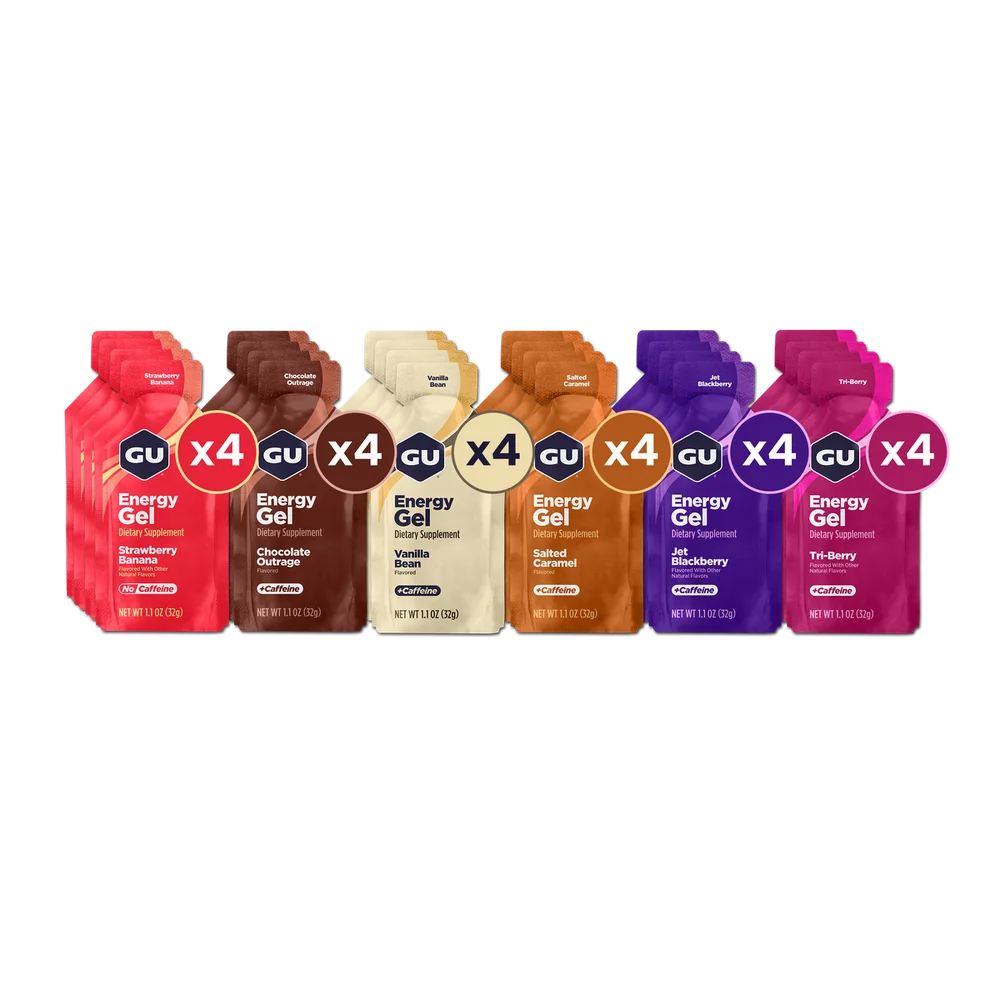
A fuel you do not like is fuel you will not eat at kilometre 32, however good its numbers, so flavour is a performance variable. GU's product developers built their Salted Lime flavour for the heat and dryness of the Western States 100, testing five concepts with that race's community before settling on sea salt and sharp lime. The lesson: taste changes as you get hot and tired, sweet starts to cloy, and sour or salty flavours go down more easily. Carry a mix, and never race on a flavour you have not tried on a long run.
Week 5: supplements and immunity
Dr Grosicki and Jonathan Levitt took supplements, and the headline is that no capsule outperforms the basics. Hard training is a stress, and a stressed, underfuelled body is a run-down one: train on too little food and there is a point where the immune system weakens and recovery stalls. The priorities are boringly consistent: enough food, enough carbohydrate for the training you are doing, enough sleep, and only then a supplement you have a reason for.
Weeks 6 and 7: mind, and five tips to go fast
Week 6 handed the screen to Bruckner and Michelle Chase for mindfulness and meditation, which sounds like a detour until you have bonked at 30 km and watched your mood collapse with your blood sugar. Fuelling is partly a mental skill: sticking to the plan when you do not feel like eating. Week 7 asked mountain biker Geoff Kabush, marathoner Scott Fauble and Camelia Mayfield for their five tips to go fast. Ours, for someone lining up in Delhi or Hyderabad, are these.
- Start before you are hungry. The first gel goes in around 45 minutes, not when you fade.
- Set a timer. Past the hour, one gel every 20–30 minutes.
- Water with every gel, every time.
- Rehearse the exact plan, flavours included, on your long sessions.
- Carry a second flavour for when the first turns on you.
Week 8: family outings and team sports
Week 8, with Emma Garrard, Max King, Wardian and Rose Grant, widened the frame to a family day out and a Sunday game, and the rules do not change. A 90-minute football match in afternoon heat or a long hike in the Sahyadris is well past the 45-minute mark, so the adults doing the hard work should eat before they are hungry and drink before they are thirsty. Keep a gel in your pocket for the stretch when the group is flagging.
Week 9: recovery, why bother?
Because the workout only makes you fitter if you recover from it. Emma Maaranen, Nikki Peterson and endurance cyclist Rebecca Rusch took this one. The first 30 minutes after a hard session or race are when the body is most ready to restock, so take in carbohydrate, protein and electrolytes inside that window; the manufacturer's recovery drink pairs 30 g of carbohydrate with 20 g of whey protein. Keep drinking for the rest of the day, sleep properly, and after a marathon or triathlon expect 3–7 days of active recovery before normal training resumes.
Weeks 10 and 11: the kitchen, and either side of a session
Week 10 was Magdalena Boulet, the 2015 Western States 100 winner who now works on product development at GU, cooking on camera with Looney and Celia Santi. The point: most of an athlete's fuelling happens in the kitchen, and gels are only the thin slice that happens on the move. Week 11 closed with Malcolm, Jeff Kerkove, Kaitlyn Boyle and Patrick Raegan on eating either side of a session. Before: easily digested carbohydrate 15–30 minutes out, a gel as late as five minutes before the start, and no fibre or protein in that window because they digest slowly. After: carbohydrate and protein within 30 minutes, then a proper meal.
The whole series on one card
- Before: easy carbs 15–30 minutes out, a gel up to five minutes before, no fibre or protein close to the start.
- During, past the hour: one gel every 20–30 minutes with a few sips of water, and 475–900 ml of fluid with electrolytes per hour.
- After: carbs, protein and electrolytes within 30 minutes, then keep drinking all day.
Eleven weeks, one idea
Fuel the work you are actually doing, every day, before, during and after. Timing in full is in how to fuel; if your stomach is the limit, train your gut shows how to raise it.
These statements have not been evaluated by a regulatory authority. This product is not intended to diagnose, treat, cure or prevent any disease.